Early root training
In the first 2–3 years, lightly prune only the taproot and any circling roots at planting to encourage a wide, stable root plate while avoiding frequent transplanting that can permanently stunt growth.

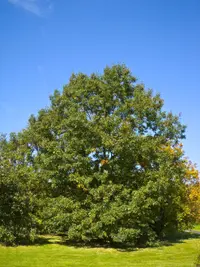
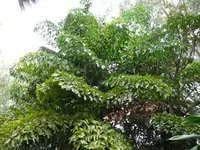
Black oak, Quercus velutina, is a long-lived deciduous tree native to eastern and central North America. It typically forms a broad, irregular crown with strong, rugged branches and dark, deeply furrowed bark.
Leaves are glossy green with sharp lobes and turn yellow to deep red in autumn, while the tree produces acorns that mature in the second year. It usually grows on dry, sandy, or rocky soils in upland forests and ridges.
Once established, it is relatively drought-tolerant but slower growing, so young trees need protection and consistent moisture. Understanding how to care for black oak starts with choosing a sunny site and well-drained, slightly acidic soil.

Care Difficulty
Moderate Care

Light Preference
Full Sun

Water Requirements
Moderate Water

Temperature Preference
Cold Hardy

Hardiness Zone
3–9

Soil Texture
Sandy, Loamy, Clay

Soil pH
Acidic (5.5–6.5), Slightly acidic (6.5–7.0)

Soil Drainage
Well-drained

Fertilization
Minimal (feed rarely)
Scan your plant to receive care tips personalized for your specific plant
Available on iOS and Android
Quercus velutina thrives in bright outdoor conditions that mimic open woodland or forest edge light.
Water needs for Quercus velutina are highest while the tree is young and establishing deep roots.
This species is a hardy temperate oak adapted to cold winters and warm to hot summers outdoors.
This species tolerates a broad humidity range and does not need special humidity management outdoors.
This oak prefers deep, moderately moist, well-drained mineral soils that support strong anchoring roots and steady growth.
This species is only suitable for short-term container growing, typically as a young tree or nursery specimen.
This native tree usually grows well in average soil, so fertilizer for black oak is modest and targeted rather than heavy.
Pruning Quercus velutina focuses on safety, structure, and long-term health rather than frequent shaping.
This oak is rarely kept in containers long-term, so care centers on timely transplanting from nursery stock into the landscape.
Propagation of Quercus velutina is typically done from seed rather than from cuttings or other methods.
Mature black oak trees are cold hardy in much of the US and usually need minimal winter care once established.

Plant Health Check
Not sure what's wrong with your plant? Check your plant's health inside the app.
Black oak has thick, velvety winter buds covered with dense hairs, a feature that helps distinguish it from many other eastern North American oaks during the dormant season.
The inner bark of black oak is bright yellow to orange and historically was a major source of quercitron, a natural dye rich in quercetin used in textile dyeing and tanning.
Mature black oak can resprout vigorously from the stump or root collar after fire or cutting, an adaptation that allows populations to persist in fire-prone oak forests.

Black oak acorns take 2 full growing seasons to mature, and in many eastern U.S. forests they are a critical mast food for wildlife such as wild turkey, white-tailed deer, black bear, and numerous rodent and bird species, strongly influencing local animal population cycles.
This species grows slowly to moderately, typically 30–60 cm per year once established. Growth is faster on deep, well-drained, slightly acidic soils and slower on compacted, dry, or very poor sites.
Keep your plants happy and healthy with plant identification, disease detection, and easy care guidance.