Root flare check
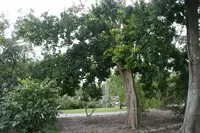
When planting or inspecting an established tree, make sure the top of the root flare sits at or just above soil level and gently remove excess mulch or soil that is piled against the trunk to prevent rot and girdling roots.

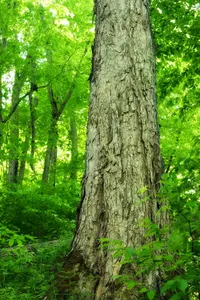
Northern red oak, Quercus rubra, is a large, deciduous hardwood tree valued for shade, timber, and wildlife support. It develops a broad, rounded crown with strong, upright branches and deeply lobed leaves that turn red in autumn.
This species is native to eastern North America, where it grows in mixed forests and along slopes and ridges. It adapts well to many urban and suburban landscapes.
It grows relatively fast for an oak when given full sun, adequate moisture, and deep, well-drained soil. Once established, it is sturdy and long-lived, but planning how to care for Northern Red Oak from a young age is important due to its eventual size.

Care Difficulty
Moderate Care

Light Preference
Full Sun

Water Requirements
Moderate Water

Temperature Preference
Cold Hardy

Hardiness Zone
3–8

Soil Texture
Loamy, Sandy, Clay

Soil pH
Acidic (5.5–6.5), Slightly acidic (6.5–7.0)

Soil Drainage
Moist but well-drained

Fertilization
Minimal (feed rarely)
Scan your plant to receive care tips personalized for your specific plant
Available on iOS and Android
Quercus rubra thrives as a full-sun tree but handles some light shade, especially when young.
Mature Quercus rubra is drought-tolerant, but young trees need consistent moisture for deep root establishment.
This species is a cold-hardy, temperate-climate tree that tolerates a wide temperature range.
This species is largely insensitive to humidity, relying more on soil moisture than air moisture.
Quercus rubra prefers deep, moist, well‑aerated mineral soils that support extensive root development.
This species is only suitable for short‑term container culture as a juvenile tree, not for long‑term growth.
Quercus rubra benefits from modest, targeted feeding in managed landscapes, especially during its juvenile years.
Pruning Quercus rubra focuses on structural strength and removal of problem branches rather than frequent shaping.
Northern red oak is usually grown in the ground, so transplanting is more relevant than long-term container repotting.
Quercus rubra is most commonly propagated from seed rather than from cuttings or other vegetative methods.
Quercus rubra is a cold-hardy deciduous tree that generally needs minimal winter care in its suitable climate range.

Plant Health Check
Not sure what's wrong with your plant? Check your plant's health inside the app.
Northern red oak is one of the fastest-growing native oaks in eastern North America, often adding noticeable height and crown spread each year under good conditions, which makes it a common choice for timber and landscape planting.
Its acorns are a major food source for many animals, including deer, black bear, wild turkey, blue jays, and several squirrel species, and the tree also hosts numerous moth and butterfly caterpillars that birds rely on for protein-rich food.
Compared with many other native oaks, this species tolerates a wide range of acidic to slightly alkaline soils and moderate urban air pollution, which is one reason city foresters often select it when growing Northern Red Oak along streets and in parks.

Northern red oak has played an important role in North American forestry and architecture, as its hard, strong, and attractively grained wood has been widely used for flooring, furniture, interior trim, and cooperage, making it one of the most economically valuable red oaks in its native range.
This species grows moderately fast for a hardwood, often adding 30–60 cm of height per year when young. Growth slows with age. Rate depends on soil quality, moisture availability, light exposure, and competition from nearby plants.
Keep your plants happy and healthy with plant identification, disease detection, and easy care guidance.