Early leader training
Select one strong upright stem in the first 2–3 years and gently stake it as a central leader so the tree develops a stable trunk and higher canopy instead of multiple weak, low branches.

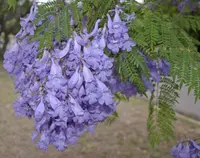
Jacaranda mimosifolia, commonly called jacaranda or blue jacaranda, is a fast-growing deciduous tree valued for its soft, fern-like foliage and showy purple-blue flowers. It develops an open, spreading crown that can cast light dappled shade rather than deep darkness.
This species is native to subtropical regions of South America but is widely planted in warm climates around the world as an ornamental street and garden tree. It prefers bright light, mild winters, and well-drained soil, which helps explain how to care for Jacaranda in most home landscapes.
Its rapid growth and brittle branches mean it needs space and some structural pruning when young. Flowering can be reduced by cold, shade, or poor drainage, so site choice strongly affects long-term performance.

Care Difficulty
Moderate Care

Light Preference
Full Sun

Water Requirements
Moderate Water

Temperature Preference
Tropical / Frost Sensitive

Hardiness Zone
9–11

Soil Texture
Sandy, Loamy, Organic-rich

Soil pH
Acidic (5.5–6.5), Slightly acidic (6.5–7.0)

Soil Drainage
Well-drained

Fertilization
Minimal (feed rarely)
Scan your plant to receive care tips personalized for your specific plant
Available on iOS and Android
This species needs abundant direct sun to form a strong canopy and reliable flowering.
Watering should support steady growth without leaving the roots saturated.
Temperature strongly influences growth, flowering, and survival of this subtropical tree.
This species prefers moderately humid air but tolerates typical indoor levels if not extremely dry.
This tree performs best in loose, well-drained, slightly acidic to neutral soil that does not stay wet for long.
This species can be grown in containers for many years if the pot and substrate are managed carefully.
Light, balanced feeding supports healthy growth and flowering without pushing excessive, weak shoots in Jacaranda.
Thoughtful pruning keeps Jacaranda mimosifolia structurally sound and encourages good light penetration.
Moving young jacaranda trees is easiest while they are still small and before roots become deeply established.
New plants are most often raised from seed, though semi‑ripe cuttings are also possible for Jacaranda mimosifolia plant care.
This subtropical tree is sensitive to freezing and needs thoughtful winter management in cooler climates.

Plant Health Check
Not sure what's wrong with your plant? Check your plant's health inside the app.
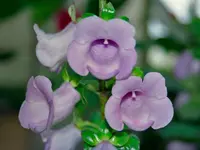
The tubular, lavender flowers strongly resemble fossils of related bignoniaceae flowers from South America, helping botanists link modern jacarandas to ancient Neotropical forest lineages.
This tree produces flat, woody pods that split to release many papery, winged seeds, which are adapted for wind dispersal and can travel far from the parent tree in open landscapes.
Dense plantings in streets and parks can slightly cool local microclimates, because the fine, fern-like foliage has a large surface area that supports efficient transpiration and light filtration compared with many other ornamental trees.

In parts of South Africa and Australia, large synchronized plantings of this species create striking seasonal “purple carpets” of fallen blossoms, and flowering times have been used informally by local communities as cues for academic exam periods and seasonal events.
Lack of flowers usually relates to plant age, insufficient light, or stress from pruning or root disturbance. Young trees may need several years to mature before flowering, even with otherwise good Jacaranda mimosifolia care.
Keep your plants happy and healthy with plant identification, disease detection, and easy care guidance.