Early framework training
In the first 2–3 years, select 3–5 well-spaced main branches and remove competing leaders to build a strong open canopy that supports heavy fruit and reduces branch breakage later.

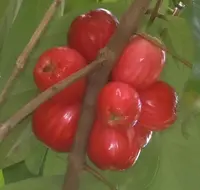
Malaysian apple (Syzygium malaccense) is a tropical evergreen fruit tree valued for its glossy foliage, showy flowers, and bell-shaped, pink to red edible fruits. It typically forms a dense, upright canopy and is usually grown outdoors in warm, frost-free climates or in large containers in sheltered settings.
This species is native to Maritime Southeast Asia and the Pacific, thriving in humid, lowland areas. It prefers consistently moist, well-drained soil and bright light, making it moderately demanding outside the tropics. Gardeners who care for Malaysian apple need space, warmth, and patience, as it can be slow to establish and fruit in cooler regions.

Care Difficulty
Moderate Care

Light Preference
Full Sun

Water Requirements
Regular Water

Temperature Preference
Tropical / Frost Sensitive

Hardiness Zone
10–11

Soil Texture
Sandy, Loamy, Organic-rich

Soil pH
Acidic (5.5–6.5), Slightly acidic (6.5–7.0)

Soil Drainage
Moist but well-drained

Fertilization
Minimal (feed rarely)
Scan your plant to receive care tips personalized for your specific plant
Available on iOS and Android
Syzygium malaccense thrives in bright, warm conditions that mimic a tropical forest edge.
This species prefers consistently moist, well‑drained soil without long dry spells or standing water.
This tropical tree needs warm, frost-free conditions to grow and fruit reliably.
This species prefers consistently high humidity and reacts quickly to dry indoor air.
This species grows best in deep, moist, well-drained, organic-rich soil that stays slightly acidic.
This tree can be grown in large containers for several years if root space and stability are managed carefully.
This tropical fruit tree benefits from moderate feeding to support steady growth and fruiting.
Thoughtful pruning keeps Syzygium malaccense structurally sound and productive.
This species is usually grown in the ground, with transplanting focused on young trees for best establishment.
New plants are most often raised from seed, with cuttings used where controlled conditions are available.
This tropical tree is frost sensitive and needs protection in regions with cool or cold winters.

Plant Health Check
Not sure what's wrong with your plant? Check your plant's health inside the app.
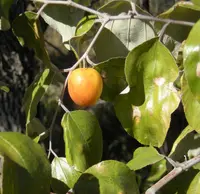
The fleshy part that looks like a fruit is actually a huge, expanded berry that can reach around 5–7 cm long, much larger than most myrtle-family relatives.
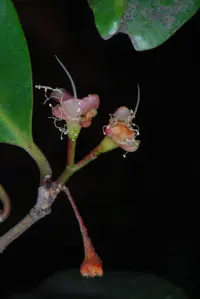
In suitable climates the tree can flower not only at branch tips but also along older branches and the main trunk, a trait called cauliflory that helps pollinators reach many flowers at once.
Archaeobotanical and ethnobotanical studies indicate that this tree was deliberately carried and planted by Austronesian voyagers across many Pacific islands as a valued fruit and shade tree.

Historical records from the Caribbean and tropical Americas show that this species became so well established after introduction from Southeast Asia that in some coastal areas it now forms near-monodominant stands, reshaping local lowland forest structure and food resources for wildlife.
The fruit is edible and widely eaten fresh, in salads, or processed into jams and drinks. The peel and flesh are both consumed. Fruits are low in calories, with moderate vitamin C and high water content.
Keep your plants happy and healthy with plant identification, disease detection, and easy care guidance.