Host tree mapping
Document the exact locations and tree species where fruiting occurs, then flag or tag these host trees so future management such as mulching and traffic control can be targeted to those productive zones.

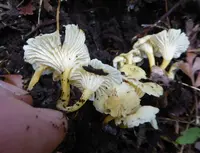
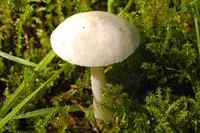
Cantharellus wellingtonensis is a small, wild mushroom species rather than a typical garden plant. It forms funnel-shaped, often yellowish to orange fruiting bodies with ridged, forked folds instead of true gills.
This species is known from New Zealand forests, where it grows on the ground among leaf litter, usually in association with native trees. Its growth depends on a mycorrhizal relationship, a mutually beneficial partnership between fungus and plant roots.
Because of this specialized lifestyle, it is considered very difficult to cultivate at home, and attempts to care for Cantharellus wellingtonensis in containers or gardens are rarely successful.

Care Difficulty
Hard Care

Light Preference
Partial Shade

Water Requirements
Keep Soil Moist

Temperature Preference
Cool Climate

Hardiness Zone
Unknown

Soil Texture
Loamy, Organic-rich

Soil pH
Strongly acidic (4.5–5.5)

Soil Drainage
Moist but well-drained

Fertilization
Minimal (feed rarely)
Scan your plant to receive care tips personalized for your specific plant
Available on iOS and Android
This species prefers bright woodland conditions with gentle, filtered light rather than direct exposure.
Moist but not waterlogged soil is essential for healthy mycelium and fruiting.
Stable, cool to mild temperatures support reliable growth and fruiting.
This species is not typically cultivated under controlled humidity, but moisture around developing fungi matters.
Soil conditions for Cantharellus wellingtonensis focus on supporting its mycorrhizal partnership with host trees.
This species is generally unsuitable for container growing because it relies on complex mycorrhizal relationships with trees in stable ground soil.
This wild mycorrhizal fungus does not benefit from conventional fertilization and usually performs best in undisturbed, nutrient-balanced soil when caring for Cantharellus wellingtonensis.
Pruning is not applicable for Cantharellus wellingtonensis, as it is a wild, ground-dwelling fungus rather than a plant with stems or branches.
This species is not suited to typical repotting or garden-style transplanting because it depends on a mycorrhizal partnership with host tree roots.
Propagation of Cantharellus wellingtonensis is complex and rarely successful in managed settings because it requires compatible host trees and soil fungi communities.
No special winter care is practical or required, as this forest fungus overwinters naturally in soil and associated tree roots.

Plant Health Check
Not sure what's wrong with your plant? Check your plant's health inside the app.
This chanterelle species is known only from New Zealand, where it has been described from native forest habitats rather than from a broad global range like some related chanterelles.
Its fruiting bodies show a vivid orange to yellow-orange color with a well-developed, wrinkled hymenium (spore-bearing surface) that distinguishes it from duller, brownish look-alike fungi in the same region.
It forms ectomycorrhizal associations, a type of root symbiosis where fungal hyphae exchange mineral nutrients for plant sugars, with certain native trees in New Zealand forests, contributing to nutrient cycling and tree health.
This species is described as an edible chanterelle, but it is rarely encountered and poorly known. Only eat specimens positively identified by an experienced mycologist, and never consume any wild fungus if identification is uncertain.
Keep your plants happy and healthy with plant identification, disease detection, and easy care guidance.