Mulch For Shoots
Apply a 5–8 cm layer of loose organic mulch in late winter to keep rhizomes cool, conserve moisture, and protect emerging flower shoots from temperature swings and surface drying.

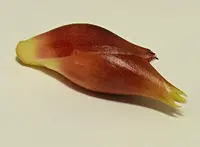
Mioga ginger, Zingiber mioga, is a hardy, clump-forming perennial grown mainly for its edible flower buds and young shoots. It belongs to the ginger family but has a cooler, fresher flavor than common ginger roots.
The plant forms leafy stems from underground rhizomes and reaches a modest height, giving a soft, textural look to shaded garden beds. It is native to Japan, Korea, and parts of China, where it grows in moist woodland and mountain areas.
Zingiber mioga is generally considered easy to grow in mild climates, especially where summers are not extremely hot or dry. To care for mioga ginger, provide partial shade, evenly moist soil, and protection from harsh afternoon sun.

Care Difficulty
Moderate Care

Light Preference
Partial Shade

Water Requirements
Keep Soil Moist

Temperature Preference
Cool Climate

Hardiness Zone
6–10

Soil Texture
Loamy, Silty, Organic-rich

Soil pH
Acidic (5.5–6.5), Slightly acidic (6.5–7.0)

Soil Drainage
Moist but well-drained

Fertilization
Light (every 4–6 weeks)
Scan your plant to receive care tips personalized for your specific plant
Available on iOS and Android
This shade-tolerant ginger prefers bright, gentle light rather than intense direct sun.
This rhizomatous perennial prefers evenly moist, never soggy soil during its active growing season.
This hardy ginger grows best in mild, temperate conditions with cool winters and warm summers.
This species prefers moderately humid air but usually adapts in typical home conditions if not overly dry.
This rhizomatous species performs best in loose, moist, well-drained, organic-rich soil.
This species grows well in containers when given enough root space and stable moisture.
This clumping ginger benefits from moderate feeding during its active growing season.
Zingiber mioga needs light, targeted pruning to maintain a healthy, productive clump.
This rhizomatous ginger is usually grown in the ground, with transplanting focused on managing clump size and vigor.
This species is most commonly propagated by division of its rhizomes rather than from seed.
This ginger is relatively cold hardy, but the underground rhizomes benefit from simple winter protection in colder areas.

Plant Health Check
Not sure what's wrong with your plant? Check your plant's health inside the app.
Mioga is cultivated mainly for its immature flower buds and young shoots, which are used as a vegetable in Japanese, Korean, and Chinese cuisines for their mild ginger flavor and crisp texture.
Unlike many tropical gingers, this species is naturally adapted to cool-temperate climates in Japan, Korea, and parts of China, tolerating much lower temperatures than typical cultivated ginger relatives.
In its native range, mioga often grows in understory or forest-edge habitats, forming dense clumps in partial to full shade rather than in open, sun-exposed sites.

In traditional Japanese agriculture, mioga has long been grown as a specialty crop in cooler regions such as Akita and Iwate Prefectures, where entire fields are managed under shade structures or forest canopies specifically to encourage high-quality flower bud production for regional markets.
Lack of flowering usually comes from insufficient light, young age, or plants stressed by drought, overcrowding, or nutrient-poor soil. Stable moisture, partial shade, and a balanced slow-release fertilizer often improve blooming over the next growing season.
Keep your plants happy and healthy with plant identification, disease detection, and easy care guidance.