Early weed control
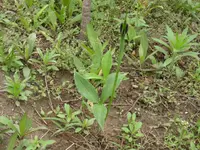
Hoe or hand-pull seedlings when they have 2–4 true leaves to prevent this species from setting seed and overwhelming crops later in the season.

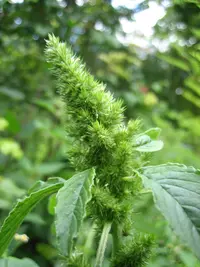
Redroot amaranth, Amaranthus retroflexus, is a fast-growing annual herb often seen as a common weed in gardens, fields, and disturbed soils. It has upright, branching stems, dull green leaves, and dense, bristly flower spikes that give the plant a rough, compact look.
This species is native to the Americas but now grows widely in temperate and warm regions worldwide. It tolerates poor, dry soils and heat, which makes it very persistent once established.
Because it thrives in full sun and disturbed ground, it is considered easy to grow but hard to control. Those who choose to care for redroot amaranth should monitor its spread to prevent unwanted self-seeding.

Care Difficulty
Easy Care

Light Preference
Full Sun

Water Requirements
Moderate Water

Temperature Preference
Tropical / Frost Sensitive

Hardiness Zone
2–11

Soil Texture
Sandy, Loamy, Clay

Soil pH
Slightly acidic (6.5–7.0), Slightly alkaline (7.0–7.5)

Soil Drainage
Well-drained

Fertilization
Minimal (feed rarely)
Scan your plant to receive care tips personalized for your specific plant
Available on iOS and Android
This sun-loving annual thrives in open, bright conditions from late spring to early fall.
This species prefers evenly moist, well-drained soil but tolerates short dry periods once established.
This warm-season annual grows best in stable, frost-free conditions.
This species grows well in typical outdoor humidity and rarely needs special humidity management.
This adaptable annual thrives in light, well‑structured mineral soils with reliable drainage.
This species can be grown in containers outdoors when managed for its strong, upright growth.
This adaptable annual usually needs little feeding in average garden soil, but light fertilization can support stronger growth when harvested as a leafy crop.
Pruning Amaranthus retroflexus is mainly a matter of simple trimming to manage spread and seed production.
This species is usually direct-sown outdoors, but young container-grown plants transplant well when handled gently.
New plants are most often raised from seed, as this annual completes its life cycle in one season.
This warm-season annual is not frost hardy and does not overwinter outdoors in cold climates.

Plant Health Check
Not sure what's wrong with your plant? Check your plant's health inside the app.
This species uses C4 photosynthesis, a pathway that allows very efficient carbon fixation in high light and heat, which helps it outcompete many crops and native plants during warm summers.
Redroot amaranth can accumulate relatively high levels of nitrates in its tissues when growing in nitrogen-rich soils, especially in fertilized fields, which makes it important to monitor if used as livestock forage.
Populations in some agricultural regions have independently evolved resistance to multiple herbicide classes, making this plant a key model for studying rapid weed adaptation in modern farming systems.

Seeds of redroot amaranth can remain viable in the soil seed bank for many years and germinate in staggered waves, which allows the species to persist in cultivated fields even after repeated control efforts.
Young leaves and tender shoots are edible cooked or raw in moderation, similar to spinach. Seeds are also edible when thoroughly cleaned and cooked. Nitrate and oxalate levels can accumulate, so avoid heavily fertilized sites and do not rely on it as a staple.
Keep your plants happy and healthy with plant identification, disease detection, and easy care guidance.