Eurasian maple-leaved goosefoot Care (Chenopodiastrum hybridum)

Eurasian maple-leaved goosefoot

About Eurasian maple-leaved goosefoot

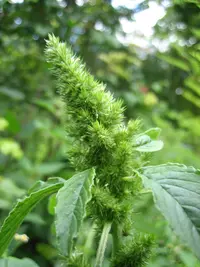
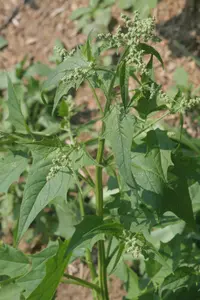
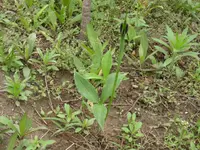
Eurasian maple-leaved goosefoot (Chenopodiastrum hybridum) is an annual herb in the amaranth family, often found as a weed in disturbed soils and field margins. It has upright, branching stems and triangular, maple-like leaves with a slightly toothed edge.

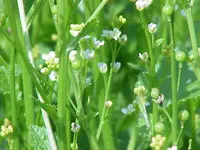
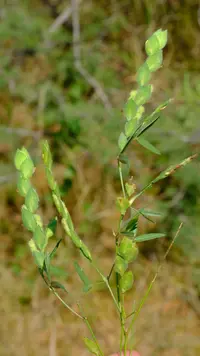
The plant is native to Europe and western Asia but now appears in many temperate regions, including North America. It produces small, greenish flowers in dense clusters that are not showy but set many seeds.

It grows quickly in nutrient-rich, loose soil and adapts to a wide range of conditions, which makes it easy to establish but sometimes invasive. Basic knowledge of how to care for Eurasian maple-leaved goosefoot is mainly relevant for wild garden areas, naturalistic plantings, or ecological studies rather than ornamental use.

Main Plant Requirements

Care Difficulty

Easy Care

Light Preference

Full Sun

Water Requirements

Moderate Water

Temperature Preference

Cool Climate

Hardiness Zone

3–8

Soil Texture

Sandy, Loamy, Organic-rich

Soil pH

Slightly acidic (6.5–7.0), Neutral (7.0)

Soil Drainage

Well-drained

Fertilization

Minimal (feed rarely)

Get Personalized Care Plan

Scan your plant to receive care tips personalized for your specific plant

Available on iOS and Android

How to Care for the Eurasian maple-leaved goosefoot

This annual species prefers moderate to bright outdoor light similar to open field margins and disturbed sites.

  • Provide 4–6 hours of direct sun, ideally gentle morning sun with light shade or filtered light in the early afternoon to reduce leaf scorch.
  • The plant tolerates partial shade, but dense shade for more than 8–10 hours daily leads to lanky stems and reduced flowering and seed set in Eurasian maple-leaved goosefoot.
  • In hot summers, protect from intense midday sun using taller neighboring plants or dappled tree shade, especially on dry, exposed sites.

This species prefers evenly moist but not saturated soil and adapts well to typical rainfall in many temperate regions.

  • Before watering, let the top 3–5 cm of soil dry; soil should feel slightly dry at the surface but still faintly moist just below when pinched.
  • Increase watering during warm, active growth if leaves droop at midday and do not recover by evening, a sign of underwatering rather than brief heat stress in Chenopodiastrum hybridum.
  • Avoid waterlogged conditions; pale, yellowing lower leaves, soft stems, or a sour smell in the soil indicate poor drainage and possible root decline, especially on heavy clay.

This hardy annual grows best in cool to warm conditions typical of temperate outdoor climates.

  • Optimal growth occurs at 60–77°F (15–25°C), with steady emergence and leaf development during mild spring and early summer weather.
  • Plants tolerate down to about 28°F (-2°C) for short periods, but hard frosts below 26°F (-3°C) can kill young seedlings or burn tender foliage.
  • In hot spells above 86°F (30°C), growth may slow; ensure soil moisture is stable and, if possible, provide light afternoon shade to limit heat stress.

Humidity is usually not critical for Chenopodiastrum hybridum grown outdoors in temperate climates.

This species prefers loose, moderately fertile soil that drains freely yet retains some moisture.

  • Use a light loamy or sandy-loam soil with plenty of crumb structure so roots can spread easily.
  • Aim for slightly acidic to neutral pH, roughly 6.0–7.2, which supports balanced nutrient uptake.
  • Incorporate 20–30% well-rotted compost to improve structure, and add coarse sand if the native soil is heavy.
  • Avoid compacted clay, waterlogged spots, or pure sand with no organic matter, as these restrict root development.

This species can be grown in containers, though it is more commonly managed in open ground.

  • Choose a pot at least 25–30 cm deep to accommodate the taproot and prevent restricted vertical growth.
  • Use a heavier material such as terracotta or ceramic to stabilize the plant against wind and tall growth.
  • Elevate the container slightly on feet or bricks so drainage holes clear quickly after rain or irrigation.

Chenopodiastrum hybridum usually thrives in average garden soil and needs only modest feeding.

  • In poor or very sandy soil, work in a light layer of well-rotted compost before spring growth to improve nutrition and structure.
  • During the active growing season, use a balanced liquid NPK fertilizer at 1⁄4–1⁄2 strength every 4–6 weeks if growth looks weak or pale.
  • Skip fertilizing in winter or when plants are dormant, as nutrients are not efficiently taken up then.
  • Avoid high-nitrogen lawn products nearby, which can cause lush, floppy growth in Eurasian maple-leaved goosefoot.

Chenopodiastrum hybridum benefits from simple, light pruning to keep plants tidy and controlled.

  • Best timing is late winter to early spring, before strong new growth starts, or after flowering if seed spread is a concern.
  • Remove dead, damaged, or diseased stems at the base using clean, sharp hand pruners.
  • Thin out crowded or leaning shoots to improve airflow and reduce self-seeding in surrounding beds.
  • Lightly shorten tall stems to shape the plant and limit lodging, but avoid cutting into very young, soft growth.

This species is most often grown in open ground, so focus on site choice and gentle transplanting rather than frequent repotting.

  • Transplant seedlings or young plants in early spring or early fall, when temperatures are mild and soil is evenly moist.
  • Choose a sunny to lightly shaded site with well-drained soil; avoid compacted or waterlogged spots that stress roots.
  • If plants were started in pots, transplant when roots just fill the container but are not heavily circling the root ball.
  • Water thoroughly after moving, then keep soil lightly moist for 1–2 weeks to limit transplant shock and support root establishment.

Chenopodiastrum hybridum is most commonly propagated by seed, which germinates readily under basic garden conditions.

  • Collect seeds from mature, dry flower clusters and store them cool and dry until sowing in spring or fall.
  • Sow seeds on or just below the soil surface in well-drained soil; a fine top dressing of sand or compost improves contact.
  • Keep the seedbed evenly moist but not waterlogged; germination usually occurs in 1–3 weeks in mild temperatures.
  • Thin crowded seedlings to maintain spacing of 20–30 cm, selecting the strongest plants and removing weak or poorly placed ones.

This annual species is cold tolerant during its growing season and normally requires no special winter care, as plants die back after seed set.

Care Tips

Staggered Succession Sowing

Sow small patches every 2–3 weeks rather than one large sowing, which keeps plants young, reduces overcrowding, and limits self-seeding that can become weedy.

Targeted Thinning Technique

When seedlings reach 5–8 cm, thin by cutting surplus plants at soil level instead of pulling, which protects the shallow root systems of the remaining plants and helps maintain an even stand.

Perimeter Weed Buffer

Maintain a 20–30 cm weed-free strip around each row using a hoe or mulch so the plants do not compete with aggressive grasses and broadleaf weeds that quickly outgrow them.

Dry-Leaf Disease Check

Inspect foliage during dry, breezy weather and remove any spotted or distorted leaves immediately, then dispose of them in the trash to reduce foliar disease pressure without spreading spores in wet conditions.

Seed Head Management

Before seeds fully mature and darken, cut and bag seed heads if you want to limit self-sowing, leaving a few selected plants to set seed only where you intend to continue growing Eurasian maple-leaved goosefoot.

Common Pests and Diseases

Beet armyworm

This pest feeds heavily on leaves, creating irregular holes and sometimes skeletonizing the foliage of young plants. Symptoms include rapid loss of leaf area and frass (dark droppings) on and around the plant.

Solution

Handpick caterpillars when populations are small and destroy them, and remove heavily chewed leaves to reduce food and hiding sites. Encourage natural predators, and if damage is significant, use a targeted biological product containing Bacillus thuringiensis (Bt) applied in the evening to young larvae on leaf surfaces.

Leaf miners

These insects create pale, winding tunnels inside the leaves, which can coalesce and cause large blotchy areas that reduce photosynthesis. Symptoms include distorted leaves with translucent trails when held to light.

Solution

Remove and dispose of mined leaves promptly to break the life cycle, especially early in the season. Floating row covers over young plants and maintaining plant vigor through regular watering can limit damage while still allowing for effective Chenopodiastrum hybridum care instructions outdoors.

Downy mildew

This disease causes pale yellow to light green patches on the upper leaf surface, with a grayish to purplish downy growth on the underside in humid conditions. Symptoms include leaf curling, distortion, and premature yellowing and drop in cool, moist weather.

Solution

Improve air circulation by increasing spacing between plants and avoid overhead watering, especially late in the day. Remove and discard infected leaves, and in areas with recurring problems use resistant crop rotations and apply a copper-based fungicide preventively when cool, wet conditions are forecast.

Cercospora leaf spot

This disease produces small, circular to irregular brown or gray leaf spots, often with darker borders, which can merge and cause large dead areas on older leaves. Symptoms include premature leaf yellowing and drop, especially on lower foliage in dense stands.

Solution

Collect and dispose of fallen, spotted leaves to reduce inoculum, and avoid wetting foliage during irrigation. Where the disease recurs, increase plant spacing, rotate away from other chenopod hosts like beets and spinach for at least 2–3 years, and use a labeled protectant fungicide early in the season if needed.

Aphids

These insects cluster on young stems and leaf undersides, sucking sap and causing curling, distortion, and sticky honeydew deposits that can support sooty mold. This pest also acts as a vector for some viral pathogens affecting related chenopod crops.

Solution

Wash colonies off with a firm stream of water and pinch back heavily infested shoot tips to remove most insects. Encourage beneficial insects such as lady beetles, and if populations remain high, use an insecticidal soap or horticultural oil, ensuring thorough coverage of leaf undersides in cool, shaded conditions.

Interesting Facts

Hybrid-looking but stable

Despite its name suggesting hybrid origin, this species is not a recent hybrid but a stable, well-defined taxon within the amaranth family, with distinctive leaf shape and floral structure used for identification in floras.

Nitrogen-rich weed associate

The plant occurs most often on nitrogen-rich, disturbed soils such as around arable fields, farmyards, and waste ground, making it a useful indicator of long-term nutrient enrichment and soil disturbance in temperate regions.

Small seeds, long dormancy

It produces numerous small, dark seeds with a hard coat that can remain dormant in the soil seed bank for many years, allowing populations to reappear after agricultural rotation or ground disturbance stops.

Botan icon

Did you know?

In several European countries this species has shifted from being a traditional farmland weed of manually cultivated fields to a much rarer plant, largely due to modern herbicide use and changes in tillage practices, and is now locally red-listed as a declining component of the arable weed flora.

FAQs about Eurasian maple-leaved goosefoot

This species can behave invasively in many temperate regions. It self-seeds heavily, spreads along disturbed ground, and competes with native plants. Remove flower heads before seed set and pull unwanted seedlings promptly to limit spread when growing Eurasian maple-leaved goosefoot.

Grow Healthy Plants with Botan Care

Keep your plants happy and healthy with plant identification, disease detection, and easy care guidance.

Botan plant care app — identify plants on mobile

Explore More Plants