Windfirm support
In windy sites, sow in rows aligned with the prevailing wind and, if stems begin lodging, run a taut twine along each row at mid-plant height to give flexible support without shading the foliage.

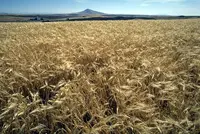
Common barley, Hordeum vulgare, is a cool-season annual grass grown mainly for grain and forage. It forms upright, hollow stems with narrow leaves and dense seed heads. Plants often develop a golden color as the grain matures.
This species originated in the Fertile Crescent and is now cultivated in many temperate regions around the world. It is generally considered easy to grow, adapting to a range of soils as long as drainage is good.
Barley prefers full sun, moderate moisture, and relatively open, uncrowded planting. Its toughness and adaptability help simplify how to care for common barley in home or educational plots.

Care Difficulty
Easy Care

Light Preference
Full Sun

Water Requirements
Moderate Water

Temperature Preference
Cool Climate

Hardiness Zone
3–9

Soil Texture
Sandy, Loamy, Silty

Soil pH
Slightly acidic (6.5–7.0), Neutral (7.0)

Soil Drainage
Well-drained

Fertilization
Minimal (feed rarely)
Scan your plant to receive care tips personalized for your specific plant
Available on iOS and Android
Hordeum vulgare prefers open, bright conditions similar to typical grain fields.
Water needs for Hordeum vulgare focus on steady soil moisture without saturation.
This cool-season cereal grows best in mild conditions and dislikes extreme heat or severe frost.
Humidity is rarely critical for Hordeum vulgare and typical outdoor conditions in most regions are adequate.
Hordeum vulgare grows best in loose, moderately fertile, well-drained mineral soil that does not stay waterlogged.
This species can be grown in containers for small-scale or educational grain production.
This annual cereal generally needs modest feeding, especially on fertile soil.
Pruning needs for Hordeum vulgare are minimal and mostly sanitary.
This annual grass is usually direct-sown in the ground, so transplanting is simple and infrequent.
Hordeum vulgare is propagated almost exclusively from seed rather than vegetative methods.
This cool-season cereal is fairly cold hardy and often needs little winter care in mild to moderate climates.

Plant Health Check
Not sure what's wrong with your plant? Check your plant's health inside the app.
Hordeum vulgare is one of the earliest domesticated cereal crops, with archaeological evidence of cultivation in the Fertile Crescent more than 10,000 years ago, making it a key species in the transition from hunter-gatherer to farming societies.
This barley species shows relatively high tolerance to drought and soil salinity compared with many other cereals, which is why it remains an important crop in marginal and semi-arid regions where wheat production is less reliable.
Barley has a sequenced and well-studied genome and is commonly used as a model organism for research on grass genetics, disease resistance, and climate resilience in cereal crops.

Barley grains from Hordeum vulgare have been identified in residues on ancient pottery and tools, providing some of the earliest direct evidence for beer and fermented beverage production in human history.
This grass is usually grown as an annual crop, completing its life cycle in 1 season from seed to grain. In mild climates some strains may overwinter, but fields are normally replanted each year.
Keep your plants happy and healthy with plant identification, disease detection, and easy care guidance.