Tolerate Salty Splash
If planted in coastal gardens, allow occasional exposure to sea spray or lightly saline irrigation, since periodic salt input helps maintain this halophyte’s vigor and reduces competition from less salt-tolerant weeds.

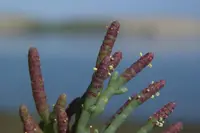
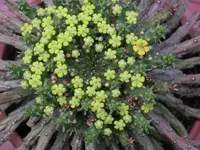
Pacific glasswort, Salicornia pacifica, is a low, succulent halophyte, meaning it is naturally adapted to salty environments. It forms dense, jointed, leafless stems that turn from green to reddish tones with age or seasonal change.
In the wild it dominates coastal salt marshes and tidal flats along the Pacific coast of North America. Its strong salt tolerance, compact growth, and clumping habit make it unusual but appealing for specialized gardens and habitat plantings.
This species is generally tough where conditions match its natural habitat, yet it can be challenging inland without consistent moisture, high light, and well-drained, saline or very sandy soil. Those who want to learn how to care for Pacific Glasswort should first ensure they can provide bright exposure and steady moisture around the roots.

Care Difficulty
Moderate Care

Light Preference
Full Sun

Water Requirements
Aquatic

Temperature Preference
Cold Hardy

Hardiness Zone
8–11

Soil Texture
Sandy, Silty, Organic-rich

Soil pH
Neutral (7.0), Alkaline (7.5–8.5)

Soil Drainage
Waterlogged tolerant

Fertilization
Minimal (feed rarely)
Scan your plant to receive care tips personalized for your specific plant
Available on iOS and Android
This coastal halophyte thrives in strong light and handles exposed, open sites well.
This species is adapted to salty, periodically wet coastal soils rather than evenly moist garden beds.
This salt marsh perennial tolerates a broad temperature range but performs best in mild coastal climates.
This coastal halophyte prefers very moist air but tolerates a wide humidity range if roots stay wet and salty.
Salicornia pacifica grows best in wet, saline, sandy media that mimics tidal flats while still allowing some aeration.
This species can adapt to container culture when the pot setup mimics a shallow, flooded shoreline zone.
Salicornia pacifica typically grows in nutrient-rich coastal habitats and needs little to no added fertilizer in cultivation.
Pruning Salicornia pacifica is simple and mainly helps maintain a tidy, compact stand.
This halophytic coastal species is more often transplanted in the landscape or salt-marsh setups than grown as a long-term container specimen.
Salicornia pacifica is commonly propagated for restoration projects and specialty edible plantings.
In mild coastal climates, Salicornia pacifica is naturally winter-hardy and needs almost no special care.

Plant Health Check
Not sure what's wrong with your plant? Check your plant's health inside the app.
This species can grow in soils with salt levels similar to seawater by actively transporting excess salt into its succulent stems and older tissues, which it later sheds. This halophytic strategy allows it to dominate high-salinity marsh zones where many other plants cannot survive.
Dense stands trap sediment and organic matter, helping tidal marshes build elevation over time. This process can increase marsh resilience to sea-level rise and creates habitat structure for invertebrates and shorebirds.
Its bright green, jointed stems gradually turn red or purple in late summer to autumn as salt accumulates and older segments age. These seasonal color changes make coastal salt marshes visually distinctive at different times of the year.

Along parts of the US Pacific coast, this species is a primary host for the endangered salt marsh harvest mouse (Reithrodontomys raviventris), providing both cover from predators and an important food source in its high-tide marsh habitat.
The succulent stems are edible and naturally salty. They are often eaten raw, lightly steamed, or sautéed, and can be pickled. Always harvest from clean, unpolluted coastal areas to avoid contamination from heavy metals or runoff.
Keep your plants happy and healthy with plant identification, disease detection, and easy care guidance.