rootless duckweed Care (Wolffia arrhiza)

Also known as: spotless watermeal
rootless duckweed

About rootless duckweed

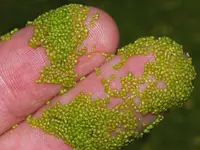
Rootless duckweed (Wolffia arrhiza) is one of the smallest flowering plants, forming tiny free-floating green grains on the water surface. Each plant looks like a smooth, lens-shaped speck with no visible roots.

It occurs naturally in still or slow-moving freshwater such as ponds, ditches, and quiet backwaters across many temperate and tropical regions. The plant grows rapidly under warm, nutrient-rich conditions and can create dense mats that cover the water.

Because it floats freely and has no roots, it is easy to start but can be tricky to control. Understanding how to care for rootless duckweed helps prevent overcrowding and maintain healthy growth in aquariums or outdoor tubs.

Main Plant Requirements

Care Difficulty

Moderate Care

Light Preference

Partial Sun

Water Requirements

Aquatic

Temperature Preference

Tropical / Frost Sensitive

Hardiness Zone

8–11

Soil Texture

Organic-rich, Silty

Soil pH

Slightly acidic (6.5–7.0), Neutral (7.0)

Soil Drainage

Waterlogged tolerant

Fertilization

Light (every 4–6 weeks)

Get Personalized Care Plan

Scan your plant to receive care tips personalized for your specific plant

Available on iOS and Android

How to Care for the rootless duckweed

This tiny floating aquatic plant needs bright but gentle light to photosynthesize efficiently without scorching.

  • Provide 3–6 hours of indirect or lightly filtered sun per day; morning sun with dappled shade in the afternoon suits rootless duckweed in most ponds and tubs.
  • Place it where tall plants, shade cloth, or overhangs soften intense midday and afternoon sun, especially in summer in warm climates.
  • Watch for pale, elongated fronds as a sign of too little light, and for yellowing or browning surfaces as an indicator of excessive direct sun exposure.

As a free-floating aquatic species, this plant relies entirely on stable, clean water rather than soil moisture.

  • Maintain a constant water level deep enough that wind or splashing does not strand Wolffia arrhiza on dry edges; even brief drying kills the tiny fronds.
  • Use still or very slow-moving water; strong currents, fountains, or frequent water changes can physically remove or stress the plant.
  • Monitor clarity and odor; sudden die-off, foul smell, or slimy buildup suggest poor water quality, nutrient overload, or low oxygen that require partial water replacement.

This species grows best in consistently mild to warm water without sudden temperature swings.

  • Aim for 70–86°F (21–30°C) water for fastest growth; shallow sun-warmed ponds and tubs usually provide this range in late spring and summer.
  • Keep it above 50°F (10°C); prolonged exposure below this slows metabolism sharply and can lead to decline or disappearance in outdoor setups.
  • Protect from frost and freezing, which are usually fatal, and from extreme heat above 95°F (35°C), which may cause rapid die-off in small, overheated containers.

This aquatic species relies on very high ambient humidity because fronds dry out quickly in air.

  • Aim for 70–100% humidity around rootless duckweed, keeping fronds on open water rather than exposed surfaces.
  • Dry household air causes shrinking, dull, or browning fronds at the waterline, and slowed multiplication.
  • Increase humidity by covering shallow trays with clear lids or plastic domes, leaving small vents for gas exchange.

This free-floating plant does not root in soil and instead relies on nutrient-rich water.

  • Use a shallow container filled with soft, organic-rich pond water or dechlorinated tap water enriched with dilute aquatic fertilizer instead of any potting mix.
  • Maintain a light suspension of fine organic particles (such as well-aged compost tea) in the water rather than a solid substrate for Wolffia arrhiza.
  • Keep water gently circulated or periodically refreshed to prevent anaerobic conditions, foul odors, and buildup of toxic byproducts at the surface layer.
  • Avoid dense mud, gravel beds, or heavy sediment layers that trap fronds, reduce light exposure, and limit access to dissolved nutrients.

This species is very suitable for container culture in shallow, still-water setups.

  • Choose wide, shallow containers so fronds spread across the surface without stacking in thick, shaded mats.
  • Use opaque or dark-colored containers to limit algae growth and help stabilize water temperature near the surface.
  • Place containers on stable, level surfaces to prevent sloshing that can strand fronds on dry edges where they desiccate.

Wolffia arrhiza grows in nutrient-rich water and usually needs only light, controlled feeding.

  • Use a dilute balanced aquatic fertilizer (for example, 10-10-10) at 1/4–1/2 strength rather than soil-based products or compost.
  • Dose small amounts every 2–4 weeks during active warm-season growth, adjusting based on water test results and algae presence.
  • Reduce or stop feeding in cooler months when growth slows, to avoid nutrient buildup and water quality issues.

Pruning for Wolffia arrhiza means thinning and harvesting rather than cutting with tools.

  • Skim off crowded surface mats during peak growth, focusing on dense or shaded areas that block gas exchange or light penetration.
  • Remove discolored or contaminated clusters to maintain water quality and reduce risk of bacterial or algal imbalance.
  • Use a fine mesh net, cup, or sieve to scoop plants gently, which limits mechanical damage and preserves healthy colonies.

This species is free floating, so management focuses on moving colonies between water bodies instead of classic repotting.

  • Plan transplanting when water temperatures are stable and mild, around spring to early summer, to reduce stress.
  • Use shallow trays or ponds with still or very slow-moving water, adding only a thin nutrient film rather than substrate.
  • Acclimate by mixing small amounts of new water into the source container before transfer, balancing temperature and chemistry.
  • Move modest volumes at first, then expand the culture once consistent green, compact growth appears in the new container.

Propagation of Wolffia arrhiza relies mainly on rapid vegetative division of the tiny floating fronds.

  • Start new cultures in late spring or summer when light levels and water temperatures favor fast cell division.
  • Place a starter portion into clean, nutrient-appropriate, non-chlorinated water under bright indirect light or filtered sun.
  • Maintain stable temperatures, typically 68–82°F, and avoid strong currents so fronds remain at the surface and in contact.
  • Seed production is rare in cultivation, so most growers expand colonies only by splitting and sharing established populations.

In cold climates, rootless duckweed is not frost hardy and needs controlled indoor conditions over winter.

  • Move outdoor cultures indoors before nights drop near 40°F, using aquaria or tubs with stable, unfrozen water.
  • Provide moderate artificial light 10–12 hours per day to maintain slow but healthy growth.
  • Keep water 64–75°F and avoid large temperature swings that can trigger die-off or rot.

Care Tips

Use Gentle Aeration

Provide very gentle water movement using an air stone set on low so surface films break up and oxygen stays available without pushing the plants to the tank edges.

Skim And Thin

Harvest a portion of the mat with a fine net 1–2 times per week to prevent overcrowding, maintain active growth, and keep light and nutrients reaching all colonies.

Rotate Culture Vessels

Keep 2–3 separate containers with slightly different nutrient levels or light intensities so a backup population is always available if one culture crashes.

Fine-Mesh Containment

Use floating rings or fine-mesh breeder boxes to confine plants to part of the surface, which simplifies cleaning, harvesting, and caring for rootless duckweed in multi-species tanks.

Pre‑Condition New Water

Prepare change water in a separate container for at least 12–24 hours, adjusting dechlorinator and temperature first, so sudden chemistry shifts do not shock the tiny fronds during refills.

Common Pests and Diseases

Watermeal weevils

This pest consists of tiny beetles whose adults and larvae feed directly on the fronds, creating thinning patches and reduced biomass in dense cultures.

Solution

Reduce weevil numbers by regularly harvesting and skimming off heavily grazed surface mats, then restarting cultures from clean stock; in outdoor ponds encourage small fish that selectively feed on the insects, and in indoor systems use fine mesh covers and quarantine new plant material to prevent introduction of contaminated stock, which is critical for consistent Wolffia arrhiza care.

Hydra contamination

This pest is a tiny freshwater predator that attaches to submerged surfaces and stings microscopic animals, indirectly competing with the plants in high-density culture systems.

Solution

Manage hydra by filtering or replacing culture water, reducing live zooplankton inputs, and temporarily moving Wolffia to clean containers; in small setups, manual cleaning of tank walls and equipment plus a short dry-out period for empty tanks helps break the hydra life cycle.

Filamentous algae overgrowth

This disease-like overgrowth involves stringy or cottony algae that tangle with the floating fronds and block light, causing decline in plant density and health.

Solution

Control algae by lowering nutrient levels through more frequent partial water changes, reducing direct strong light, and physically lifting out algae clumps with a net; starting fresh cultures from rinsed Wolffia in clean, well-balanced nutrient solution helps prevent recurrence.

Cyanobacterial blooms

This disease issue is caused by blue-green algae forming scums or films on the water surface that outcompete the plants and may release toxins harmful to aquatic life.

Solution

Address blooms by immediately removing surface scum, increasing water movement or aeration, and reducing excess nutrients from fish waste or fertilizers; in persistent cases, restart cultures using clean water and carefully controlled nutrient dosing while keeping containers out of intense direct sun to limit bloom formation.

Bacterial soft decay

This disease occurs in overcrowded, warm, nutrient-rich water where bacteria cause fronds to turn pale, soften, and disintegrate, leading to rapid loss of biomass.

Solution

Manage soft decay by promptly thinning dense mats, improving water quality with partial changes, and lowering water temperature into the recommended range; discard visibly decomposing material, rinse remaining healthy Wolffia in clean water, and re-establish cultures at lower density with good aeration to prevent stagnant conditions.

Interesting Facts

Smallest flowering plant

This species is widely recognized as one of the smallest flowering plants on Earth, with individual plants often less than 1 mm long and lacking differentiated leaves and stems in the typical sense.

Flower hidden in tissue

Its tiny flower develops inside a small cavity in the plant body (thallus), which makes the reproductive structures difficult to detect without magnification.

High protein biomass

Under suitable conditions, this species can form dense surface mats that are relatively rich in protein, which has led to research interest in using it as a potential feed or food biomass source.

Botan icon

Did you know?

This species can complete its entire life cycle floating freely on the water surface without any true roots, relying on direct nutrient and gas exchange through its simple plant body.

FAQs about rootless duckweed

Flowering is naturally rare and often microscopic in this species. Under stable, nutrient-rich, calm water and bright light, tiny blooms may appear, but vegetative growth is the main reproductive strategy, so flowering should not be expected regularly.

Grow Healthy Plants with Botan Care

Keep your plants happy and healthy with plant identification, disease detection, and easy care guidance.

Botan plant care app — identify plants on mobile

Explore More Plants