Mueller's saltbush Care (Atriplex muelleri)

Also known as: Vaalbrak Saltbush
Mueller's saltbush

About Mueller's saltbush

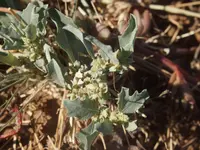
Mueller's saltbush (Atriplex muelleri) is a small, short-lived shrub or subshrub in the amaranth family, adapted to dry, often salty environments. It typically forms low, bushy clumps with grey-green foliage that helps reduce water loss in hot, exposed sites.

This species is native to arid and semi-arid regions of Australia, where it colonizes sandy or saline soils and helps stabilize fragile ground. It is valued in restoration and low-maintenance landscapes because it tolerates drought, poor soils, and coastal conditions.

In cultivation, it prefers full sun, sharply drained soil, and only occasional moisture once established. These traits make it relatively straightforward to care for Mueller's saltbush in suitable dry or coastal gardens.

Main Plant Requirements

Care Difficulty

Easy Care

Light Preference

Full Sun

Water Requirements

Low Water

Temperature Preference

Warm Climate

Hardiness Zone

9–11

Soil Texture

Sandy, Loamy, Rocky

Soil pH

Neutral (7.0), Slightly alkaline (7.0–7.5)

Soil Drainage

Well-drained

Fertilization

Minimal (feed rarely)

Get Personalized Care Plan

Scan your plant to receive care tips personalized for your specific plant

Available on iOS and Android

How to Care for the Mueller's saltbush

This coastal shrub thrives with strong light and handles sun better than shade when established.

  • Provide 6–8 hours of direct sun daily; morning and midday sun are ideal, with light afternoon shade in very hot inland sites.
  • Young Mueller's saltbush plants benefit from some filtered light in their first summer to reduce leaf scorch and moisture stress.
  • In dense partial shade, plants become leggy and pale; move or prune surrounding vegetation to restore sun exposure, especially in spring.

This species is drought-tolerant once established and prefers drier conditions to frequent watering.

  • Allow the top 3–5 cm of soil to dry between waterings; in sandy or coastal soils this often means long gaps with no irrigation.
  • In the first growing season, water deeply when lower leaves start to lose turgor or curl slightly, then let the soil dry again.
  • Yellowing, soft stems and a sour smell indicate overwatering and poor drainage; crisp, browning leaf edges and slow growth signal prolonged dryness.

This salt-tolerant shrub accepts a wide temperature range but grows fastest in mild, frost-free conditions.

  • Aim for active growth in 65–80°F (18–27°C), when shoot and root development are most efficient for Atriplex muelleri.
  • Mature plants usually tolerate down to about 25°F (−4°C), but repeated hard frosts can damage young shoots and tips.
  • Heat tolerance is good up to 95–100°F (35–38°C) if soil is not waterlogged; combine full sun with airflow to limit heat stress in midsummer.

This coastal species tolerates a wide humidity range and usually does not need special humidity management.

This halophytic shrub prefers lean, fast-draining mineral soils that resist waterlogging.

  • Use sandy or sandy-loam soil with low to moderate organic matter so roots stay aerated and do not become soft or weak.
  • Aim for slightly alkaline to strongly alkaline pH (about 7.5–9.0), reflecting the native coastal and saline habitats of Atriplex muelleri.
  • Blend coarse sand or fine gravel into standard sandy topsoil to improve drainage and prevent standing water around the root zone.
  • Avoid compacted clay, peat-heavy mixes, or any substrate that stays wet for more than 1 day after irrigation.

This species can be grown in containers if the setup prioritizes sharp drainage and root aeration.

  • Choose a squat, wide container to accommodate the spreading root system and reduce tipping in windy, exposed sites.
  • Use a rigid material such as clay or thick plastic that stays stable when the plant is top-heavy in dry, coarse media.
  • Elevate the pot slightly on feet or bricks so drainage holes stay clear and salty runoff does not reabsorb into the root zone.

This tough coastal shrub needs only modest feeding, especially when grown in poor, sandy soils.

  • Apply a light dressing of compost or a low-rate slow-release balanced NPK fertilizer once in early spring to support new growth.
  • Use a balanced NPK formulation around 5-5-5 to 10-10-10, applied at half the label rate for Mueller's saltbush in lean soils.
  • Avoid fertilizing in late fall and winter, when growth slows and excess nutrients can lead to weak, frost-sensitive tissue.
  • In containers, use a diluted liquid balanced fertilizer at 1/4–1/2 strength every 4–6 weeks during the main growing season.

Light, periodic pruning helps keep Atriplex muelleri compact and healthy.

  • Prune in late winter or early spring before vigorous new growth starts, avoiding very wet or freezing conditions.
  • Remove dead, damaged, or crossing stems first to improve airflow and reduce disease risk.
  • Shorten overly long or leggy shoots to maintain a bushy, rounded shape and encourage denser branching.
  • Use clean, sharp hand pruners, making angled cuts just above a healthy bud or side branch.

This species is more often grown in the ground, where it dislikes frequent disturbance once established.

  • Transplant young plants in early spring or early fall, allowing mild conditions for root establishment before temperature extremes.
  • Choose a sunny site with very well-drained, sandy or gritty soil, matching the existing soil level at planting.
  • Water thoroughly after transplanting, then reduce watering as roots anchor, keeping the root zone slightly moist but never waterlogged.
  • For container-grown plants showing circling roots or slowed growth, shift to a pot only 2–5 cm wider and handle roots gently to limit shock.

Atriplex muelleri is commonly propagated by seed and softwood cuttings under suitable conditions.

  • Sow fresh seed in late winter to early spring in a free-draining, sandy mix, barely covering the seeds and keeping them just moist.
  • Provide bright light, good airflow, and temperatures around 65–75°F to promote steady, even germination.
  • Take softwood cuttings in late spring or early summer, using non-flowering shoots 7–10 cm long with a few leaves retained.
  • Insert cuttings into a coarse, well-drained medium, optionally using rooting hormone, and maintain high humidity until roots form.

This plant is relatively tolerant of mild coastal winters but can suffer in prolonged hard frost.

  • In regions with frost below about 20°F, consider it short-lived or provide sheltered microclimates near walls or larger shrubs.
  • Mulch lightly around the root zone with gravel or coarse organic material to stabilize soil temperature while keeping the crown free.
  • Container plants in cold climates can be moved to an unheated, bright, frost-free space for the coldest weeks.

Care Tips

Salt-tolerant placement

Use Mueller's saltbush as a front-line plant in coastal or roadside beds where soil or spray has elevated salinity, which reduces competition from less salt-tolerant species and helps the plant thrive.

Wind and spray buffer

Plant it as a low hedge or in staggered rows to act as a windbreak and salt-spray filter for more sensitive plants positioned behind it.

Targeted form pruning

Lightly tip-prune new growth once or twice a year to maintain a compact, bushy form and prevent the plant from becoming too open or leggy in exposed sites.

Soil salinity monitoring

In non-coastal gardens, avoid frequent use of high-salt fertilizers and check for white crusting on the soil surface, flushing the area with plain water if salts accumulate excessively even though the plant is salt-tolerant.

Habitat support planting

Include a mix of native grasses and small shrubs around it to create a more stable microhabitat, which improves wind protection, soil life, and overall resilience when growing Mueller's saltbush in open, dry landscapes.

Common Pests and Diseases

Sap-sucking scale

This pest attaches to young stems and leaves, feeding on plant sap and excreting sticky honeydew that can lead to sooty mold. Symptoms include small, dome-shaped bumps on stems, reduced vigor, and yellowing foliage.

Solution

Physically remove scale with a gloved hand, soft brush, or cotton swab dipped in alcohol, then hose the plant down to remove residues. For heavier infestations, apply a light horticultural oil or insecticidal soap, ensuring thorough coverage of stems and leaf undersides, and repeat after 7–10 days if needed.

Native leaf-chewing caterpillars

These insects feed on the foliage, leaving irregular holes or shredded leaf margins, especially on young, tender growth. Plants in coastal and arid landscapes can experience noticeable but often patchy defoliation.

Solution

Hand-pick caterpillars where practical and prune heavily damaged shoots. If damage is persistent and severe, use a biological control such as Bacillus thuringiensis (Bt) applied in the evening to foliage, targeting young larvae while minimizing impact on beneficial insects.

Leaf spot

This disease produces small tan to brown lesions on leaves that may coalesce under humid conditions, leading to premature leaf drop. Symptoms include spotting that often starts on lower, denser growth where moisture lingers longer.

Solution

Remove and discard affected leaves and any plant debris around the base to reduce inoculum. Improve airflow by thinning crowded stems and avoid overhead watering; if conditions remain wet and spotting progresses, apply a copper-based fungicide according to label directions.

Powdery mildew

This disease appears as a fine white or gray powder on leaves and young stems, which can cause leaf distortion and reduced growth. Symptoms include a dusty coating that is most visible on upper leaf surfaces in shaded or crowded plantings.

Solution

Increase light and airflow around the plant, avoid overhead irrigation, and remove heavily affected leaves. For ongoing issues, use sulfur or potassium bicarbonate sprays labeled for powdery mildew, applying on dry foliage and repeating at intervals recommended on the product label.

Interesting Facts

Halophyte leaf bladders

This species has specialized bladder cells on its leaf surfaces that accumulate excess salt, allowing the plant to tolerate saline soils that would damage most other plants.

Soil salinity engineer

By sequestering and eventually shedding salt from its foliage, this plant can gradually reduce surface soil salinity and create slightly more favorable conditions for less salt-tolerant species nearby.

Native coastal specialist

It is naturally restricted to coastal and near-coastal habitats in southern Australia, where it is adapted to sandy, nutrient-poor soils, high light, and frequent salt-laden winds.

Botan icon

Did you know?

The seeds of this species show facultative dormancy, meaning some can germinate quickly after suitable rain while others remain dormant, spreading germination over time and helping the population persist through unpredictable coastal climates.

FAQs about Mueller's saltbush

Yes, this species grows readily from seed. Sow in late winter or early spring, barely covering the seed. Germination is improved by good light, warmth, and keeping the substrate just slightly moist, not wet, during establishment.

Grow Healthy Plants with Botan Care

Keep your plants happy and healthy with plant identification, disease detection, and easy care guidance.

Botan plant care app — identify plants on mobile

Explore More Plants