Use Vertical Support
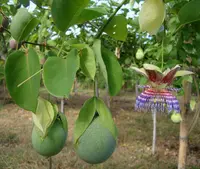
Install a sturdy trellis or mesh 1.5–2 m tall before planting so vines can climb freely, which improves air flow around foliage and keeps fruits cleaner and easier to harvest.


Mexican sour gherkin, Melothria scabra, is a warm-season vining cucumber relative grown for its tiny, grape-sized fruits with a tangy, cucumber-like taste. The plant forms slender climbing or trailing stems with small, ivy-like leaves and delicate yellow flowers.
It is native to Mexico and Central America, where it grows in warm, sunny conditions with a long frost-free season. The vines are vigorous yet generally easy to manage, which makes it straightforward to care for Mexican Sour Gherkin in home gardens.
This species prefers full sun, moderate moisture, and well-drained, fertile soil, and it typically resists many common cucumber pests and diseases, making it suitable for beginners.

Care Difficulty
Moderate Care

Light Preference
Full Sun

Water Requirements
Regular Water

Temperature Preference
Tropical / Frost Sensitive

Hardiness Zone
7–11

Soil Texture
Sandy, Loamy, Organic-rich

Soil pH
Acidic (5.5–6.5), Slightly acidic (6.5–7.0)

Soil Drainage
Moist but well-drained

Fertilization
Moderate (every 2–4 weeks)
Scan your plant to receive care tips personalized for your specific plant
Available on iOS and Android
This vining cucumber relative thrives in bright outdoor conditions with balanced sun exposure.
This plant prefers consistently moist but not saturated soil throughout the growing season.
This warm-season vine grows best in stable, frost-free conditions.
Melothria scabra grows well in typical outdoor humidity and rarely needs special humidity management.
This species prefers loose, fertile, well-drained soil that stays evenly moist without waterlogging.
This vine is well suited to container growing when given stable support and enough root space.
Melothria scabra responds well to modest feeding during its warm, active growing season.
Melothria scabra benefits from light, targeted pruning to manage vigor and fruiting space.
This vining species is usually grown as an annual in beds or large containers and prefers careful transplanting.
This plant is most commonly propagated from seed rather than vegetative methods.
Melothria scabra is typically grown as a warm-season annual and has low frost tolerance.

Plant Health Check
Not sure what's wrong with your plant? Check your plant's health inside the app.
The fruits closely resemble tiny watermelons but are botanically more similar to cucumbers and stay about grape-sized, with a sour, cucumber-like taste that has made them popular in specialty cuisine.
This species is native to Mexico and Central America, where it grows as a scrambling vine in dry forests and thickets, and has been cultivated for a long time as a traditional food crop.
Flowering and fruiting are influenced by day length, with plants often producing more reliably and heavily in regions that provide a long, warm growing season with stable summer photoperiods.

Melothria scabra has escaped cultivation in some warm regions and can naturalize along fences and hedgerows, where its small fruits are eaten and dispersed by birds, helping the vine spread beyond garden settings.
This species is a twining vine that naturally climbs using thin tendrils. It can also sprawl across the ground if no support is provided. Given a trellis or netting, it will quickly cover vertical structures with foliage and fruit.
Keep your plants happy and healthy with plant identification, disease detection, and easy care guidance.