Jerusalem artichoke Care (Helianthus tuberosus)

Also known as: sunchoke, Sunroot, Earth apple
Jerusalem artichoke

About Jerusalem artichoke

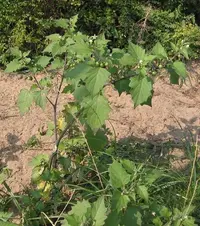
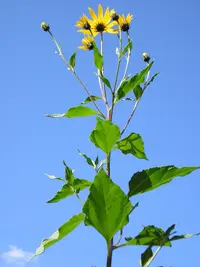
Jerusalem artichoke, Helianthus tuberosus, is a perennial sunflower grown mainly for its edible, knobbly underground tubers. Above ground, it forms tall, upright stems with coarse leaves and bright yellow daisy-like flowers.

The plant is native to central North America but is now cultivated and naturalized in many temperate regions. It spreads readily by tubers and can become vigorous if not managed.

This species is generally considered easy to grow, with a tolerant nature toward different soils and weather conditions. Understanding how to care for Jerusalem artichoke starts with knowing it prefers full sun, moderately moist soil, and room to spread.

Main Plant Requirements

Care Difficulty

Easy Care

Light Preference

Full Sun

Water Requirements

Regular Water

Temperature Preference

Cold Hardy

Hardiness Zone

3–9

Soil Texture

Sandy, Loamy, Organic-rich

Soil pH

Acidic (5.5–6.5), Slightly acidic (6.5–7.0)

Soil Drainage

Moist but well-drained

Fertilization

Minimal (feed rarely)

Get Personalized Care Plan

Scan your plant to receive care tips personalized for your specific plant

Available on iOS and Android

How to Care for the Jerusalem artichoke

This species prefers abundant direct sun to build strong stems and tubers.

  • Provide 6–8 hours of direct sunlight daily; full sun all day gives the best yield for Jerusalem artichoke in most temperate climates.
  • Plant where it receives morning sun and can tolerate strong afternoon sun; it will grow in light partial shade but may become taller, weaker, and produce fewer tubers.
  • Avoid dense shade and heavy competition from trees or buildings; in cloudy or short-day seasons, choose the brightest, least-obstructed site available.

This plant prefers evenly moist but not saturated soil during its main growth period.

  • Water when the top 3–5 cm of soil feel dry, applying a deep soak that reaches the tuber zone rather than frequent light splashes.
  • Use well-drained, loose soil for Helianthus tuberosus; standing water, sour smell, or soft, rotting stems indicate overwatering and poor aeration.
  • During peak summer growth, monitor more often in hot, windy weather; as foliage yellows in late season, gradually reduce watering to allow tubers to cure.

This hardy perennial tolerates a wide temperature range once established.

  • Optimal growth occurs around 65–80°F (18–27°C), supporting rapid stem elongation and tuber development in late spring and summer.
  • The tops are damaged by hard frost below about 28°F (-2°C), but dormant tubers in the ground usually survive winter down to 0°F (-18°C) or slightly lower with soil cover.
  • In hot spells above 90°F (32°C), growth may slow and leaves can wilt midday; consistent soil moisture and a mulch layer help buffer heat stress.

Humidity is not a significant factor for Helianthus tuberosus in typical outdoor conditions.

Soil conditions strongly affect tuber size and health in Helianthus tuberosus.

  • Use loose, deep, sandy-loam soil that is stone-free so tubers can expand without deforming.
  • Ensure fast drainage; mix in coarse sand and compost to prevent waterlogging and compaction.
  • Aim for slightly acidic to neutral pH around 6.0–7.2, avoiding strongly acidic or alkaline sites.
  • Improve aeration by working in well-rotted compost and avoiding heavy, unamended clay that stays wet.

This tall, vigorous species is only moderately suitable for containers and needs careful setup for stability.

  • Choose a very large, heavy container at least 40–50 cm deep to support tall stems and tuber formation.
  • Use a weighty, mineral-rich mix so the pot does not tip over in strong wind as the plant gains height.
  • Position the container in a sheltered, full-sun spot and, if needed, brace it against a wall or stake the pot itself for stability.

Helianthus tuberosus tolerates poor soils but responds well to moderate, balanced nutrition.

  • Before planting, work in compost or well-rotted manure to improve soil structure and baseline nutrients.
  • During active growth, apply a balanced slow-release or liquid fertilizer (around 10-10-10 NPK) every 4–6 weeks.
  • Use half-strength liquid feeds to limit excessive leafy growth and support tuber development in Jerusalem artichoke.
  • Stop feeding 4–6 weeks before expected frost to allow stems and tubers to mature.

Pruning Helianthus tuberosus is simple and mainly focused on managing height and removing spent growth.

  • In late winter or very early spring, cut back dead stems to ground level using clean, sharp pruners.
  • During summer, pinch or tip tall stems once to encourage branching and sturdier growth.
  • Remove damaged, weak, or crossing stems to improve airflow and reduce disease risk.
  • Deadhead spent flowers if seed dispersal or self-sowing is not desired.

Jerusalem artichoke is usually grown in-ground, so focus on thoughtful site preparation and division-based transplanting.

  • Transplant or divide clumps in early spring or late fall when plants are dormant and soil is workable.
  • Look for crowded stands, declining vigor, or many small tubers as signs the patch benefits from lifting and spacing.
  • Dig widely to lift tubers with minimal damage, then separate healthy, firm pieces with at least 1–2 buds each.
  • Replant tubers at similar depth in loose, well-drained soil, water thoroughly, and keep evenly moist until established.

Helianthus tuberosus is most commonly propagated by tuber division rather than by seed.

  • Divide tubers in early spring or late fall when the plant is dormant and tops are cut back.
  • Select firm, disease-free tubers and cut large ones into sections, each with at least 1–2 buds or “eyes.”
  • Allow cut surfaces to dry for a few hours, then plant 5–10 cm deep in loose, well-drained soil.
  • Space pieces 30–45 cm apart, keep soil moderately moist, and provide full sun for strong shoot development.

Helianthus tuberosus is cold hardy and usually needs minimal winter care in the ground.

  • After the first hard frost, cut back blackened stems to just above soil level if tidy appearance is desired.
  • Apply a 5–10 cm layer of straw or leaf mulch to insulate tubers and stabilize soil temperature.
  • In very cold regions, container-grown plants benefit from moving pots into an unheated but frost-free garage or shed.

Care Tips

Install sturdy supports

Set up strong stakes or a wire fence on the windy side before stems reach 30–40 cm tall, then tie plants loosely as they grow to prevent lodging and snapped stalks later in the season.

Use root barriers

Sink solid edging or buried boards 30–40 cm deep around beds to contain spreading tubers and make future lifting, dividing, and replanting more controlled and efficient when growing Jerusalem artichoke.

Stagger harvest timing

Dig only a portion of tubers in late fall and leave the rest in the ground through winter as natural cold storage, then harvest remaining tubers just before shoots elongate in spring.

Rotate planting sites

Move plantings to a new sunny area every 3–4 years to reduce soil-borne disease buildup and to avoid nutrient depletion in the upper 20–30 cm of soil.

Monitor for borers

Inspect stems mid to late summer for wilting tops or frass (sawdust-like material), then cut out affected stalk sections and destroy them to reduce stem borer populations before they overwinter in debris.

Common Pests and Diseases

White mold

This disease is caused by the fungus Sclerotinia sclerotiorum, leading to stem rot, wilt, and a white cottony growth near the soil line. Symptoms include sudden wilting, stem collapse, and formation of hard black sclerotia inside or on stems and tubers.

Solution

Remove and destroy infected plants and nearby plant debris, and avoid replanting Jerusalem artichoke or related crops in the same spot for several years. Improve drainage and spacing, avoid overhead watering, and in commercial or large plantings consider labeled biological or fungicidal seed or tuber treatments as part of Helianthus tuberosus care instructions.

Rust

This disease produces small, orange-brown pustules on the underside of leaves, often with yellowing on the upper surface. Symptoms include premature leaf drop and reduced vigor, especially in humid conditions.

Solution

Remove and discard heavily infected leaves and plant debris to reduce spore spread. Grow plants with good spacing, water at the base, and if rust is severe and recurring, use a labeled sulfur or other rust-specific fungicide applied according to product directions.

Powdery mildew

This disease appears as white, powdery patches on leaves and stems, often starting on older foliage. Symptoms include distorted growth, reduced photosynthesis, and earlier leaf senescence later in the season.

Solution

Increase air circulation with proper spacing, avoid overhead watering in the evening, and remove heavily affected leaves to slow spread. In persistent cases, apply a labeled powdery mildew control such as potassium bicarbonate, sulfur, or horticultural oil, making sure to spray in cool, shaded conditions to avoid leaf burn.

Sunflower moth

These insects are small moth larvae (caterpillars) that tunnel into flower heads and developing seeds, leaving frass and webbing. Damage can reduce flower quality and seed production, though plants often survive.

Solution

Handpick and destroy visible caterpillars and remove heavily infested flower heads before larvae complete development. Encourage natural predators, use fine mesh netting over flower heads where practical, and in larger plantings monitor flowering heads and apply a targeted biological insecticide containing Bacillus thuringiensis (Bt) when young larvae first appear.

Wireworms

These pests are the larval stage of click beetles and feed on underground parts, boring into tubers and sometimes young stems. Symptoms include stunted growth, wilting in dry weather, and narrow tunnels in harvested tubers that reduce quality and storability.

Solution

Rotate away from sod or grassy areas, since wireworms build up in long-term grass, and avoid planting tubers into newly turned pasture or lawn. Use traps made from cut potato pieces buried shallowly and removed with larvae, cultivate soil before planting to expose larvae to predators, and in heavy infestations consider soil-applied biological controls such as beneficial nematodes labeled for wireworm management.

Interesting Facts

Edible underground tubers

This species forms starchy underground tubers that are botanically modified stems, not roots, and are eaten as a vegetable commonly called Jerusalem artichoke or sunchoke.

Late-season sunflower relative

Although related to the common sunflower, it typically flowers later in the season, often from late summer into fall, providing nectar and pollen when many other garden flowers have finished.

High in inulin fiber

Its tubers store energy mainly as inulin, a type of soluble fiber that human digestive enzymes do not break down, which is why the tubers have a lower impact on blood glucose than many other starchy vegetables.

Botan icon

Did you know?

The plant was grown by Indigenous peoples of North America long before European contact and became so valued as a hardy food crop that early European settlers in the 17th century quickly adopted and spread it across Europe as a versatile root vegetable and livestock feed.

FAQs about Jerusalem artichoke

This species spreads strongly through underground tubers and can become difficult to remove if not contained. Use deep edging, raised beds, or containers and harvest tubers thoroughly each year to limit unwanted expansion and maintain control.

Grow Healthy Plants with Botan Care

Keep your plants happy and healthy with plant identification, disease detection, and easy care guidance.


Botan plant care app — identify plants on mobile

Explore More Plants