Sturdy trellis design
Install a rigid trellis or tensioned wire system at least 3–6 m high and fix the base securely, as mature vines become heavy and need stable support to avoid stem breakage and wind damage.

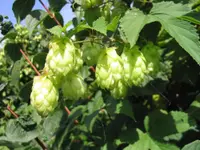
Hop, Humulus lupulus, is a fast-growing perennial vine known for its cone-like flowers used to flavor and stabilize beer. It climbs by twining stems that can quickly cover trellises, fences, or wires, with coarse leaves that create dense summer foliage.
This species is native to Europe and western Asia but is now widely cultivated in temperate regions. It prefers sun, consistent moisture, and well-drained soil, and its vigorous growth makes it rewarding but sometimes demanding to manage.
Understanding how to care for hop mainly involves giving it strong support and enough root space, which helps keep this energetic plant healthy and under control.

Care Difficulty
Moderate Care

Light Preference
Full Sun

Water Requirements
Regular Water

Temperature Preference
Cool Climate

Hardiness Zone
4–8

Soil Texture
Loamy, Sandy, Organic-rich

Soil pH
Acidic (5.5–6.5), Slightly acidic (6.5–7.0)

Soil Drainage
Moist but well-drained

Fertilization
Moderate (every 2–4 weeks)
Scan your plant to receive care tips personalized for your specific plant
Available on iOS and Android
This vigorous climber needs strong light to flower and produce cones well.
This fast-growing perennial needs consistent moisture in well-drained soil to support rapid vine and cone development.
This temperate perennial prefers cool to warm summers and cold winters with a distinct dormant period.
This species grows well in typical outdoor humidity but benefits from moderately moist air in dry regions.
Humulus lupulus prefers deep, loose, moisture-retentive but free-draining soil for strong vine and rhizome development.
This species can be grown in large containers if root space, drainage, and stability are carefully managed.
Strong growers like hop respond well to modest, targeted feeding during the active season.
Pruning supports vigorous, manageable Humulus lupulus growth and good cone production.
This vigorous climber is usually grown in-ground, so transplanting established crowns is more relevant than frequent repotting.
Humulus lupulus is commonly propagated by crown division, rhizome cuttings, and occasionally seed for breeding.
This herbaceous perennial is cold hardy in much of the US and usually needs minimal winter care outdoors.

Plant Health Check
Not sure what's wrong with your plant? Check your plant's health inside the app.
The female cones of this species produce alpha and beta acids such as humulone and lupulone, which give beer its characteristic bitterness and also help inhibit microbial growth during brewing.
Its cone scales are covered in tiny yellow lupulin glands that synthesize resins and aromatic oils, and these compounds degrade quickly under strong light, which is why dried cones are stored cool and dark for brewing quality.
The bines of this plant are bines, not true vines, and they consistently twine clockwise as they climb supports, using stiff hairs along the stem to grip rather than tendrils or adhesive pads.

The hop is dioecious, meaning individual plants are either male or female, and commercial hop yards are usually planted almost entirely with female clones so that cone production and brewing quality remain uniform and seed formation is minimized.
Brown leaves usually come from drought stress, excess heat, fertilizer burn, or wind scorch. Check soil moisture, avoid letting roots dry out completely, reduce strong afternoon sun exposure, and stop high-salt fertilizers until new, healthy foliage appears.
Keep your plants happy and healthy with plant identification, disease detection, and easy care guidance.