erect pricklypear Care (Opuntia dillenii)

Also known as: Pipestem Prickly-Pear, Dillen's Prickly Pear, Spiny Pest-Pear
erect pricklypear

About erect pricklypear

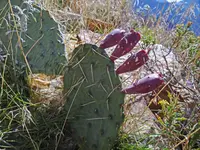
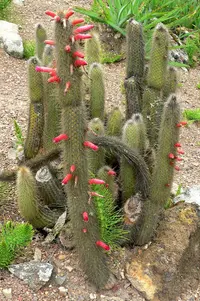
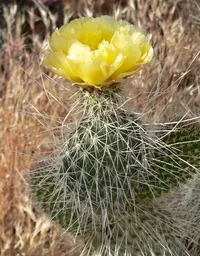
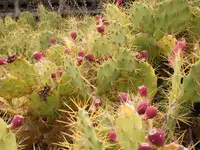
Opuntia dillenii, commonly called erect pricklypear, is a branching cactus with upright pads, sharp spines, and yellow to orange flowers followed by reddish fruits. It typically forms dense, shrubby clumps and can spread over time, especially in warm, coastal or arid regions.

This species is native to tropical and subtropical areas, and in some places it behaves as an invasive plant. Thick, water-storing pads and a strong root system make it very drought tolerant but difficult to handle without protection.

In general, it prefers strong light, low to moderate moisture, and very well-drained, sandy or rocky soil. Understanding these natural conditions helps guide how to care for erect pricklypear in gardens or containers.

Main Plant Requirements

Care Difficulty

Easy Care

Light Preference

Full Sun

Water Requirements

Low Water

Temperature Preference

Tropical / Frost Sensitive

Hardiness Zone

10–12

Soil Texture

Sandy, Loamy, Rocky

Soil pH

Slightly acidic (6.5–7.0), Slightly alkaline (7.0–7.5)

Soil Drainage

Well-drained

Fertilization

Minimal (feed rarely)

Get Personalized Care Plan

Scan your plant to receive care tips personalized for your specific plant

Available on iOS and Android

How to Care for the erect pricklypear

This cactus thrives in strong, direct sun typical of arid and coastal habitats.

  • Provide 6–10 hours of direct sunlight daily; full southern or western exposure suits erect pricklypear in most US climates.
  • In very hot regions, give light afternoon shade or filtered sun during peak summer to reduce pad scorching and sunburned patches.
  • Young plants benefit from gradual sun exposure over 7–10 days, especially when moved from shade or greenhouse to open ground.

This drought-adapted cactus prefers infrequent, deep watering and very fast drainage.

  • Allow the top 3–5 cm of soil to dry completely before watering; in sandy ground this often means long gaps between soakings.
  • During active growth in warm months, water thoroughly, then let soil dry; in cool seasons, reduce to occasional light watering only if pads begin to wrinkle.
  • Use sharply draining, gritty soil; yellowing, mushy pads indicate overwatering and poor drainage, while thin, shriveled pads signal prolonged dryness.

This species handles substantial heat but only light, brief cold.

  • Optimal growth occurs around 70–90°F (21–32°C); plants stay physiologically active and produce new pads most reliably in this range.
  • Mature plants may tolerate short dips near 28–32°F (-2–0°C), but repeated freezes damage pads and can kill roots in wet soil.
  • In hot climates above 100°F (38°C), airflow and dry soil help prevent heat stress, especially during extended summer heatwaves.

This cactus handles typical indoor humidity well and rarely needs special humidity management.

This cactus needs very fast-draining, mineral-heavy soil to prevent root rot.

  • Use a sandy, gritty mix such as 50–60% cactus potting mix blended with coarse sand and 20–30% pumice or perlite for aeration.
  • Aim for slightly acidic to slightly alkaline pH, roughly 6.0–7.5, which Opuntia dillenii tolerates well.
  • Avoid peat-heavy, dense, or clay-rich substrates that hold water and compress around the roots.
  • For in-ground planting, amend native soil with coarse sand and gravel to improve drainage on slopes or raised beds.

This species is well suited to container growing outdoors in sunny, dry locations.

  • Choose a wide, shallow pot that gives room for spreading pads while keeping the root zone relatively compact for stability.
  • Select heavy terracotta or concrete containers to reduce tipping as pads grow and catch wind.
  • Raise the pot on feet or bricks so drainage holes stay clear and water exits quickly after rain or irrigation.

This cactus needs only light feeding, as many erect pricklypear plants grow well in lean soils.

  • Use a balanced, low-nitrogen cactus fertilizer or diluted 10-10-10 at 1/2–1/4 strength.
  • Feed once in late spring and again in mid-summer during active growth only.
  • Avoid compost-rich or high-organic mixes that stay wet, which can cause rot.
  • Do not fertilize in fall and winter when growth is very slow or dormant.

Pruning Opuntia dillenii is mainly for safety, shape control, and plant health.

  • Best time is late winter to early spring, before strong new growth starts.
  • Remove dead, diseased, storm-damaged, or rubbing pads using long-handled loppers or a sharp knife.
  • Thin crowded segments at the base to improve light, airflow, and a stable structure.
  • Cut at the joint between pads; avoid shredding tissue to reduce infection risk.

This species is most often transplanted outdoors and only occasionally grown in containers.

  • Transplant or up-pot in late spring once nights stay above 50°F and growth resumes.
  • Look for roots circling the pot, water running straight through, or stunted growth as signs to move it.
  • Handle pads with tongs or folded newspaper, keeping the root ball as intact as possible.
  • Replant into a very fast-draining, gritty mix and keep soil slightly dry for 7–10 days to limit root stress.

New plants are most commonly produced from pad cuttings rather than seed for Opuntia dillenii.

  • Take healthy, mature pads in late spring or early summer and let cut ends callus 5–10 days.
  • Set pads upright in very gritty, barely moist soil and keep warmth around 70–80°F with bright light.
  • Water sparingly until firm resistance indicates rooting, then increase watering slightly.
  • Seeds need warmth, bright light, and a sharply drained mix; germination may be slow and uneven.

This cactus is only moderately frost tolerant and benefits from basic winter precautions in cooler regions.

  • In-ground plants in mild climates tolerate brief drops near 25°F if soil is very well drained.
  • Apply a light gravel or coarse sand mulch to keep the root zone drier, not warmer.
  • Move containers under cover or indoors to a bright, cool, very dry spot before hard frost.
  • Avoid winter watering except to prevent severe pad shriveling, then use only a small amount.

Care Tips

Use gravel collar

Create a 5–8 cm wide ring of coarse gravel or small stones around the base to keep pads dry at soil level, reduce rot risk, and discourage weeds close to the cladodes.

Pad orientation

When planting or repotting, orient the broad faces of the pads north–south so both sides receive balanced light, which helps prevent lopsided growth and pad warping.

Stabilize new pads

Support freshly developing pads with a short, soft tie to a stake or adjacent mature pad for a few weeks to prevent wind damage or breakage at the joint while tissue is still tender.

Dry handling method

Handle pads only with rigid tongs or several layers of folded newspaper, and keep a roll of duct tape or packing tape nearby to lift out fine glochids from skin if accidental contact occurs while caring for erect pricklypear.

Winter rain protection

In regions with cool, wet winters, place containers under an eave or use a simple overhead rain cover of clear polycarbonate or plastic sheeting to keep the substrate mostly dry and minimize cold-related pad lesions.

Common Pests and Diseases

Cochineal scale

This insect pest forms dense white cottony patches on pads and feeds on plant sap, causing yellowing and weakening of the cladodes. Heavy infestations can stunt growth and make the plant more prone to other stressors.

Solution

Prune off heavily infested pads and dispose of them in the trash, then spray remaining pads with a strong stream of water to dislodge insects and cottony masses. For persistent cases, spot-treat colonies with cotton swabs dipped in 70% isopropyl alcohol or use an insecticidal soap labeled for cacti, repeating every 7–10 days until new cottony growth stops.

Opuntia mealybugs

These insects hide in pad joints and on roots, leaving white, fuzzy deposits and sticky honeydew that can attract sooty mold. Infested plants may show reduced vigor and gradual decline.

Solution

Physically remove visible mealybugs with a cotton swab dipped in 70% isopropyl alcohol and rinse crevices with a firm stream of water. For larger populations, use an insecticidal soap or horticultural oil applied in the cool part of the day, and quarantine affected plants to prevent spread while monitoring new growth closely as part of Opuntia dillenii care instructions.

Pad spot (cactus scab)

This disease causes rough, corky, brown to gray lesions on pads, often following mechanical injury or prolonged wetness. Symptoms include superficial scarring that can deform pads over time but usually does not kill the plant.

Solution

Trim off severely disfigured or cracked pads using sterile tools and avoid overhead watering so pads dry quickly after rain or irrigation. Improve air circulation around the plant, keep pads free from prolonged contact with wet soil or mulch, and avoid wounding the tissue to reduce new infections.

Phyllosticta pad blight

This disease produces small, dark, sunken spots with pale centers on pads that can merge into larger lesions, sometimes with a yellow halo. In humid or wet conditions, affected tissue may crack and weaken the pad structure.

Solution

Remove and discard infected pads as soon as spots are noticed, disinfecting cutting tools between cuts. Reduce leaf wetness by watering at the soil level, increase spacing and airflow around the plant, and in severe outdoor cases consider a copper-based fungicide labeled for cacti, applied according to label directions.

Cactus longhorn beetle

This pest bores into pads and stems, with adults and larvae feeding internally and causing collapse or breakage of affected sections. Symptoms include oozing wounds, frass (chewed plant material), and sudden pad wilting or death.

Solution

Inspect plants regularly at dusk and early night to hand-pick adult beetles and destroy them before they lay eggs. Remove and discard any bored or collapsing pads well below the damage point, then reduce nearby weed cover and debris where beetles shelter, and avoid overwatering or overfertilizing, which can attract more feeding activity.

Interesting Facts

Color-changing new pads

Young pads are often bright reddish-purple before they mature to green, a pigmentation linked to protective anthocyanins that can help reduce light stress in strong sun.

Specialist cactus pest host

In coastal and tropical regions, this species commonly hosts cochineal scale insects (Dactylopius spp.), whose white cottony colonies can heavily cover the pads and are monitored as part of Opuntia dillenii care in invaded habitats.

Aggressive coastal invader

Outside its native range, especially on sandy coasts and dunes, it forms dense, spiny thickets that outcompete local vegetation and make land access difficult, so it is considered a serious invasive plant in several warm regions.

Botan icon

Did you know?

In parts of India, South Africa, and oceanic islands, dense stands of this cactus have required organized mechanical removal and long-term biological control programs, because its spiny, interlocking pads can create nearly impenetrable barriers over large coastal areas.

FAQs about erect pricklypear

Lack of blooms usually comes from insufficient light, plants that are still immature, or excessive nitrogen fertilizer. Cold winter rest, strong sun, and lean, well-drained soil encourage flower production in this species.

Grow Healthy Plants with Botan Care

Keep your plants happy and healthy with plant identification, disease detection, and easy care guidance.

Botan plant care app — identify plants on mobile

Explore More Plants