Coryphantha delaetiana Care

Coryphantha delaetiana

About Coryphantha delaetiana

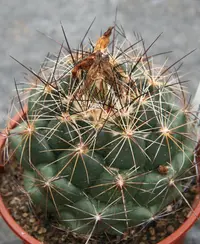
Coryphantha delaetiana is a small, globular cactus known for its neat pattern of tubercles and short, white to yellowish spines. Mature plants may produce yellow flowers at the crown, adding seasonal interest despite the compact size.

This species is native to arid regions of Mexico, where it grows in rocky, well-drained soils with strong sun and limited rainfall. Its slow growth and drought tolerance make it relatively easy to keep in containers if watering is controlled and the soil drains quickly.

Gardeners who want to learn how to care for Coryphantha delaetiana should focus on bright light, minimal moisture, and a gritty mineral substrate to avoid root problems.

Main Plant Requirements

Care Difficulty

Moderate Care

Light Preference

Full Sun

Water Requirements

Low Water

Temperature Preference

Warm Climate

Hardiness Zone

9–11

Soil Texture

Sandy, Rocky, Loamy

Soil pH

Slightly acidic (6.5–7.0), Neutral (7.0)

Soil Drainage

Well-drained

Fertilization

Minimal (feed rarely)

Get Personalized Care Plan

Scan your plant to receive care tips personalized for your specific plant

Available on iOS and Android

How to Care for the Coryphantha delaetiana

This small desert cactus thrives in strong light but benefits from some protection from harsh sun.

  • Provide 6–8 hours of bright sun daily, ideally with morning direct sun and light afternoon shade, especially in hot, low-latitude regions.
  • Tolerates open exposure but may scorch in intense afternoon sun; pale or yellowed tissue on the south or west side indicates too much radiation.
  • In summer, gradually increase light after cloudy periods; in winter, place Coryphantha delaetiana in the brightest available spot to prevent stretching.

This species prefers infrequent, deep watering with thorough drying in between.

  • Water only when the top 3–5 cm of soil are completely dry; in hot active growth this may mean every 10–21 days, but always check the substrate first.
  • Use a very fast-draining mineral-rich mix and water until excess runs out, ensuring no standing water around the roots or in saucers or trays.
  • In cool autumn and winter, reduce watering sharply or stop if kept below 55°F (13°C); soft, yellowing, or translucent tissue suggests overwatering, while wrinkling ribs signal drought stress for Coryphantha delaetiana.

This cactus prefers warm, dry conditions with a cool but not freezing winter rest.

  • Aim for 70–85°F (21–29°C) during active growth; short periods up to 95°F (35°C) are tolerated if the soil is dry and air is moving.
  • Protect from frost; it is safest to keep it above 40°F (4°C), although brief, completely dry exposure down to about 32°F (0°C) is sometimes survived.
  • For a firm, compact body, give a cooler, drier rest in winter around 45–55°F (7–13°C), then warm it gradually in spring to avoid temperature shock.

This cactus tolerates very dry air and usually does not need humidity adjustment indoors.

  • Target 20–40% relative humidity, similar to most heated or air-conditioned homes.
  • Dry, firm stems with normal color indicate humidity is adequate, while soft spots or unexplained rot suggest excess moisture around the plant, not low humidity.
  • If air is extremely dry and hot, simply shield the plant from strong drafts rather than adding trays of water or humidifiers.

Coryphantha delaetiana needs a very fast-draining, mineral-based substrate to prevent root and stem rot.

  • Use a gritty cactus mix with at least 60–70% inorganic material such as pumice, coarse sand, and fine gravel, plus a small amount of low-peat organic component.
  • Ensure the soil feels loose and crumbly, never compacted, so air can move freely around the roots and water can drain within seconds, not minutes.
  • Aim for slightly acidic to neutral pH around 6.0–7.0, avoiding strongly alkaline mixes that can lock up nutrients over time.
  • Avoid dense garden soil, clay-heavy mixes, and moisture-retentive components like high-peat compost or fine coco coir that stay wet for long periods.

This species is very suitable for container growing when drainage and substrate are carefully managed.

  • Choose a shallow, wide pot that matches the root spread, which helps the mineral mix dry evenly and reduces hidden wet pockets.
  • Unglazed terracotta is often preferable because its porous walls speed evaporation from the mix, reducing the risk of chronic dampness.
  • Place the pot on a slight incline or use pot feet outdoors so water cannot pool under the base after rain or heavy watering, protecting the roots.

This small desert cactus has low nutrient demand but benefits from light feeding in active growth.

  • Use a low-nitrogen balanced cactus fertilizer (for example 5-10-10 NPK) or dilute general balanced feed made specifically weak.
  • Apply at 1/4–1/2 label strength every 4–6 weeks in spring and summer when Coryphantha delaetiana is actively growing.
  • Avoid organic composts that stay wet; use mineral-based products to reduce rot risk in gritty substrate.
  • Stop feeding in autumn and winter so the plant can rest and maintain compact, healthy growth.

Pruning needs are minimal and mainly hygiene-based for this compact cactus.

  • Carry out any pruning at the start or end of the warm season when the plant is dry and not stressed.
  • Use clean, sharp scissors or tweezers to remove dried flowers, shriveled tissues, and clearly dead offsets only.
  • Limit removal to damaged or diseased parts so the natural rounded form and flowering potential remain intact.
  • Allow cuts to dry and callus in good airflow to reduce infection risk after pruning Coryphantha delaetiana.

This slow-growing cactus stays in the same pot for several years if the substrate remains open and free-draining.

  • Plan to repot every 3–5 years or when roots circle the pot, drainage slows, or growth becomes noticeably slower.
  • Choose late spring as the main time for repotting so roots recover quickly in warm, bright conditions.
  • Use a pot only 1–2 cm wider with a large drainage hole and a very gritty cactus mix to limit excess moisture.
  • Unpot gently, remove loose soil, let any damaged roots dry for 1–2 days, then replant and keep almost dry for 7–10 days.

This species is most reliably propagated from seed, with patience needed for slow juvenile growth.

  • Sow fresh seed in late spring or early summer on the surface of a sterile, very fine, gritty cactus mix.
  • Maintain 70–80°F, bright indirect light, and consistently slight moisture under a clear cover for germination.
  • Ventilate gradually once seedlings appear, keeping them in low direct sun until spines and bodies harden.
  • Offsets, if present, can be removed with a sterile knife, dried for several days, then rooted in barely moist grit for new Coryphantha delaetiana plants.

Winter care focuses on keeping this cactus dry and cool but frost free.

  • Keep temperatures around 45–55°F in winter; short drops near freezing are risky and may mark tissues.
  • Move containers indoors or into an unheated but frost-free space before sustained nights below 40°F.
  • Provide maximum light through a south-facing window or grow lights while keeping the potting mix almost completely dry.
  • Avoid overhead watering and high humidity so the resting plant stays firm and less prone to rot in winter.

Care Tips

Deep pot choice

Use a relatively deep, narrow pot with several large drainage holes so the strong taproot can develop fully and excess water leaves the container quickly.

Inorganic top dressing

Apply a 0.5–1 cm layer of coarse grit or small lava rock on the soil surface to keep the stem base dry, reduce algae and fungus growth, and stabilize the plant.

Summer growth push

During the plant’s active summer period, slightly increase watering frequency and rotate the pot 90° every few weeks to encourage even tubercle development and balanced growth.

Winter rest protection

In winter, keep the plant completely dry and shield the pot from cold windowsills or drafts by placing it on a wooden or cork board to prevent root damage from cold conduction.

Root inspection repot

Every 3–4 years, unpot the plant in late spring to inspect roots for rot or mealybugs, trim any damaged parts with a sterile tool, let cuts callus for several days, then repot in fresh, very gritty mix as part of caring for Coryphantha delaetiana.

Common Pests and Diseases

Red spider mites

This pest thrives on Coryphantha in hot, dry, stagnant air and feeds on the epidermis, causing a dull, grayish surface and fine webbing between tubercles.

Solution

Increase air movement and humidity slightly around the plant without overwatering, then rinse the cactus thoroughly with a firm stream of lukewarm water and repeat weekly; if mites persist, apply a targeted acaricide or neem oil spray to all surfaces, including the base between tubercles.

Root mealybugs

These insects live hidden on the roots and in the potting mix, sucking sap and causing slow decline, shriveling, and poor new growth even when light and watering seem correct.

Solution

Unpot the plant, wash all soil from the roots, remove visible insects, and soak the root system briefly in an insecticidal soap or systemic insecticide solution labeled for root mealybugs, then repot into fresh, sterile, very well-drained cactus mix and keep slightly drier for 1–2 weeks.

Corky scab lesions

This disease manifests as rough, brown, corky patches on the lower stem where tissue has been stressed by sunburn, overwatering, or minor mechanical injury, and is common in aging plants.

Solution

Improve cultural conditions by providing bright but filtered light in summer, maintaining a fast-draining mineral substrate, and watering deeply but infrequently, then keep affected areas dry and monitor; if lesions remain dry and firm, no chemical treatment is needed, but cut away only soft, expanding areas with a sterile blade and allow the wound to callus fully in dry air.

Fusarium stem rot

This disease starts from wounds or the root collar and causes localized soft, discolored tissue that can progress into sunken, brown to black rot in the lower stem.

Solution

At early stages, cut out all affected tissue with a sterile knife until only firm, healthy flesh remains, dust the wound with a sulfur or copper-based fungicide, and keep the plant in a warm, very dry, well-ventilated spot until a thick callus forms, then repot into fresh, gritty mix and resume cautious watering.

Interesting Facts

Distinctive spiral tubercles

This species forms prominent conical tubercles (the small peg-like segments on the stem) that are arranged in a neat spiral pattern, giving the plant a characteristic geometric appearance compared to many other Coryphantha species.

Yellow woolly areoles

The areoles, which are the specialized pads that bear spines and later flowers, often have conspicuous yellowish wool, creating a strong contrast against the green stem and emphasizing the plant’s radial spine pattern.

Showy summer flowers

It typically produces relatively large, funnel-shaped yellow flowers from the stem apex in summer, which can almost cover the top of the plant when several blooms open at the same time.

FAQs about Coryphantha delaetiana

This species usually blooms in late spring to summer, producing funnel-shaped, often yellow to cream flowers from the crown. Blooms are relatively large compared to the body and appear once mature, under stable, warm, bright conditions.

Grow Healthy Plants with Botan Care

Keep your plants happy and healthy with plant identification, disease detection, and easy care guidance.

Botan plant care app — identify plants on mobile

Explore More Plants