Golden Rat-tail Cactus Care (Cleistocactus winteri)

Golden Rat-tail Cactus

About Golden Rat-tail Cactus

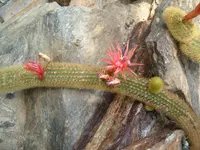
Golden rat-tail cactus, Cleistocactus winteri, is a trailing desert cactus valued for its long, rope-like stems covered in dense golden spines. Mature plants form hanging cascades that can spill dramatically over the edges of pots or baskets.

This species comes from the dry, rocky regions of Bolivia, so it is adapted to strong light, good airflow, and brief, infrequent rainfall. Its ability to store water and tolerate short dry spells makes it relatively easy to grow for those who avoid overwatering.

Golden rat-tail cactus prefers bright, direct light, fast-draining cactus soil, and a careful watering routine. Learning how to care for Golden Rat-tail Cactus mainly involves managing light exposure and preventing root rot in heavy or wet substrates.

Main Plant Requirements

Care Difficulty

Easy Care

Light Preference

Full Sun

Water Requirements

Low Water

Temperature Preference

Warm Climate

Hardiness Zone

9–11

Soil Texture

Sandy, Loamy, Rocky

Soil pH

Acidic (5.5–6.5), Slightly acidic (6.5–7.0)

Soil Drainage

Well-drained

Fertilization

Minimal (feed rarely)

Get Personalized Care Plan

Scan your plant to receive care tips personalized for your specific plant

Available on iOS and Android

How to Care for the Golden Rat-tail Cactus

This cactus thrives in bright, direct light but needs gradual acclimation to strong sun.

  • Provide 6–8 hours of sun daily, ideally with morning or late-afternoon direct sun and lighter midday exposure to prevent scorching of Golden Rat-tail Cactus stems.
  • In very hot regions, give 2–4 hours of filtered or dappled midday light; intense afternoon sun can cause bleaching or brown patches.
  • Outdoors, shift the plant seasonally: move from light shade in late winter to increasing sun in spring, then protect from extreme summer glare if stems pale or shrivel.

Watering should mimic a dry, rocky habitat with brief soakings and long dry periods.

  • In active growth, water only when the top 3–5 cm of soil are completely dry; drench thoroughly, then let excess drain away.
  • Use a very fast-draining cactus mix and a pot or bed that never holds standing water; soggy soil leads to root rot, yellowing, and mushy stems in Cleistocactus winteri.
  • In winter or cool periods, reduce watering sharply, giving only light sips when stems slightly soften or wrinkle, and avoid watering if temperatures stay low and soil dries slowly.

This species prefers warm, dry conditions with a cool but not freezing winter rest.

  • Aim for 65–80°F (18–27°C) during active growth; brief peaks up to 90°F (32°C) are tolerated if air is dry and roots are not waterlogged.
  • Protect from frost; growth slows below 55°F (13°C) and tissue damage occurs near 32°F (0°C), especially in wet or windy conditions.
  • For winter rest, keep it at 50–60°F (10–16°C) and much drier; avoid sudden swings from cool nights to very hot days, which can stress stems and roots.

This cactus thrives in dry indoor air and rarely needs extra humidity attention.

  • Target 30–50% relative humidity, similar to most heated or air-conditioned homes.
  • It tolerates drier air well; prolonged humidity above 60% increases rot risk, especially at the roots.
  • Signs of excess humidity stress include soft, pale stems and slow drying soil; increase airflow and use a dehumidifier rather than misting.

Cleistocactus winteri needs a very fast-draining, mineral-based substrate to prevent root rot.

  • Use a gritty mix such as 50–70% inorganic material (pumice, coarse perlite, or 3–5 mm gravel) blended with cactus potting mix or lean loam.
  • Aim for a slightly acidic to neutral pH around 6.0–7.0, avoiding strongly alkaline or heavily limed substrates.
  • Ensure structure stays open and airy; avoid fine sand and peat-heavy mixes that compact and slow drainage.
  • If a commercial cactus mix feels dense, lighten it further with extra perlite or pumice until water runs through in seconds.

This species is very suitable for container growing, especially in hanging baskets where stems can trail freely.

  • Choose a wide, shallow pot to match the relatively shallow root system and provide stability for long trailing stems.
  • Use a container material like unglazed terracotta if extra evaporation is needed in humid or cool climates.
  • Ensure the pot allows immediate runoff of water and empty any outer cachepot or tray so roots never sit in collected moisture.

Cleistocactus winteri grows well with modest feeding during its active season if grown in containers.

  • Use a diluted balanced liquid fertilizer (such as 10-10-10 or 20-20-20 at 1/4–1/2 strength) formulated for cacti and succulents.
  • Feed every 4–6 weeks in spring and summer when stems elongate and Golden Rat-tail Cactus is actively growing.
  • Avoid compost-rich or high-organic mixes that stay wet; excess nutrients increase rot risk and weak, soft growth.
  • Stop fertilizing in fall and winter to allow a cool, dry rest period and support flowering the next season.

Pruning Cleistocactus winteri is minimal and mainly corrective, aimed at maintaining health and manageable length.

  • Best time to prune is late winter to early spring before strong new growth begins.
  • Remove dead, shriveled, or blackened stems and any damaged or diseased sections with clean, sharp scissors or pruners.
  • Shorten overly long, tangled, or crowded stems to refine shape and keep hanging baskets from becoming unbalanced.
  • Disinfect tools before and after cutting to reduce disease transmission and allow cut surfaces to dry and callus.

Repotting is infrequent but important to keep Cleistocactus winteri healthy and stable in its container.

  • Repot every 3–4 years or when roots circle the pot, growth slows, or the plant becomes top-heavy and leans.
  • Plan repotting for late winter or early spring, before rapid growth, to give roots time to recover and re-establish.
  • Use a slightly wider, heavy pot with excellent drainage and a gritty cactus mix to support long, trailing stems.
  • Handle stems gently, keep the root ball mostly intact, and water lightly after 5–7 days to reduce root stress and rot risk.

Propagation of Cleistocactus winteri is commonly done from stem cuttings for consistent traits and quick results.

  • Take 7–12 cm healthy stem segments in late spring or early summer using a sterile, sharp knife or pruners.
  • Let cut pieces dry and callus for 5–10 days in a shaded, airy place to reduce infection and rot risk.
  • Insert callused cuttings shallowly into dry, gritty cactus mix, then mist lightly until roots form in 3–6 weeks.
  • Provide bright, indirect light and warm temperatures around 70–80°F during rooting; start normal watering only after firm rooting.

Winter care for Cleistocactus winteri focuses on avoiding frost damage and providing a cool, dry rest.

  • Treat as frost-sensitive; keep above 35–40°F, especially in USDA zones colder than 9b.
  • Move containers indoors to a bright, cool room, such as a sunny windowsill or unheated, frost-free sunroom.
  • Keep soil almost dry in winter, giving only very light sips to prevent complete desiccation of stems.
  • Outdoors in mild climates, use a sharp-draining site and coarse mulch around, not on, the crown to insulate roots.

Care Tips

Support Hanging Stems

Use a sturdy hanging basket or wall-mounted trough so the long stems can trail freely without kinking or snapping at the base as they gain weight over time.

Rotate For Even Growth

Turn the container 90° every 2–3 weeks so all sides receive similar light, which keeps the stems evenly thick and prevents them from curving strongly to one side.

Use Inert Topdressing

Apply a thin layer of coarse gravel or small rocks on the soil surface to keep stems off damp soil, reduce rot risk at contact points, and stabilize the root zone.

Inspect Stem Bases

Check the crown and lower 5–10 cm of stems every month for soft spots or discoloration so that any early rot can be cut out and the plant re-rooted before the problem spreads.

Encourage Safe Branching

If a long, healthy stem becomes too heavy, lay it gently over a dry, gritty mix in another pot so that it can root along its length and form a new plant, a practical method for growing Golden Rat-tail Cactus without stressing the parent.

Common Pests and Diseases

Mealybugs

This pest often hides in the woolly areoles and between crowded stems, feeding on plant sap and causing yellowing and stunted growth. Symptoms include cottony white clusters and sticky honeydew that can lead to sooty mold on the stems.

Solution

Isolate the plant, then dab visible mealybugs with cotton swabs dipped in 70% isopropyl alcohol and repeat weekly until gone. Improve light and airflow, rinse the stems gently with lukewarm water, and use a systemic insecticide labeled for cacti if infestations persist as part of Cleistocactus winteri plant care.

Spider mites

These insects favor dry, warm indoor air and can cause fine speckling, dull patches, and webbing between hanging stems. This pest sucks out cell contents, leading to overall loss of color and vigor in the stems.

Solution

Shower the plant with a firm but gentle stream of lukewarm water to remove mites, then increase ambient humidity slightly and improve airflow without overmisting the stems. For ongoing problems, apply a miticide or horticultural soap labeled for spider mites, repeating according to label directions to break the life cycle.

Scale insects

This pest appears as small, hard, brown or tan bumps firmly attached to stems, especially along ridges and near the base of hanging segments. Infested plants may show yellowing, slow growth, and sticky honeydew on or under the stems.

Solution

Scrape or pry off individual scales carefully with a fingernail or soft brush, then wipe stems with a cloth lightly moistened with 70% isopropyl alcohol. For larger or recurring infestations, use a systemic insecticide suitable for cacti and monitor new growth regularly for reinfestation.

Fusarium stem rot

This disease can enter through small wounds on trailing stems, leading to soft, sunken, brown to black areas that may expand along the stem. Symptoms include rapid collapse of sections that were previously firm and healthy.

Solution

Cut away all affected stem segments well into healthy, firm tissue using a sterile blade, and discard diseased parts in the trash. Reduce watering, keep the plant in bright, dry, well-ventilated conditions, and avoid wounding the stems; in severe cases, root only healthy tip cuttings in fresh, sterile cactus mix.

Corking and sunscald

Symptoms include rough, brown, bark-like tissue near the base of older stems combined at times with pale, bleached patches or scarring on sun-exposed sides. This is partly natural aging but can be worsened by sudden intense sun and previous minor stem damage.

Solution

Move plants gradually into higher light rather than exposing directly to full midday sun, and provide bright but slightly filtered light in very hot climates. Remove only severely damaged segments to improve appearance, and keep watering and nutrition steady to support new, healthy growth that will mask older corked areas over time.

Interesting Facts

Golden, hooked spines

This species produces dense, golden-yellow spines that curve slightly and can interlock, giving each stem a fuzzy appearance while still functioning as sharp physical protection against herbivores.

Trailing rock specialist

In its native habitats of Bolivia and Argentina, this cactus often grows on rocky slopes and cliffs, where its long trailing stems hang down and take advantage of high light and excellent drainage.

Narrow tubular flowers

It forms bright orange to salmon tubular flowers that open along the sides of the stems rather than only at the tips, an adaptation that helps attract hummingbirds and other pollinators moving along its hanging growth.

Botan icon

Did you know?

This cactus can form large, cascading mounds several meters long over many years in habitat, creating hanging curtains of stems that dramatically cover rock faces and old walls in its native range.

FAQs about Golden Rat-tail Cactus

Lack of flowering usually comes from insufficient light, no cool dry winter rest, or a plant that is still immature. Older, well-lit stems that experience a cooler, drier winter are more likely to produce abundant spring blooms.

Grow Healthy Plants with Botan Care

Keep your plants happy and healthy with plant identification, disease detection, and easy care guidance.

Botan plant care app — identify plants on mobile

Explore More Plants