


Stabilize Tall Stems
Use discreet, rigid stakes or a mesh support ring once stems exceed 30–40 cm to prevent wind or accidental knocks from snapping brittle growth.

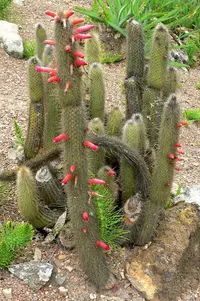
Cleistocactus hyalacanthus is a columnar cactus known for its dense, bristly spines and tall, upright stems that can form striking clumps over time. It is often grown as a container specimen or accent plant in arid gardens.
This species is native to high-altitude regions of Bolivia and Argentina, where it experiences strong light, well-drained rocky soils, and cool, dry air. Its tubular flowers, typically red to orange, appear along the stems and are adapted for bird pollination.
Because it is drought-tolerant and slow-growing, many growers find it relatively low-maintenance once established. Understanding how to care for Cleistocactus hyalacanthus mainly involves providing bright light, fast-draining soil, and careful watering to avoid root rot.

Care Difficulty
Easy Care

Light Preference
Full Sun

Water Requirements
Low Water

Temperature Preference
Tropical / Frost Sensitive

Hardiness Zone
10–11

Soil Texture
Sandy, Loamy, Rocky

Soil pH
Slightly acidic (6.5–7.0), Neutral (7.0)

Soil Drainage
Well-drained

Fertilization
Minimal (feed rarely)
Scan your plant to receive care tips personalized for your specific plant
Available on iOS and Android
This cactus thrives with strong light that mimics its high-altitude Andean habitat.
Watering should be infrequent and measured, allowing the roots to dry between soakings.
Stable warmth with a cool, dry winter rest supports healthy growth and flowering.
This cactus is adapted to dry air and rarely needs humidity adjustment indoors.
Cleistocactus hyalacanthus needs a very fast-draining, mineral-rich substrate that dries quickly between waterings.
This species suits container culture, as its narrow, upright stems and modest root system adapt well to pots.
This upright cactus benefits from modest feeding in its active growing season but tolerates lean soil.
Pruning needs are minimal and mainly focused on health and safety for this columnar cactus.
This cactus prefers slightly tight conditions and only needs infrequent repotting in containers.
This species is commonly propagated from stem cuttings and sometimes from seed in warm conditions.
Winter care focuses on dryness and avoiding freezing temperatures for this frost-sensitive cactus.

Plant Health Check
Not sure what's wrong with your plant? Check your plant's health inside the app.
This species produces long, narrow, orange-red tubular flowers that rarely open fully and are adapted for pollination by hummingbirds in its native Andean range, which explains the flower shape and orientation along the stems.
Cleistocactus hyalacanthus naturally occurs on rocky slopes and cliffs of the Andes in Argentina and Bolivia, often at relatively high elevations where it tolerates strong sun, large day–night temperature swings, and poor, very well-drained soils.
Its specific epithet hyalacanthus refers to its pale, glassy-looking spines (from Greek hyalos, meaning glass, and akantha, meaning thorn), which can give the stems a shimmering appearance in strong light.

In its native habitat, this cactus often grows in nearly vertical rock crevices, where its upright, columnar stems can form dense clumps that help stabilize loose substrates and provide shelter for small animals and invertebrates in otherwise sparse, exposed Andean environments.
Growth is moderate for a columnar cactus. Expect roughly 5–15 cm of new stem per year in suitable conditions, with faster growth in warm, bright summers and slower or nearly dormant growth in cooler, low-light seasons.
Keep your plants happy and healthy with plant identification, disease detection, and easy care guidance.

-1-200x133.webp)