Berlandier's hedgehog cactus Care (Echinocereus berlandieri)

Berlandier's hedgehog cactus

About Berlandier's hedgehog cactus

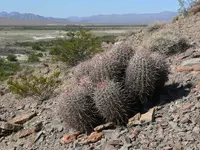
Berlandier's hedgehog cactus, Echinocereus berlandieri, is a small, clumping cactus native to the Rio Grande region of Texas and northern Mexico. It grows in rocky, well-drained habitats, often among gravel or limestone.

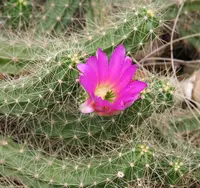
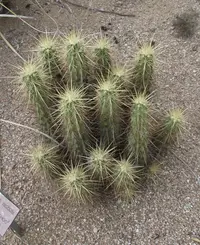
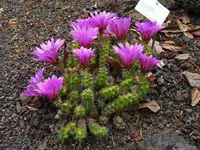
Stems are low, cylindrical, and covered with short, stiff spines that protect the plant from sun and grazing animals. In spring, it produces large, showy pink to magenta flowers that contrast strongly with the compact stems.

This species is relatively slow-growing but long-lived when kept dry and bright, which makes it suitable for containers and rock gardens. Understanding how to care for Berlandier's hedgehog cactus mainly involves providing strong light, minimal watering, and very free-draining soil.

Main Plant Requirements

Care Difficulty

Easy Care

Light Preference

Full Sun

Water Requirements

Low Water

Temperature Preference

Warm Climate

Hardiness Zone

9–11

Soil Texture

Sandy, Loamy, Rocky

Soil pH

Slightly acidic (6.5–7.0), Neutral (7.0)

Soil Drainage

Well-drained

Fertilization

Minimal (feed rarely)

Get Personalized Care Plan

Scan your plant to receive care tips personalized for your specific plant

Available on iOS and Android

How to Care for the Berlandier's hedgehog cactus

This desert cactus needs strong light to stay compact and flower well.

  • Provide 6–8 hours of direct sun daily outdoors, ideally with morning sun and light afternoon shade in very hot, dry climates.
  • In regions with intense summer sun, give Berlandier's hedgehog cactus filtered light or shade cloth during midafternoon to prevent scorching and yellow patches.
  • If stems stretch, lean, or turn dull green, the plant is not getting enough light; move it gradually to a brighter, more open exposure.

This species prefers thorough but infrequent watering and fast-drying soil.

  • Water only when the top 3–5 cm of soil are completely dry, then soak the root zone once and let excess water drain away fully.
  • Use a gritty, fast-draining mix; standing water or constantly damp soil leads to root rot, soft stems, and a sour smell around Echinocereus berlandieri.
  • In spring and summer, drying intervals may be 7–21 days depending on heat and wind; in fall and winter, extend intervals and water just enough to prevent shriveling.

This cactus is adapted to hot summers and cool, dry winters with brief cold spells.

  • Aim for active growth in 70–90°F (21–32°C); it tolerates short spikes up to about 100°F (38°C) if soil is dry and air is moving.
  • It can survive down to about 15–20°F (-9 to -6°C) when fully dry, but repeated freeze-thaw cycles increase the risk of tissue damage.
  • Protect from hard frost and cold rain in winter; provide excellent drainage and a rain shelter if temperatures sit below 40°F (4°C) for extended periods.

This cactus prefers dry air and does not require elevated humidity.

  • Aim for 20–40% humidity, similar to a dry indoor room or arid outdoor climate.
  • It tolerates very dry air; problems arise mainly if humidity stays above 60% with cool temperatures.
  • High humidity stress appears as slow drying soil, yellowing at the base, and increased risk of stem rot.

This species needs a very fast-draining, mineral-rich, gritty substrate to prevent root rot.

  • Use a mix of about 50–70% mineral material such as coarse sand, pumice, or fine gravel with 30–50% cactus potting mix.
  • Ensure the structure stays loose and airy; gritty particles create stable air pockets that protect roots from suffocation.
  • Keep pH slightly acidic to neutral, around 6.0–7.0, which matches the natural calcareous yet well-leached habitats of Echinocereus berlandieri.
  • Avoid dense, peat-heavy, or clay-based substrates, which hold water around the roots and sharply increase rot risk.

This cactus is well suited to container growing when placed in a pot that prioritizes fast drainage and root protection.

  • Choose a squat, wider-than-deep pot to support its clumping spread and reduce tipping from lateral stem growth.
  • Use unglazed terracotta if extra evaporation is needed in humid or cool climates, as it slowly wicks moisture from the root zone.
  • Raise the container slightly on feet or pot risers so water can exit freely and the drainage holes do not sit in collected runoff.

This cactus needs only modest feeding to support healthy growth in containers.

  • Use a dilute balanced liquid cactus fertilizer (around 10-10-10) at 1/4–1/2 strength during active growth in spring–summer.
  • Feed every 4–6 weeks if growth is ongoing; skip if the plant is already vigorous.
  • Avoid organic composts that stay wet; choose mineral-based or low-organic mixes instead.
  • Stop feeding Berlandier's hedgehog cactus in fall and winter when growth is dormant.

Pruning needs for Echinocereus berlandieri are minimal and mainly hygienic.

  • Best time for any pruning is late spring to early summer, after flowering has finished.
  • Use clean, sharp scissors or pruning snips to remove dead, shriveled, or diseased stems at the base.
  • Take out any damaged or rotting sections promptly to prevent spread of fungal or bacterial issues.
  • Minor thinning of crowded offsets can slightly improve air flow and reduce moisture retention around stems.

Container-grown plants need infrequent repotting, mainly to refresh the gritty mix and manage offsets.

  • Repot every 3–5 years or when roots circle the pot, growth slows, or the clump lifts itself upward.
  • Plan repotting for late winter to early spring, just before new growth begins in Echinocereus berlandieri.
  • Water lightly 3–5 days before, then slide the root ball out, handling the plant with folded newspaper or tongs.
  • Trim only dead roots, pot into a slightly wider container with dry cactus mix, and wait 5–7 days before watering.

This species is commonly propagated from offsets and sometimes from seed.

  • Detach firm, healthy offsets in late spring–summer, using a sterile knife if needed.
  • Allow cut surfaces to dry and callus for 5–10 days in bright, indirect light before planting.
  • Set callused offsets into barely moist, fast-draining cactus mix and keep warmth around 70–80°F.
  • For seed, sow on the surface of sterile, gritty mix, keep lightly moist and warm with bright, filtered light.

Winter care focuses on keeping the plant cold tolerant but dry at the roots.

  • Many clones tolerate brief drops near 20–25°F if soil is completely dry and drainage is excellent.
  • In the ground, use a light gravel mulch around the crown to shed water and insulate the root zone.
  • For containers, move plants under a bright, unheated shelter or indoors to a cool, dry windowsill.
  • Stop watering through winter dormancy; resume light watering only when consistent spring warmth returns.

Care Tips

Cluster-friendly spacing

Use a wide, shallow pot that allows offsets to spread horizontally, and rotate the container a quarter turn every 2–3 weeks so the clump develops evenly and does not lean toward the strongest light source.

Winter rest management

From late fall to early spring, keep the plant cool and almost dry, only giving a very light watering once every 4–6 weeks to prevent shriveling while supporting flower bud formation for the next season.

Calcium-rich topdressing

Add a thin top layer of crushed limestone or marble chips to the soil surface to mimic its native calcareous habitat and help maintain a slightly alkaline to neutral pH over time.

Rain protection strategy

If the plant is grown outdoors, place it under a clear overhang or move it to a sheltered spot during long rainy periods to prevent water from sitting around the stem base and causing rot.

Targeted pest checks

Inspect the rib grooves and areoles with a hand lens every few weeks for early signs of mealybugs or scale, and spot-treat affected areas with a cotton swab dipped in isopropyl alcohol as soon as pests are seen to keep caring for Berlandier's hedgehog cactus straightforward and low-risk.

Common Pests and Diseases

Spider mites

This pest feeds on cactus epidermis, causing fine yellow speckling, dull patches, and very fine webbing between ribs or spines. Symptoms include slowed growth and a dusty, stressed appearance, especially in hot, dry, still air.

Solution

Rinse stems thoroughly with a firm stream of water, taking care not to damage spines, then allow the plant to dry in bright, airy conditions. For persistent infestations, treat all stem surfaces with a ready-to-use insecticidal soap or neem oil every 7–10 days for 3–4 cycles and increase humidity and air movement to make conditions less favorable for mites.

Cochineal scale

These insects form white, cottony clusters on areoles and between ribs, often staining fingers red when crushed due to carminic acid. This pest sucks sap, leading to weakened growth and localized yellowing or shriveling of stems.

Solution

Dislodge visible insects with a cotton swab dipped in isopropyl alcohol, then gently hose the plant to remove residues from between spines. Inspect nearby cacti, repeat spot treatment weekly until no new clusters appear, and keep the plant in a bright, dry, well-ventilated position to limit reinfestation.

Mealybugs

This pest hides in crevices, at the base of stems, and occasionally on roots, forming white, fluffy masses and causing localized yellowing or distortion. Infested plants often show sticky honeydew and sooty mold on surfaces below the cactus.

Solution

Physically remove above-ground mealybugs with alcohol-dipped cotton swabs, then spray the plant thoroughly with insecticidal soap to reach hidden insects. If symptoms persist or roots are involved, unpot the cactus, wash off old soil, trim badly affected roots, allow them to dry for 24 hours, then repot into fresh, very free-draining mix and monitor closely.

Basal stem rot

This disease starts at the base of the stems, which turn soft, discolored, and water-soaked while upper parts may remain firm for some time. Symptoms include a sour smell and collapsing clumps, often after prolonged soil moisture or cool, wet conditions.

Solution

Remove the plant from its pot, cut away all affected soft tissue with a sterile knife, and dust the clean cuts with a dry sulfur or copper-based fungicidal powder. Allow salvaged healthy segments to callus for several days in a dry, shaded spot, then re-root them in a sterile, very gritty mix and adjust watering so the mix dries completely between irrigations.

Sunscald

Symptoms include bleached, yellow-white patches on the sun-exposed side of the stems that may later turn tan or corky. Damage often appears when a plant grown in shade or indoors is suddenly moved to intense outdoor sun, especially during heat waves.

Solution

Move the cactus to a location with bright but filtered light and provide temporary shading (such as 30–40% shade cloth) while it acclimates. Gradually increase direct sun exposure over 2–3 weeks; damaged tissue will not green up again, but stable, firm areas can remain functional while new growth forms under more suitable light levels.

Interesting Facts

Cross-border native range

This cactus is naturally distributed along the lower Rio Grande region of south Texas and northern Mexico, where it grows on limestone outcrops, rocky slopes, and thin calcareous soils in hot, semi-arid habitats.

Creeping stem clusters

Plants typically form low, creeping clumps of slender, curved stems that often lie partially along the ground, an adaptation that reduces exposure to intense sun and wind near the soil surface.

Large flowers for size

Despite its relatively small stems, it produces striking magenta to pink funnel-shaped flowers that can be nearly as long as the stem itself, providing a significant nectar source for native pollinators such as bees and moths.

Botan icon

Did you know?

This species was originally described in 1849 from material collected by the German-American botanist George Engelmann, and it has since been an important taxon in studies of species limits and variation within the hedgehog cactus genus Echinocereus.

FAQs about Berlandier's hedgehog cactus

This species performs best outdoors in full sun and fast-draining, gritty soil. It can be grown indoors only in the brightest windows, with very light watering and excellent airflow, as part of general Echinocereus berlandieri care.

Grow Healthy Plants with Botan Care

Keep your plants happy and healthy with plant identification, disease detection, and easy care guidance.

Botan plant care app — identify plants on mobile

Explore More Plants