


Encourage clumping
Rotate the pot 90° every 2–3 weeks in the bright season to keep stems evenly lit, which encourages symmetrical clump formation instead of leaning growth toward one side.

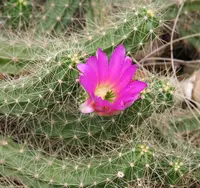
Echinocereus cinerascens is a small, clumping cactus known for its cylindrical, ribbed stems covered in short spines. Mature plants often form dense mounds over time. Native to arid regions of Mexico, it is adapted to strong sun, rocky soils, and long dry periods. These natural conditions make it a relatively undemanding plant when kept dry and bright.
Its main appeal comes from its showy, funnel-shaped flowers, which can cover the stems in season. Firm, slow growth and drought tolerance make it suitable for growers who prefer low-maintenance plants. Understanding how to care for Echinocereus cinerascens mainly involves providing strong light, sharply drained soil, and careful watering to avoid rot.

Care Difficulty
Moderate Care

Light Preference
Full Sun

Water Requirements
Low Water

Temperature Preference
Warm Climate

Hardiness Zone
9–11

Soil Texture
Sandy, Rocky, Loamy

Soil pH
Slightly acidic (6.5–7.0), Neutral (7.0)

Soil Drainage
Well-drained

Fertilization
Minimal (feed rarely)
Scan your plant to receive care tips personalized for your specific plant
Available on iOS and Android
This cactus thrives in strong, direct light that mimics its desert habitat.
Watering should be infrequent and thorough, with long dry intervals between soakings.
This species prefers warm conditions with a pronounced cool, dry rest in winter.
This cactus thrives in dry air and rarely needs extra humidity attention.
This species needs a very fast-draining, mineral-heavy substrate to prevent root rot.
This species is well suited to container growing when the pot and substrate manage moisture efficiently.
This cactus needs only light feeding to support slow, compact growth during warm months.
Pruning needs for Echinocereus cinerascens are minimal and mainly hygienic.
This species grows slowly and prefers slightly tight containers with excellent drainage.
Echinocereus cinerascens is commonly propagated from offsets and seeds under warm, dry conditions.
This cactus is moderately cold tolerant when kept very dry but still benefits from basic winter care.

Plant Health Check
Not sure what's wrong with your plant? Check your plant's health inside the app.
Mature plants can develop multiple upright stems from a shared base, sometimes forming ring-shaped clumps that slowly expand over many years in rocky soils of central Mexico.
The spines often emerge reddish or purplish and age to gray or whitish tones, helping protect the stem from intense sun while also providing camouflage among volcanic rocks.
This species naturally occurs on rocky slopes and lava fields at relatively high elevations in central Mexico, tolerating strong sun, large day–night temperature swings, and very limited soil depth.

In habitat, large, established clumps of this cactus can produce dense crowns of bright magenta flowers that open in strong sunlight, creating a striking floral display that can almost cover the stems for a short blooming period.
This species performs best outdoors in a bright, dry, frost-free position, similar to its native desert habitat. Indoors it can survive on a very sunny windowsill, but growth and flowering are usually weaker than outside.
Keep your plants happy and healthy with plant identification, disease detection, and easy care guidance.

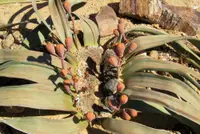
Tree Tumbo
Welwitschia mirabilis
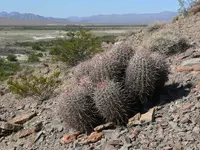
cottontop cactus
Echinocactus polycephalus
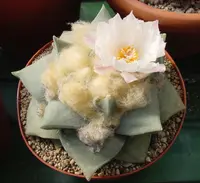
Ariocarpus retusus
Ariocarpus retusus
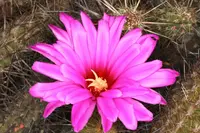
Brandegee's Hedgehog Cactus
Echinocereus brandegeei
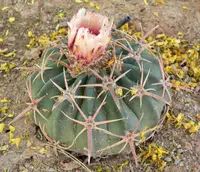
horse crippler
Echinocactus texensis
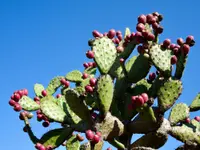
Prickly pear
Opuntia ficus-indica
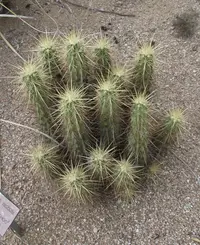
Nichol's hedgehog cactus
Echinocereus nicholii
 POPULAR
Monstera
Monstera deliciosa