Beschorneria yuccoides Care

Beschorneria yuccoides

About Beschorneria yuccoides

Beschorneria yuccoides is an evergreen succulent perennial from highland regions of Mexico, often grown as an architectural accent in mild climates. It forms dense rosettes of long, sword-like grey-green leaves that resemble a yucca, but without sharp spines at the tips.

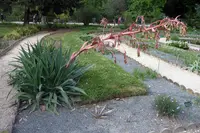
Mature plants may send up tall flowering spikes with tubular red and green flowers that attract pollinators. It is generally robust and low-maintenance if given sun, sharp drainage, and protection from heavy winter moisture. Gardeners who learn how to care for Beschorneria yuccoides usually find it reliable in dry or coastal plantings.

Main Plant Requirements

Care Difficulty

Easy Care

Light Preference

Full Sun

Water Requirements

Low Water

Temperature Preference

Warm Climate

Hardiness Zone

8–10

Soil Texture

Sandy, Loamy, Rocky

Soil pH

Slightly acidic (6.5–7.0), Slightly alkaline (7.0–7.5)

Soil Drainage

Well-drained

Fertilization

Minimal (feed rarely)

Get Personalized Care Plan

Scan your plant to receive care tips personalized for your specific plant

Available on iOS and Android

How to Care for the Beschorneria yuccoides

This drought-tolerant rosette succulent prefers bright outdoor conditions with some protection from extreme midday sun.

  • Provide 6–8 hours of sun daily, ideally with morning sun and light afternoon shade, especially in hotter climates.
  • Tolerates light or open shade but flowering and compact growth decline if it receives under 4–5 hours of direct sun.
  • In very hot, dry regions, protect Beschorneria yuccoides from intense summer afternoon sun to reduce leaf scorch and bleaching.

This species prefers infrequent, deep watering and dries quickly between soakings in well-drained soil.

  • Water when the top 3–5 cm of soil are dry, soaking the root zone thoroughly, then allow excess to drain away.
  • Reduce watering in fall and winter, only irrigating when foliage begins to lose firmness or soil is completely dry.
  • Use sharply drained, gritty soil to prevent root rot; persistent wetness, yellowing, or mushy leaves indicate overwatering, while folding or wrinkling leaves suggest underwatering.

This hardy succulent copes well with a wide outdoor temperature range when drainage is excellent.

  • Optimal growth occurs around 65–80°F (18–27°C), with good performance during warm, dry summers if soil does not stay waterlogged.
  • Mature plants can tolerate short drops to about 15–20°F (-9 to -6°C) when dry, but repeated hard freezes increase damage risk.
  • In colder climates, protect the crown from prolonged frost and winter wet, and provide some shade during extreme heat above 95°F (35°C) to limit leaf scorch.

This species is adapted to dry conditions, so humidity is rarely a concern indoors or outdoors.

  • Target 30–50% relative humidity, which matches most heated and air-conditioned homes.
  • Dry indoor air rarely harms Beschorneria yuccoides, provided watering is not excessive.
  • If leaf tips brown while soil stays moist, reduce heat sources blowing directly on the plant rather than adding humidity.

This plant prefers sharply drained, mineral-rich soil that dries quickly after rain or watering.

  • Use a gritty mix such as 50–60% coarse sand or fine gravel with 40–50% loam-based compost or cactus mix to balance drainage and nutrients.
  • Maintain a slightly acidic to neutral pH around 6.0–7.0, which supports nutrient uptake without risking lime-induced deficiencies.
  • Improve aeration by incorporating pumice or perlite instead of peat-heavy products, which compact and hold excess water over time.
  • Avoid heavy clay, unamended garden soil, or mixes that stay wet longer than 2–3 days, as persistent saturation encourages root and crown rot in Beschorneria yuccoides.

This species adapts well to container growing when the pot is chosen for drainage and stability.

  • Select a wide, low container to counterbalance the tall flower spike and prevent the pot from tipping in wind.
  • Choose a porous material such as unglazed clay to allow faster evaporation, which suits the plant’s drought-tolerant root system.
  • Raise the pot slightly on feet or bricks so drainage holes stay clear and water runs off quickly after rain or irrigation.

This drought-tolerant rosette needs only modest feeding to maintain steady growth.

  • Apply a balanced slow-release fertilizer (for example 10-10-10 or 14-14-14) once in early spring around the root zone.
  • In lean or sandy soils, supplement with a light layer of compost, keeping it away from the crown of Beschorneria yuccoides.
  • During active growth, avoid more than 1–2 light feedings per year to prevent weak, lush foliage.
  • Stop feeding in late summer and avoid winter applications to allow tissues to harden and reduce rot risk.

Pruning needs are low and mainly focused on hygiene and safety around the sharp leaves.

  • In late winter or early spring, remove dead, damaged, or diseased leaves at the base with clean, sharp pruners.
  • Cut back spent flower stalks near the base once they dry, which tidies the clump and encourages offsets to develop.
  • Trim only obviously brown leaf tips if necessary, maintaining the natural architectural shape of Beschorneria yuccoides.
  • Wear gloves and eye protection when working around stiff leaves to prevent injury.

This species is more often grown in the ground, but container plants or young transplants benefit from occasional moving.

  • Plan transplanting or potting-on for spring, when new root growth starts and recovery is fastest.
  • Look for roots circling the pot drainage holes, reduced vigor, or the plant becoming top-heavy as signs it needs a larger container or ground spot.
  • Move into a pot only 1 size larger, using a sharply draining mix, and keep the crown slightly above soil level to avoid rot.
  • Water thoroughly after transplanting Beschorneria yuccoides, then allow the mix to dry slightly between waterings to limit root stress.

New plants are most reliably produced from offsets rather than seed in typical home conditions.

  • In late spring or early summer, select well-formed offsets around the base once they show their own root development.
  • Lift the clump carefully and separate pups with a clean, sharp knife, keeping as many roots attached as possible.
  • Plant divisions into a gritty, fast-draining mix, keeping the crown just above the surface to prevent rotting.
  • Provide bright light, moderate warmth (65–75°F), and slightly moist but not wet soil until the divisions establish.

This plant is relatively cold tolerant but may need protection in regions with prolonged freezes or very wet winters.

  • Mature plants can handle light frosts, but sustained temperatures below about 15–20°F can damage foliage and crowns.
  • In colder areas, mulch 5–8 cm around the root zone of Beschorneria yuccoides, keeping mulch away from the crown.
  • In containers, shift plants to a bright, cool, frost-free spot and maintain only lightly moist soil through winter.

Care Tips

Secure heavy rosettes

In windy or exposed sites, anchor the base with a few large stones or use low, discreet stakes to keep the rosette stable and prevent root rock that can loosen the plant in the soil over time.

Support tall flower spikes

As the flowering stalk elongates, drive a sturdy stake on the windward side and tie the stem loosely with soft ties in 2–3 places to prevent snapping during storms.

Improve winter drainage

Before winter in cooler or wetter climates, top-dress around the crown with a 3–5 cm layer of coarse grit or sharp sand to keep water away from the growing point and reduce the risk of rot.

Use reflective mulches

In cooler regions, apply a light-colored gravel mulch around the plant to reflect extra light into the lower leaves and slightly warm the root zone, which supports stronger growth.

Divide offsets strategically

When removing offsets, choose pups with a clear root system, cut with a clean sharp knife, dust the cut surfaces with a dry fungicidal powder if available, then heel them in a dry, shaded spot for 2–3 days before planting to reduce infection risk when caring for Beschorneria yuccoides.

Common Pests and Diseases

Agave snout weevil

This pest attacks the base and crown, where adults chew and lay eggs, and the larvae tunnel inside the tissue, causing collapse of the rosette. Symptoms include wilting of outer leaves, softening at the crown, and a foul smell from rotting internal tissue.

Solution

Remove and destroy any infested plants, including roots, to reduce the local population, and avoid replanting Beschorneria or agave relatives in the same spot for at least 1–2 years. In areas where this weevil is common, monitor crowns regularly, keep plants healthy but not overfertilized, and consider preventive soil drenches with a systemic insecticide labeled for snout weevils if growing Beschorneria yuccoides in large landscape plantings.

Aloe mite

This pest (eriophyid mite) causes distorted, warty, or tumor-like growths known as galls on leaves, flower stalks, or the crown. Symptoms include rough, blistered, or swollen patches that slowly spread and disfigure the plant.

Solution

Cut out and discard affected leaves or inflorescences well below the visible gall tissue, and bag and trash all removed parts instead of composting. Isolate affected plants, monitor nearby plants of the same family, and if new galls continue to appear, use a miticide labeled for eriophyid mites and improve spacing and airflow to reduce stress and spread.

Soft scale

These insects attach to leaves and flower stalks, sucking sap and excreting sticky honeydew that can lead to sooty mold. Symptoms include yellowing patches, slow growth, sticky residue, and small dome-shaped bumps along the leaves or stems.

Solution

Wipe leaves and stalks with a soft cloth dipped in mild soapy water to remove scale and honeydew, or prune heavily infested flower stalks. For persistent infestations, apply horticultural oil thoroughly to all leaf surfaces according to the label, and repeat as needed while improving light and airflow to reduce reinfestation risk.

Leaf spot

This disease causes small brown, tan, or dark purple spots on the thick leaves, sometimes with a yellow halo or a sunken center. Symptoms include coalescing lesions that weaken affected leaves, which may eventually dry and die back from the tip.

Solution

Remove and discard severely spotted leaves to reduce inoculum, and avoid overhead watering that leaves foliage wet for long periods. Increase spacing and airflow, water at the soil level, and if spots continue to spread, use a copper-based or other appropriate fungicide labeled for ornamental leaf spots, following label directions carefully.

Bacterial crown rot

This disease starts at the crown, often after cold damage or mechanical injury, leading to soft, water-soaked tissue and a foul smell. Symptoms include sudden collapse of the central rosette and slimy, discolored tissue at the base of the leaves.

Solution

Discard severely affected plants completely, including the root system, and do not reuse contaminated soil or containers. Prevent future problems by planting in sharply drained soil, avoiding damage at the crown, keeping water off the rosette, and protecting plants from excessive winter moisture and freezing conditions that predispose tissue to infection.

Interesting Facts

Hummingbird-pollinated spikes

In its native Mexican habitat, this species is primarily pollinated by hummingbirds that visit its tall, arching flower spikes loaded with tubular, nectar-rich blossoms.

Semi-succulent adaptation

The fleshy, strap-shaped leaves function as semi-succulent tissue, storing water that helps the plant tolerate dry, rocky slopes and seasonal drought in its native range.

Monocarpic flowering habit

A mature rosette usually flowers only once, producing a towering inflorescence up to several meters tall, then gradually declines as younger offsets around the base take over.

Botan icon

Did you know?

Beschorneria yuccoides has been cultivated in mild coastal parts of Europe since at least the 19th century, valued in historic gardens as a hardy, architectural alternative to more tender agaves and yuccas for creating an exotic effect in cool, maritime climates.

FAQs about Beschorneria yuccoides

This species forms a clumping rosette and slowly enlarges over time, but it does not spread aggressively. Offsets stay close to the main plant and are easy to control or remove if space is limited.

Grow Healthy Plants with Botan Care

Keep your plants happy and healthy with plant identification, disease detection, and easy care guidance.

Botan plant care app — identify plants on mobile

Explore More Plants