


Deep taproot container
Use an extra-deep, narrow container (at least 30–40 cm tall) with side drainage holes so the taproot can grow straight down without circling, which is critical for long-term health when growing Tree Tumbo.

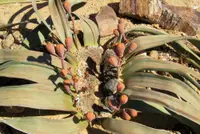
Tree tumbo, Welwitschia mirabilis, is a very long-lived desert plant native to the Namib Desert of Angola and Namibia. It is a gymnosperm, related to conifers but with a very unusual form.
The plant grows from a short, woody base with only two strap-like leaves that continue growing and fraying over time, creating a twisted, ribboned mass. Its slow growth and need for stable, dry conditions make it challenging for most home growers.
It comes from extremely arid, full-sun habitats with well-drained, mineral soils and very low humidity. These strict environmental needs strongly influence how to care for Tree Tumbo in cultivation.

Care Difficulty
Hard Care

Light Preference
Full Sun

Water Requirements
Low Water

Temperature Preference
Warm Climate

Hardiness Zone
10–11

Soil Texture
Sandy, Rocky

Soil pH
Slightly acidic (6.5–7.0), Neutral (7.0)

Soil Drainage
Well-drained

Fertilization
Minimal (feed rarely)
Scan your plant to receive care tips personalized for your specific plant
Available on iOS and Android
This desert species needs intense light that copies its native open, arid habitat.
This species is highly drought-adapted and must never sit in persistently wet soil.
This plant prefers hot, very dry conditions and copes poorly with prolonged cold or frost.
This desert species thrives in very dry air and does not need extra humidity.
This species needs a deep, very fast-draining, mineral soil that mimics desert gravel plains.
This species can be grown in containers if the pot is adapted to its slow, deep-rooting desert habit.
Welwitschia mirabilis grows in extremely poor soils and needs only very light feeding in cultivation.
Welwitschia mirabilis almost never needs structural pruning and is usually left to its natural form.
Container-grown plants resent disturbance, so repotting Welwitschia mirabilis must be infrequent and very cautious.
New plants are almost always raised from seed, as vegetative propagation of Welwitschia mirabilis is not practical.
This desert species is sensitive to prolonged cold and wet conditions in winter, especially in pots.

Plant Health Check
Not sure what's wrong with your plant? Check your plant's health inside the app.
This plant produces just two strap-like leaves from seedling stage and keeps the same pair for its entire life; they grow continuously from the base and fray into ribbons at the tips as they age and weather.
It survives in the Namib Desert by absorbing moisture mainly from coastal fog rather than regular rainfall, using thick, low-lying leaves that condense and capture water in one of the driest habitats on Earth.
Genetic and fossil evidence places this species in its own ancient gymnosperm family, Welwitschiaceae, making it one of the most evolutionarily isolated seed plants still alive today and a key subject in Welwitschia mirabilis plant care research.

Individual plants are estimated, from growth ring counts in the woody stem base and radiocarbon dating of tissue, to commonly reach ages of several hundred to possibly over 1,000 years, making some specimens among the longest-lived seed plants known.
Growth is extremely slow. Seedlings may take several years to develop leaves longer than 10–20 cm, and noticeable size changes happen over decades. Patience is essential, as this species invests energy in survival rather than rapid growth.
Keep your plants happy and healthy with plant identification, disease detection, and easy care guidance.

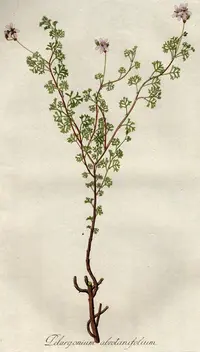
Southernwood-leaf Storksbill
Pelargonium abrotanifolium
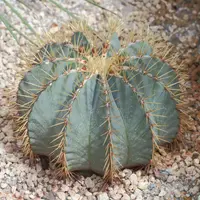
glaucous barrel cactus
Ferocactus glaucescens
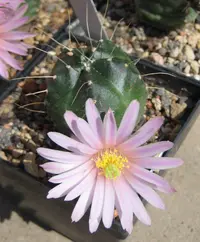
Echinocereus knippelianus
Echinocereus knippelianus
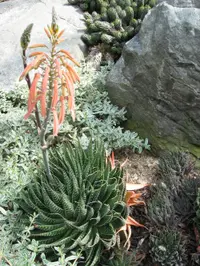
Lace aloe
Aristaloe aristata
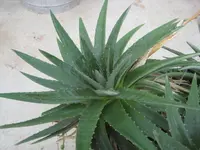
sawblade
Dyckia brevifolia
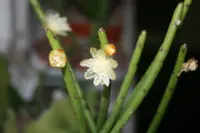
Rhipsalis floccosa
Rhipsalis floccosa
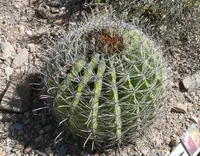
candy barrelcactus
Ferocactus wislizeni
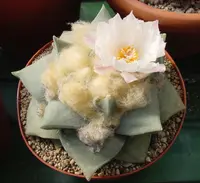
Ariocarpus retusus
Ariocarpus retusus