Pegleg Butterbush Care (Tylecodon wallichii)

Also known as: Wallich Cotyledon
Pegleg Butterbush

About Pegleg Butterbush

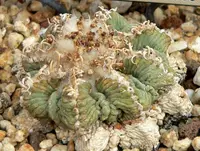
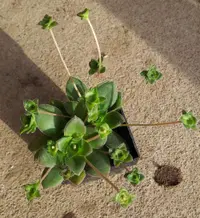
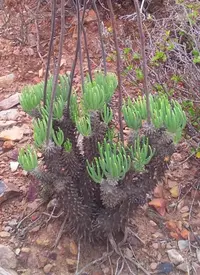
Tylecodon wallichii is a small, deciduous succulent shrub known for its thick, knobbly stems and sparse, fleshy leaves. In the resting season it often appears leafless, storing water in its swollen branches.

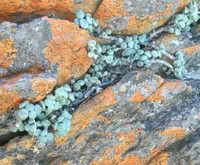
This species is native to arid regions of South Africa and Namibia, where it grows on rocky slopes with strong light and very sharp drainage. It produces tubular flowers that attract pollinators and add seasonal interest.

Its slow growth, water storage capacity, and tolerance of dry air make it suitable for experienced succulent collectors and patient beginners willing to learn how to care for Tylecodon wallichii. It prefers bright light, low to moderate watering, and gritty, fast-draining soil.

Main Plant Requirements

Care Difficulty

Moderate Care

Light Preference

Full Sun

Water Requirements

Low Water

Temperature Preference

Tropical / Frost Sensitive

Hardiness Zone

10–11

Soil Texture

Sandy, Loamy, Rocky

Soil pH

Slightly acidic (6.5–7.0), Neutral (7.0)

Soil Drainage

Well-drained

Fertilization

Minimal (feed rarely)

Get Personalized Care Plan

Scan your plant to receive care tips personalized for your specific plant

Available on iOS and Android

How to Care for the Pegleg Butterbush

This small succulent shrub thrives with bright, mostly direct sun that mimics its arid habitat.

  • Provide 4–6 hours of direct morning sun plus bright light for the rest of the day; light afternoon shade is useful in very hot, dry climates.
  • Plant in an open, unshaded spot outdoors; in bright coastal or cooler areas it tolerates full sun all day without scorching.
  • Watch for etiolation (stretching, pale growth) as a sign of insufficient light and for leaf scorch or brown tips as a sign of excessive, intense sun.

This species prefers infrequent, deep watering with thorough drying between soakings.

  • Allow the top 3–5 cm of soil to become completely dry before watering, then soak the root zone so excess drains away quickly.
  • In the main growth period, water when stems start to look slightly less plump; in winter dormancy, reduce watering to brief, rare sips only.
  • Use very fast-draining, gritty soil on a slope or in a raised position to avoid root rot; soft, yellowing stems indicate overwatering, while shriveling tips signal underwatering.

This drought-adapted succulent handles heat well but is sensitive to hard frost.

  • Aim for 65–80°F (18–27°C) during active growth, with cooler, drier conditions around 50–60°F (10–16°C) in winter dormancy.
  • Protect from frost; short dips to 30–32°F (-1–0°C) may be survived if soil is dry, but repeated or lower freezes can kill roots and stems.
  • In hot regions, it tolerates 95–100°F (35–38°C) if air is dry and soil drains rapidly; provide airflow and some afternoon shade during extreme heat to limit stress.

This succulent prefers dry air and does not have strict humidity requirements.

  • Aim for 30–50% humidity, similar to typical indoor air in heated homes.
  • Dry air is well tolerated; avoid placing the plant in enclosed, constantly damp spaces.
  • Excess humidity shows as soft, yellowing stems or unexpected rot, so increase air movement rather than misting.

This species needs a very fast-draining, mineral-heavy soil to prevent tuber and root rot.

  • Use a gritty mix such as 60–70% mineral components (pumice, coarse sand, fine gravel) with 30–40% lean cactus potting mix.
  • Ensure water drains through in seconds, not minutes; standing water or heavy, compacted substrates cause rapid root decline.
  • Aim for slightly acidic to neutral pH, roughly 6.0–7.0, which suits most commercial cactus or succulent blends.
  • Avoid peat-heavy, moisture-retentive, or clay-based soils and add extra pumice or sand to improve aeration and pore space.

This species is well suited to container growing when stability and drainage are carefully managed.

  • Choose a wide, shallow pot to accommodate the caudex and reduce tipping as the branching canopy develops.
  • Prefer unglazed terracotta in humid or cool climates, since it speeds evaporation from the root zone.
  • Top-dress with coarse gravel to keep the caudex surface dry and to reduce splash-back that can encourage rot at the stem base.

This slow-growing succulent needs only light feeding to stay healthy in cultivation.

  • Use a low-nitrogen balanced cactus fertilizer (around 2-7-7 or similar), formulated for succulents, during active growth.
  • Feed Tylecodon wallichii at half strength every 4–6 weeks in late fall to early spring if it is in its winter-growing phase.
  • Skip feeding during its dry dormancy; nutrients at that time encourage weak, elongated growth.
  • Always water lightly before applying fertilizer to avoid root burn in this drought-adapted species.

Pruning is mainly used to maintain structure and remove damaged tissue on this compact succulent shrub.

  • Carry out light pruning at the end of the active growth period, before the main rest phase.
  • Remove dead, shriveled, or damaged stems and any crossing branches that shade the interior.
  • Use small, sharp, disinfected pruning shears to make clean cuts just above branch junctions.
  • Careful shaping improves air flow, maintains the characteristic form of Tylecodon wallichii, and reduces rot risk.

Container-grown plants benefit from occasional repotting to refresh soil and prevent root congestion.

  • Repot every 3–4 years, or when roots circle the pot base or emerge from drainage holes and growth slows.
  • Plan repotting for late summer to early fall, as the plant prepares for its cooler, winter-growing season.
  • Use a shallow pot with excellent drainage and a very gritty, mineral-rich cactus mix to limit water retention.
  • Gently loosen the root ball, trim any rotten roots, replant at the same depth, then keep soil barely moist for 1–2 weeks to reduce stress when growing Tylecodon wallichii.

This species is usually propagated from semi-hardwood stem cuttings or seeds under controlled conditions.

  • Take short, firm cuttings in late summer, then allow cut ends to callus for several days in dry shade.
  • Insert callused cuttings into a sterile, gritty mix and keep at 65–75°F with bright, indirect light.
  • Water sparingly, just enough to prevent shriveling, until roots form and new growth appears.
  • For seed propagation, surface-sow fresh seed on a fine, well-drained mix and maintain very light, even moisture.

This plant is not frost hardy and needs careful handling in areas with cold winters.

  • Keep temperatures above 40°F; brief exposure near freezing can scar or kill tissue.
  • Move container plants indoors or into a cool, bright greenhouse before night temperatures drop in fall.
  • Provide maximum light through winter while keeping soil on the dry side to match its cool-season growth pattern.
  • Avoid overhead watering in cold conditions to reduce the risk of stem and root rot.

Care Tips

Seasonal Rest Control

Mark your calendar to sharply reduce water and move the pot to a cooler, very bright spot in late summer to support a defined dry dormancy, then slowly resume watering as new leaves emerge in fall.

Pot Weight Check

Use the pot’s weight as a guide and only water when it feels very light, which helps prevent hidden root rot in this species’ thick, tuberous roots.

Calcium-Rich Grit

Mix a small proportion of crushed, rinsed limestone chips or marble chips into the top 1–2 cm of the substrate to mimic the mineral-rich, gritty slopes this species prefers and improve drainage at the crown.

Targeted Pest Scouting

Inspect the base of stems, branch forks, and leaf scars every few weeks with a hand lens, since mealybugs and scale often hide there on this rough, peeling bark.

Safe Handling Practice

Handle the plant with gloves and avoid touching your face, and keep fallen leaves and prunings away from pets or children, as this species contains toxic compounds and sap can irritate skin in sensitive individuals when caring for Tylecodon wallichii.

Common Pests and Diseases

Mealybugs

This pest feeds on sap and hides in leaf joints and along the knobbly stems, often covered by white cottony masses. Symptoms include stunted growth, shriveling, and sticky honeydew on stems or nearby surfaces.

Solution

Isolate the plant, then dab visible insects with cotton swabs dipped in 70% isopropyl alcohol and repeat weekly until no new clusters appear. For heavier infestations, use a ready-to-use neem oil or insecticidal soap spray labeled for succulents, and reduce excess nitrogen fertilization that encourages soft, pest-prone growth.

Aphids

These insects cluster on young stem tips and flower stalks, sucking sap and causing distortion or yellowing of new growth. Sticky honeydew and sometimes sooty mold on affected parts can appear in severe cases.

Solution

Rinse colonies off with a firm stream of water, protecting the soil from getting waterlogged, then treat remaining insects with insecticidal soap or a light neem oil spray in the cool part of the day. Remove heavily affected flower stalks or stem tips and avoid overfertilizing, which produces tender tissue that attracts aphids and complicates Tylecodon wallichii care instructions.

Spider mites

These pests prefer dry, warm air and can colonize the fine surfaces of stems, causing a dull appearance and tiny pale stippling on the skin. Fine webbing may be visible in crevices or around growing points under close inspection.

Solution

Increase local humidity slightly around the plant without wetting the soil, and gently wash stems with lukewarm water or a soft cloth to remove mites. Follow with repeated applications of insecticidal soap or a horticultural oil labeled for mites, rotating contact products and monitoring closely during hot, dry periods.

Fungal stem canker

This disease develops when damaged or shaded stem areas stay damp, leading to sunken, brown to black lesions on the caudiciform stem or branches. Symptoms include localized softening, cracking, or slow dieback above the affected zone.

Solution

Cut out affected tissue with a sterile blade back into firm, healthy tissue, then allow the wound to dry and callus in bright, airy shade. Improve airflow, keep the plant on the dry side, especially in cool conditions, and avoid overhead watering so stems stay dry while the soil receives limited, controlled irrigation.

Bacterial soft rot

This disease starts in injured or overwatered tissue, causing rapid softening, a water-soaked appearance, and often a foul smell in the caudex or lower stems. Symptoms include sudden collapse of sections of the plant, especially in warm, humid conditions or poorly drained soil mixes.

Solution

Remove and discard all affected tissue with sterile tools, cutting well into clean, firm tissue, and discard the entire plant if rot reaches the main caudex. As prevention, use a very fast-draining succulent mix, keep watering sparse in cool or overcast weather, and ensure the container has excellent drainage and plenty of airflow around the plant.

Interesting Facts

Summer-deciduous behavior

This species drops its leaves in summer and grows mainly in the cooler winter months, an adaptation to the winter-rainfall climate of its native range in South Africa and Namibia.

Toxic to livestock

Its tissues contain cardiac glycosides, which can cause a poisoning syndrome known as krimpsiekte in grazing animals that eat it over time.

Camouflaged mottled stems

The upright stems develop a mottled, peeling bark that blends with rocky backgrounds, helping the plant remain inconspicuous in its arid, stony habitat.

Botan icon

Did you know?

Some populations grow on very steep, rocky slopes and cliff faces, where their woody, branching stems anchor into narrow crevices, allowing the plants to exploit niches with minimal soil and reduced grazing pressure.

FAQs about Pegleg Butterbush

This species usually flowers in late winter to early spring, during its active cool-season growth. It produces tubular, greenish to yellowish flowers in clusters at branch tips, often before or as older leaves are shed.

Grow Healthy Plants with Botan Care

Keep your plants happy and healthy with plant identification, disease detection, and easy care guidance.

Botan plant care app — identify plants on mobile

Explore More Plants