

Root-zone insulation
In regions with mild frost, place a 2–3 cm layer of coarse mineral mulch (grit or small gravel) around the root zone to buffer rapid temperature swings and keep the shallow roots dry in winter.

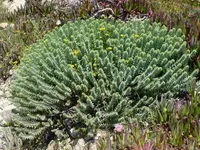
Euphorbia pithyusa is a small, compact perennial succulent from Mediterranean coastal regions. It forms dense, low mounds of narrow, blue-green leaves with small yellow-green floral bracts. The plant has a bushy, cushion-like growth habit that suits rock gardens, dry borders, and containers. It is adapted to harsh, sunny, and windy sites with poor, well-drained soils. This species is drought tolerant once established and usually dislikes prolonged wet conditions. These traits make it relatively low-maintenance for gardeners who want to care for Euphorbia pithyusa in warm, bright, and dry settings.

Care Difficulty
Easy Care

Light Preference
Full Sun

Water Requirements
Low Water

Temperature Preference
Warm Climate

Hardiness Zone
8–11

Soil Texture
Sandy, Rocky, Loamy

Soil pH
Slightly acidic (6.5–7.0), Neutral (7.0)

Soil Drainage
Well-drained

Fertilization
Minimal (feed rarely)
Scan your plant to receive care tips personalized for your specific plant
Available on iOS and Android
This compact Mediterranean succulent thrives in strong light and benefits from several hours of direct sun daily.
This drought-tolerant species prefers infrequent, deep watering and fast-drying, mineral soil.
This Mediterranean shrub-like succulent prefers warm, dry conditions and has only limited cold tolerance.
This species prefers dry air and humidity control is usually not critical indoors or outdoors.
This Mediterranean succulent needs very sharply drained, mineral soil to avoid root rot.
This species is well suited to container growing in sunny, dry locations.
This drought-adapted species needs only modest feeding, especially in lean, well-drained soils.
Pruning is minimal and mainly used to maintain a compact, tidy cushion and remove damaged growth.
This species is usually grown in open, rocky sites, but container plants or young nursery stock may need occasional transplanting.
Propagation is typically done from seeds or carefully handled stem cuttings, taking care with the irritant sap.
This Mediterranean cushion spurge is fairly cold tolerant in dry, well-drained sites and usually needs only light winter attention.

Plant Health Check
Not sure what's wrong with your plant? Check your plant's health inside the app.
This species is naturally restricted to dry, rocky coastal habitats of the western Mediterranean, especially Sardinia, Corsica, and nearby islands, where it tolerates salty winds and calcareous, nutrient-poor soils.
In its native climate, the plant often slows growth or partially dries back in the hottest, driest part of summer, then resumes active growth in cooler, moister seasons, a strategy that reduces water loss and heat stress.
Its showy yellow-green structures are not true petals but specialized leaves called bracts surrounding the tiny, reduced flowers, which help attract pollinators in otherwise sparse coastal vegetation.

Euphorbia pithyusa is considered near-endemic to a small part of the western Mediterranean basin, with several recognized subspecies showing local adaptation to very specific island and coastal microhabitats, which makes wild populations sensitive to habitat disturbance and coastal development.
This species forms small, slowly expanding clumps rather than running aggressively. It spreads by short stems and some self-seeding but usually stays manageable. In well-drained, lean soils it behaves as a controlled, low ground-cover.
Keep your plants happy and healthy with plant identification, disease detection, and easy care guidance.

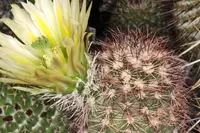
spiny hedgehog cactus
Echinocereus dasyacanthus

Mammillaria standleyi
Mammillaria standleyi
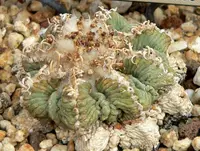
Aztekium ritteri
Aztekium ritteri
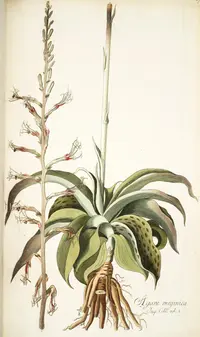
false aloe
Agave virginica
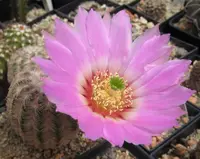
lace hedgehog cactus
Echinocereus reichenbachii
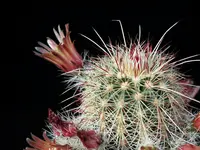
brownspine hedgehog cactus
Echinocereus russanthus
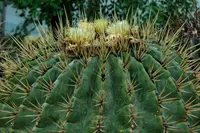
Acitrón barrel cactus
Ferocactus histrix
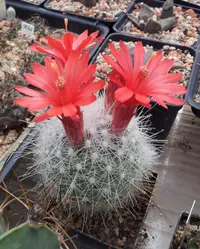
Mammillaria senilis
Mammillaria senilis