BotaN logo

Acitrón barrel cactus Care (Ferocactus histrix)

About Acitrón barrel cactus

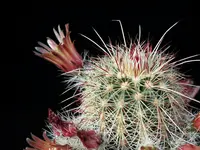
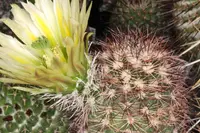
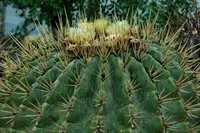
Ferocactus histrix, often called Mexican lime cactus, is a slow-growing barrel cactus with a rounded body covered in strong, hooked yellow to brown spines. Mature plants can develop several heads, forming clumps over time.

This species is native to arid and semi-arid regions of central Mexico, where it grows in rocky, well-drained soils under intense sun. Its drought tolerance and slow growth make it relatively low maintenance, but the sharp spines require careful handling.

Bright light, low humidity, and a gritty, fast-draining cactus mix suit its natural preferences. Understanding these basic needs helps owners care for Ferocactus histrix successfully indoors or outdoors in warm climates.

Main Plant Requirements

Care Difficulty

Easy Care

Light Preference

Full Sun

Water Requirements

Low Water

Temperature Preference

Warm Climate

Hardiness Zone

9–11

Soil Texture

Sandy, Loamy

Soil pH

Slightly alkaline (7.0–7.5), Alkaline (7.5–8.5)

Soil Drainage

Well-drained

Fertilization

Minimal (feed rarely)

Get Personalized Care Plan

Scan your plant to receive care tips personalized for your specific plant

Available on iOS and Android

How to Care for the Acitrón barrel cactus

This cactus thrives in strong light that mimics open desert conditions.

  • Provide 6–8 hours of direct sun daily, ideally with morning sun and some protection from intense late-afternoon summer rays to reduce scorching risk.
  • Outdoors, place Ferocactus histrix in an unobstructed south or west exposure; in very hot regions, use light shade cloth during heatwaves above 100°F (38°C).
  • If stems elongate, lean, or turn pale green, light is too low; gradually increase sun over 1–2 weeks to avoid sudden sunburn.

Watering should be infrequent and deep, allowing the root zone to dry between soakings.

  • Use fast-draining, gritty soil so water runs through quickly and no puddles remain around the roots or in planting basins.
  • In active growth, wait until the top 3–5 cm of soil are completely dry, then water thoroughly; in cool seasons, reduce watering sharply and keep almost dry.
  • Shrinkage, deep wrinkling, and very light weight indicate underwatering, while yellowing, blackened base tissue, or a sour smell suggest overwatering and possible rot.

Stable warm to hot conditions support healthy growth and flowering.

  • Aim for 70–90°F (21–32°C) during the growing season; short spikes to 100°F (38°C) are tolerated if soil is dry and airflow is good.
  • Protect from cold below 40°F (4°C); brief dips to about 30°F (-1°C) may be survived if the plant is dry, but frost can mark or kill tissue.
  • In winter rest, keep it cool and dry at 45–60°F (7–16°C) to avoid soft, etiolated growth and reduce the risk of rot in cold, wet soil.

This cactus handles typical indoor humidity well and rarely needs adjustments.

  • Maintain 30–50% humidity; average household air is usually adequate.
  • Very dry heated air is tolerated, but prolonged exposure can cause puckered ribs and slower growth rather than rot.
  • If air is extremely dry and hot, place a shallow water tray nearby instead of misting to slightly raise local humidity without wetting the stem.

This species needs a very fast-draining, mineral-rich substrate to prevent root rot.

  • Use a gritty cactus mix based on coarse sand or fine gravel with low organic matter, suited to growing Ferocactus histrix.
  • Aim for a slightly acidic to neutral pH around 6.0–7.0 to support nutrient availability without encouraging rot.
  • Combine 1 part commercial cactus mix with 1–2 parts mineral amendments such as pumice, perlite, or crushed lava rock for better aeration.
  • Avoid dense, peat-heavy, or water-retentive soils, which trap moisture around the taproot and greatly increase rot risk.

This species is well suited to container growing when the pot is chosen for drainage and stability.

  • Select a heavy terracotta or clay pot to let the soil dry faster while adding weight against tipping of the spiny, rounded stem.
  • Choose a pot that is only slightly wider than the root ball but deep enough for the taproot to extend without curling tightly.
  • Ensure large, unobstructed drainage holes and, if possible, a slightly sloped saucer so excess water can run off instead of pooling under the pot.

This cactus needs only light feeding to support healthy growth in pots.

  • During spring–summer, apply a balanced liquid cactus fertilizer (low to moderate NPK) every 6–8 weeks.
  • Dilute to 1/4–1/2 the label rate to avoid salt buildup in the soil.
  • Skip feeding in autumn–winter when Ferocactus histrix rests and growth slows.
  • Use well-drained, low-organic soil; avoid rich compost and frequent slow-release products.

Pruning needs are minimal and mainly focused on plant health and safety.

  • Limit work to removing clearly dead, rotting, or pest-infested tissue only.
  • Carry out any trimming in late spring or early summer, when healing is fastest.
  • Use long-handled tongs and a sterile, sharp knife or pruning saw to avoid injury.
  • Do not shape or shorten Ferocactus histrix, as heavy cuts stress the plant and scar permanently.

Container-grown plants benefit from infrequent but careful repotting.

  • Repot every 3–5 years, or when roots circle the pot, emerge from drainage holes, or growth noticeably slows.
  • Plan repotting in late spring, when temperatures are consistently warm and growth is starting.
  • Use a slightly larger pot with a highly mineral, fast-draining cactus mix, handling Ferocactus histrix with thick gloves or tongs.
  • After repotting, keep roots dry for 7–10 days, then resume light watering to limit transplant shock and rot risk.

Propagation is usually done from seed and requires patience and stable conditions.

  • Sow fresh seeds in late spring–summer in a sterile, gritty cactus mix with very good drainage.
  • Press seeds onto the surface and barely cover; maintain 70–80°F and bright, indirect light.
  • Keep the medium just slightly moist using a humidity dome or clear cover with small vents.
  • Germination can take several weeks; seedlings of Ferocactus histrix should be left crowded for the first year before pricking out.

This desert cactus dislikes prolonged cold and needs controlled, dry winter conditions in many climates.

  • Move container plants indoors or to a bright, unheated room before temperatures drop below 40°F.
  • Keep soil almost completely dry in winter to reduce the risk of root rot at low temperatures.
  • Provide 6–8 hours of bright light, using grow lights if natural light is weak.
  • In mild climates, outdoor plants benefit from overhead cover to keep rain off the crown.

Care Tips

Rock mulch ring

Place a ring of coarse gravel or small rocks around the base instead of organic mulch to keep the neck of the plant dry and reduce rot while still stabilizing the shallow root zone.

Top‑dressing refresh

Every 1–2 years, gently remove the top 1–2 cm of old, compacted surface mix and replace it with fresh gritty substrate to improve surface drainage and reduce fungus gnat habitat.

Pot anchoring method

Use a slightly heavier clay or cement pot and tuck a few flat stones around the root ball when repotting to keep the plant stable and upright as the stem becomes taller and heavier.

Winter dryness control

In regions with cool, damp winters, move the plant under an overhang or into a bright cold frame so the substrate stays almost completely dry while still receiving maximum light.

Safe handling setup

Before any handling or repotting, wrap the body loosely with several layers of folded newspaper or foam and use long tongs or thick leather gloves to avoid spine injuries and accidental dropping of the plant when caring for Ferocactus histrix.

Common Pests and Diseases

Red spider mites

This pest feeds on cactus epidermis, causing a dull, bronzed surface, fine corky spots, and loss of the natural green-glaucous color. Symptoms include very fine webbing in ribs and spines, often on plants kept hot and dry with little air movement.

Solution

Increase humidity around the plant slightly and improve airflow, then hose or shower the cactus thoroughly to remove mites and webs. Follow with 2–3 treatments of a horticultural oil or insecticidal soap at 7–10 day intervals, keeping the plant in bright, indirect light during treatment to avoid sunburn.

Cochineal scale

These insects appear as small white, cottony tufts tucked between ribs and at areoles, often staining fingers red when crushed due to carminic acid. Infestations cause yellowing patches and slow, weakened growth.

Solution

Physically remove visible clusters with cotton swabs dipped in isopropyl alcohol, working carefully around spines. For larger infestations, rinse the plant thoroughly, then apply insecticidal soap or a systemic insecticide labeled for cacti and repeat after 10–14 days while isolating the plant from others.

Root mealybugs

This pest lives hidden around the roots and base of the stem, causing unexplained paling, slow decline, and poor water uptake despite seemingly correct care. Symptoms include white, cotton-like deposits on roots or in the potting mix when the plant is unpotted.

Solution

Unpot the cactus, wash all soil from the roots with lukewarm water, and trim any badly infested or dead roots. Soak the root system briefly in a solution of insecticidal soap or a labeled systemic insecticide, repot into fresh, sterile, very well-draining mix, and keep the plant slightly on the dry side for several weeks.

Corking and sunscald

This disorder is common in older specimens and in plants suddenly moved to intense sun, producing brown, corky patches or pale, bleached areas on the southwest-facing side of the stem. Symptoms include rough, bark-like tissue at the base that is normal aging, but newer, sharply defined bleached patches indicate sun damage.

Solution

Move the plant gradually into stronger light over 1–2 weeks, using shade cloth or a sheer curtain for transition, especially in hot, dry climates. Corked tissue will not revert, but preventing future damage through controlled light exposure and avoiding midday sun on recently repotted or stressed plants is an important part of Ferocactus histrix care instructions.

Fungal stem spot

This disease appears as small, sunken, brown to black spots on the stem that may slowly expand, often after mechanical injury or prolonged dampness on the epidermis. Symptoms include firm but discolored tissue that can later soften if secondary rot organisms enter.

Solution

Keep the stem dry, avoid overhead watering, and ensure strong light and airflow to allow fast surface drying. If spots are small and firm, monitor only; if they enlarge or soften, carefully excise affected tissue with a sterile knife, dust the wound with sulfur or a copper-based fungicide, and keep the plant in a dry, bright place until callus forms.

Interesting Facts

Spine color changes

Young plants often show pale yellow to light brown spines that become stronger yellow or straw-colored as the cactus ages, creating a visible contrast between older and newer spine growth on the same plant.

Massive taproot system

This species develops a thick taproot and strong lateral roots that anchor it in rocky, eroded slopes of central Mexico and allow it to access deeper moisture during long dry periods.

Rocky hillside specialist

In the wild, this cactus typically grows on arid, sun-exposed hillsides and volcanic or limestone slopes in central Mexican states such as Hidalgo and Querétaro, where it helps stabilize poor, stony soils.

Botan icon

Did you know?

In its native range in central Mexico, this barrel cactus is sometimes used as a living fence, planted in lines for its dense, rigid spines that form an effective barrier against livestock and people.

FAQs about Acitrón barrel cactus

Growth is slow, usually only a few millimeters to about 1 cm per year under good conditions. This species invests heavily in dense spines and water storage tissue, so visible size increase is gradual, especially in containers.

Grow Healthy Plants with Botan Care

Keep your plants happy and healthy with plant identification, disease detection, and easy care guidance.

Botan plant care app — identify plants on mobile

Explore More Plants