


Winter rest management
Keep the plant almost dry and in a bright, cool spot around 45–55°F in winter to promote stronger flowering the following spring when caring for Mammillaria senilis.

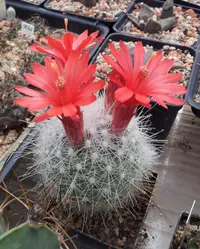
Mammillaria senilis is a small globular cactus known for its dense white hair-like spines and bright red tubular flowers. It usually grows as a solitary stem or in small clusters over time. Native to rocky, high-altitude regions of Mexico, it is adapted to strong light, cool nights, and very sharp drainage. This background makes it sensitive to excess moisture and poor ventilation. The plant is considered moderately challenging, mainly because it dislikes overwatering and prolonged humidity. It stays compact, which suits container culture and collectors with limited space. For those learning how to care for Mammillaria senilis, stable bright light, a gritty mineral soil mix, and careful watering are the main priorities.

Care Difficulty
Moderate Care

Light Preference
Full Sun

Water Requirements
Low Water

Temperature Preference
Warm Climate

Hardiness Zone
9–11

Soil Texture
Sandy, Loamy, Rocky

Soil pH
Acidic (5.5–6.5), Slightly acidic (6.5–7.0)

Soil Drainage
Well-drained

Fertilization
Minimal (feed rarely)
Scan your plant to receive care tips personalized for your specific plant
Available on iOS and Android
This small cactus needs strong light but benefits from some protection from intense midday sun.
This species prefers thorough but infrequent watering in fast-draining, gritty soil.
This highland cactus prefers cool to warm conditions with a marked dry, cool rest in winter.
This cactus prefers dry air and rarely needs extra humidity intervention indoors.
Use a very fast-draining, gritty substrate that mimics rocky desert soil.
This species is very suitable for container growing due to its compact, shallow root system.
This cactus needs only light feeding, as Mammillaria senilis is adapted to low-nutrient, rocky soils.
Pruning needs are minimal, focused on hygiene rather than shaping for Mammillaria senilis.
Repotting Mammillaria senilis is infrequent and mainly for root health and substrate renewal.
Propagation of Mammillaria senilis is usually done from seeds, with offsets used when available.
Winter care for Mammillaria senilis focuses on keeping it cold, bright, and very dry.

Plant Health Check
Not sure what's wrong with your plant? Check your plant's health inside the app.
This cactus is naturally restricted to high volcanic slopes in central Mexico, often growing at 2,000–3,000 m where nights are cold and sunlight is very intense.
The stems are covered in long, hair-like white spines that act like a protective wool layer, helping to shade the plant body and reduce rapid temperature swings in its exposed mountain habitat.
It produces vivid red, tubular flowers near the stem apex that are adapted for pollination by hummingbirds and other nectar-feeding visitors in its native range.

Mammillaria senilis is considered rare in habitat and is known from relatively few, localized populations on rocky cliffs and slopes, which makes wild plants vulnerable to overcollection and habitat disturbance.
This species usually flowers in late winter to early spring, producing bright red, tubular blooms above the white spines. Flowers often form a ring near the stem apex and are followed by small red fruit containing seeds.
Keep your plants happy and healthy with plant identification, disease detection, and easy care guidance.

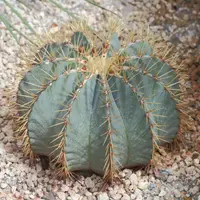
glaucous barrel cactus
Ferocactus glaucescens
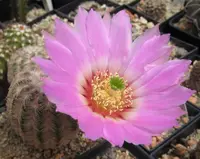
lace hedgehog cactus
Echinocereus reichenbachii
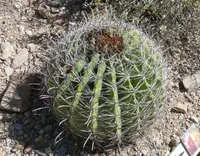
candy barrelcactus
Ferocactus wislizeni
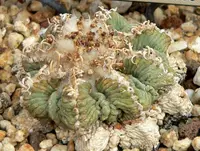
Aztekium ritteri
Aztekium ritteri
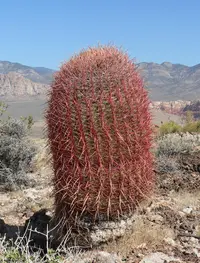
California barrel cactus
Ferocactus cylindraceus
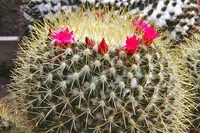
rainbow pincushion
Mammillaria rhodantha
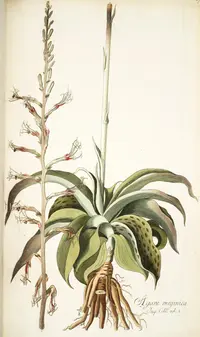
false aloe
Agave virginica
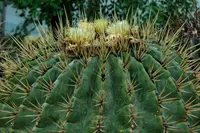
Acitrón barrel cactus
Ferocactus histrix