


Rotate For Symmetry
Turn the pot 90° every 2–4 weeks so the plant receives light evenly on all sides, which helps maintain a round, symmetrical form instead of leaning toward the brightest direction.

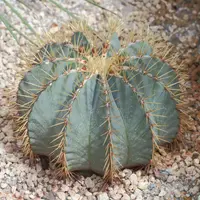
Ferocactus glaucescens, commonly called glaucous barrel cactus, is a slow-growing desert cactus valued for its rounded, ribbed body and blue-gray skin. It typically forms a compact barrel shape that can become multi-headed with age, creating a striking architectural clump in containers or rock gardens.
This species is native to arid regions of central Mexico, where it grows in rocky, well-drained soils under strong sun. Firm spines protect the plant and discourage handling, but also make repotting and placement slightly more challenging. With bright light, minimal watering, and gritty soil, it is relatively straightforward to care for glaucous barrel cactus for growers who respect its need for dryness and good drainage.

Care Difficulty
Easy Care

Light Preference
Full Sun

Water Requirements
Low Water

Temperature Preference
Tropical / Frost Sensitive

Hardiness Zone
9–11

Soil Texture
Sandy, Loamy, Rocky

Soil pH
Slightly acidic (6.5–7.0), Neutral (7.0)

Soil Drainage
Well-drained

Fertilization
Minimal (feed rarely)
Scan your plant to receive care tips personalized for your specific plant
Available on iOS and Android
This cactus thrives in strong light that mimics its native arid habitat.
Watering for Ferocactus glaucescens should be infrequent but thorough, with full drying between waterings.
This species prefers warm, dry conditions with a clear cool season but no hard frost.
This desert cactus handles typical indoor humidity well and rarely needs adjustment.
This cactus needs a very fast-draining, mineral-rich substrate to prevent root rot.
This species is very suitable for container growing due to its slow, compact habit.
This species benefits from light, targeted feeding but does not need heavy fertilization to stay healthy.
Pruning Ferocactus glaucescens is minimal and mainly focused on safety and hygiene rather than shaping.
Repotting is infrequent but important to maintain healthy roots and stable growth in containers.
Propagation of this cactus is usually done from seed and is slow but reliable under stable conditions.
Winter care focuses on keeping the plant cold-dry and above its frost limit, especially in containers.

Plant Health Check
Not sure what's wrong with your plant? Check your plant's health inside the app.
A naturally occurring form, often sold as Ferocactus glaucescens f. nuda, produces almost no spines and shows the blue-gray epidermis very clearly, unlike most related barrel cacti that are heavily armed.
In the wild, this species is native to Hidalgo, Mexico, where it grows on sunny, arid limestone hills, indicating strong adaptation to alkaline, rocky substrates with very sharp drainage.
Compared with many desert cacti, this species tolerates brief drops close to 32°F if kept dry, which makes Ferocactus glaucescens care slightly more flexible in cooler indoor or greenhouse conditions.

In habitat, mature plants can gradually form low, clustering groups of many heads, creating wide, dome-like colonies that stand out sharply against the pale limestone slopes where they grow.
Growth is slow. In typical home or garden conditions, it may add only 1–2 cm in diameter per year. Seedlings stay small for many years, and reaching a substantial barrel size usually takes several decades.
Keep your plants happy and healthy with plant identification, disease detection, and easy care guidance.

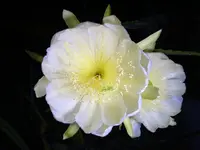
Yellow dragonfruit
Selenicereus megalanthus
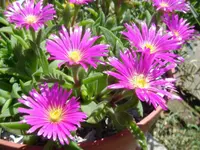
Fire Sheepfig
Delosperma sutherlandii
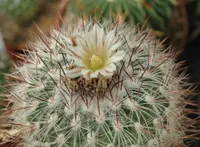
Brain Cactus
Stenocactus multicostatus
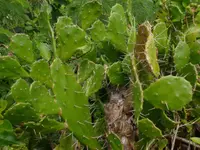
Common pricklypear
Opuntia monacantha
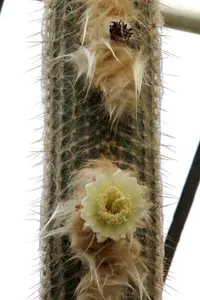
Espostoa melanostele
Espostoa melanostele
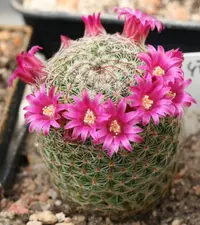
Thumb Cactus
Mammillaria matudae
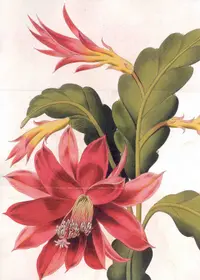
Disocactus ackermannii
Disocactus ackermannii
Rock Stonecrop
Crassula orbicularis