


Winter rest setup
Provide a cool, bright, and very dry winter rest at 45–55°F by moving the pot to an unheated but frost-free window or using a slightly open vent to lower temperatures without exposing the plant to drafts.

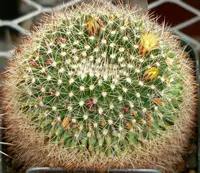
Mammillaria petrophila is a small, clustering cactus from rocky habitats in Mexico. It forms rounded stems covered with dense white spines and small woolly tubercles instead of ribs. In season it produces a ring of pink to magenta flowers near the stem top, giving a neat, decorative look. The plant stays compact, which makes it suitable for containers and windowsills. It is generally considered an easy species for those learning how to care for Cactus, as long as excess moisture is avoided. It prefers bright light, gritty fast-draining soil, and careful watering that allows the roots to dry between waterings.

Care Difficulty
Moderate Care

Light Preference
Full Sun

Water Requirements
Low Water

Temperature Preference
Warm Climate

Hardiness Zone
9–11

Soil Texture
Sandy, Loamy, Rocky

Soil pH
Slightly acidic (6.5–7.0), Neutral (7.0)

Soil Drainage
Well-drained

Fertilization
Minimal (feed rarely)
Scan your plant to receive care tips personalized for your specific plant
Available on iOS and Android
This species prefers bright, direct light that mimics open, rocky desert slopes.
Watering should imitate brief desert rains followed by thorough drying.
This cactus thrives in warm, dry conditions with a marked cool, but not freezing, winter rest.
This species tolerates typical indoor humidity and prefers fairly dry air.
Prepare a very fast-draining, mineral-rich mix to keep Mammillaria petrophila roots dry and aerated.
This compact species is well suited to container growing.
Mammillaria petrophila grows well with modest feeding during its active season in spring and summer.
Mammillaria petrophila needs minimal pruning, mainly for cleanliness and disease prevention.
This cactus prefers a stable root environment and only occasional repotting in containers.
Mammillaria petrophila is commonly propagated from offsets and seeds under warm, bright conditions.
Mammillaria petrophila benefits from a cool, dry winter rest and moderate cold protection in most climates.

Plant Health Check
Not sure what's wrong with your plant? Check your plant's health inside the app.
This species naturally grows on steep rocky limestone slopes and cliffs in northern Mexico, anchoring itself in crevices where little organic soil is present.
Its short, white radial spines form a tight cushion over the stem surface, which helps shade the epidermis and reduce water loss in intense sun.
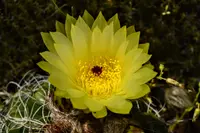
It produces relatively large white to pale cream flowers, often forming a ring near the top of the stem, which stand out strongly against the grey-green body and white spines.
Lack of flowering usually results from insufficient light, no cool dry rest in winter, or excess nitrogen fertilizer. Mature plants need strong light, a slight winter temperature drop, and lean feeding to set buds reliably.
Keep your plants happy and healthy with plant identification, disease detection, and easy care guidance.

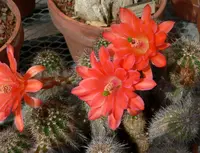
Mojave mound cactus
Echinocereus polyacanthus
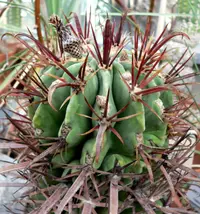
Devil's Tongue Barrel Cactus
Ferocactus latispinus
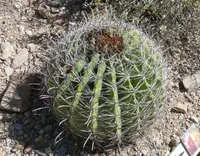
candy barrelcactus
Ferocactus wislizeni
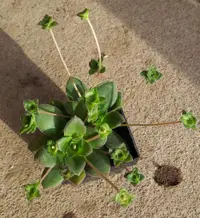
Rock Stonecrop
Crassula orbicularis
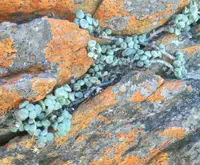
String-of-Tears
Curio citriformis
Mammillaria sempervivi
Mammillaria sempervivi
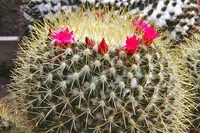
rainbow pincushion
Mammillaria rhodantha
Cactus
Parodia ottonis