


Reset leggy growth
If stems become sparse near the base, cut several 5–8 in tip cuttings in spring, replant them around the original root ball, and lightly press them into the soil surface to create a fuller, denser cascade over time.

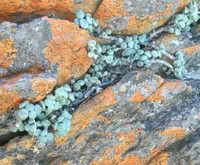
String-of-tears, Curio citriformis, is a small trailing succulent grown mainly for its bead-like, teardrop leaves carried on thin hanging stems. It forms cascading chains that suit hanging baskets, shelves, and mixed succulent planters.
This species comes from arid regions of South Africa, so it stores water in its fleshy leaves and tolerates short dry spells. Its compact roots and drought-adapted growth make it sensitive to overwatering and poorly drained soil.
With bright light, modest watering, and gritty, fast-draining potting mix, it tends to grow reliably indoors. For most homes, understanding how to care for String-of-Tears mainly means preventing rot and avoiding heavy, moisture-retentive soil.

Care Difficulty
Easy Care

Light Preference
Partial Sun

Water Requirements
Low Water

Temperature Preference
Tropical / Frost Sensitive

Hardiness Zone
10–11

Soil Texture
Sandy, Loamy, Rocky

Soil pH
Acidic (5.5–6.5), Slightly acidic (6.5–7.0)

Soil Drainage
Well-drained

Fertilization
Minimal (feed rarely)
Scan your plant to receive care tips personalized for your specific plant
Available on iOS and Android
Curio citriformis prefers bright, indirect light with some gentle direct sun each day.
Curio citriformis is a drought-tolerant succulent that prefers infrequent, deep watering.
This succulent thrives in warm, dry conditions and dislikes cold, damp environments.
This succulent handles typical indoor humidity well and rarely needs special adjustment.
This species needs a very fast-draining, airy mix to protect its roots from excess moisture.
This plant is very suitable for container growing due to its trailing, compact root system.
This succulent benefits from modest feeding to support steady growth without stretching.
Pruning helps Curio citriformis stay compact, tidy, and free of weak growth.
Curio citriformis prefers slightly tight pots and only occasional repotting.
This species is commonly propagated from stem cuttings to create new plants or thicken existing pots.
Curio citriformis is not frost hardy and needs protection in regions with cold winters.

Plant Health Check
Not sure what's wrong with your plant? Check your plant's health inside the app.
This species develops small, lemon-shaped leaves with a pointed tip and translucent windowed tissue near the apex that helps light reach the inner photosynthetic cells while the rest of the leaf stays protected from excess sun and water loss.
Unlike many compact stone-like succulents, this plant produces long, wiry stems that can both trail and scramble over surrounding vegetation or rocks, allowing it to access better light while keeping its water-storing leaves elevated from hot ground surfaces.
In its native South African habitat, it tends to grow more actively in the cooler, wetter months and slow down in hot, dry periods, so under cultivation it often responds best when given a slight rest in midsummer with reduced watering.

In its natural range in the Eastern Cape of South Africa, this species is often found rooted in shallow, rocky crevices where its bead-like leaves mimic small pebbles, a growth strategy known as camouflage or cryptic mimicry that may help reduce herbivore attention in sparse, arid landscapes.
Brown leaves usually result from underwatering, excess direct sun scorch, or salt buildup from fertilizer. Check soil moisture, flush the pot occasionally, and trim damaged beads. New growth should appear healthy once conditions stabilize.
Keep your plants happy and healthy with plant identification, disease detection, and easy care guidance.


Cereus fernambucensis
Cereus fernambucensis
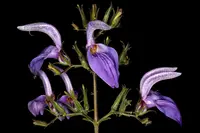
Brillantaisia cicatricosa
Brillantaisia cicatricosa
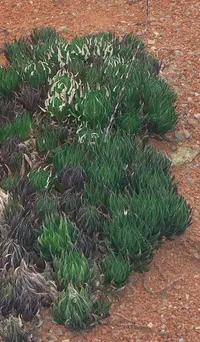
Haworthia marumiana
Haworthia marumiana
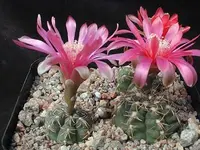
Dwarf Chin Cactus
Gymnocalycium baldianum
Euphorbia decaryi
Euphorbia decaryi
Day's Cymbidium
Cymbidium dayanum
starfish flower
Stapelia hirsuta
Baby Toes
Fenestraria rhopalophylla