Early trellis training
Install a sturdy trellis or wire frame at planting time and gently tie new vines with soft ties every 10–15 cm of growth to prevent tangling and to keep bracts well displayed and easy to inspect for pests.

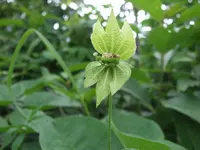
Spurgecreeper (Dalechampia scandens) is a fast-growing tropical vine in the spurge family, valued mainly for its unusual, showy bracts rather than its tiny true flowers. It typically climbs or trails with slender stems and lobed green leaves, forming a light, scrambling canopy over supports or nearby plants.
In nature, it occurs in warm, humid regions of Central and South America, often in forest edges and thickets. Its vigorous growth and adaptable habit make it relatively easy to manage in frost-free gardens or sheltered containers.
To care for spurgecreeper successfully, provide bright light, moderate moisture, and well-drained soil, protecting it from cold and prolonged drought.

Care Difficulty
Moderate Care

Light Preference
Partial Sun

Water Requirements
Moderate Water

Temperature Preference
Tropical / Frost Sensitive

Hardiness Zone
10–11

Soil Texture
Sandy, Loamy, Organic-rich

Soil pH
Acidic (5.5–6.5), Slightly acidic (6.5–7.0)

Soil Drainage
Moist but well-drained

Fertilization
Light (every 4–6 weeks)
Scan your plant to receive care tips personalized for your specific plant
Available on iOS and Android
Dalechampia scandens prefers bright, indirect light with some soft direct sun for best flowering.
Dalechampia scandens benefits from consistently moist but not waterlogged soil.
This vine prefers warm, frost-free conditions for reliable growth and flowering.
This vine prefers moderate humidity but copes with typical indoor levels if not too dry.
This species grows best in a light, well-aerated mix that drains quickly yet holds some moisture.
This twining species is well suited to container growing when the pot supports its vining habit.
Dalechampia scandens responds well to light, consistent feeding during its active growing season.
Pruning Dalechampia scandens helps manage its vigorous vine growth and maintain flowering performance.
This twining vine benefits from timely repotting or transplanting to support its fast root and shoot growth.
Dalechampia scandens is commonly propagated from softwood or semi-ripe stem cuttings and sometimes from seed.
This tropical vine is frost-sensitive and needs protective winter care in climates with cold seasons.

Plant Health Check
Not sure what's wrong with your plant? Check your plant's health inside the app.
The showy purple structures often mistaken for petals are actually bracts that hide small unisexual flowers, and their shape helps guide specialized bees into position to contact the pollen and stigmas efficiently.
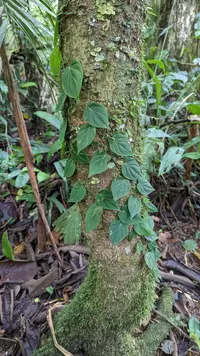
This species has twining stems that can scramble over shrubs and small trees, allowing it to reach brighter canopy light while keeping relatively thin, flexible shoots rather than investing in a thick woody trunk.
As a member of the spurge family, it produces a milky latex sap containing defensive chemicals that deter many herbivores and help seal wounds when the vine is damaged.

In its native range from Mexico through Central America, Dalechampia scandens often grows at forest edges and gaps where periodic disturbance creates mixed sun and shade, and it can quickly exploit these openings by extending long, fast-growing vines that flower over much of the warm season.
This species is a twining vine that climbs when given support, but will scramble and spread across the ground or over nearby plants if no structure is available. Regular training and pruning help keep its growth controlled and directed.
Keep your plants happy and healthy with plant identification, disease detection, and easy care guidance.