swamp leather flower Care (Clematis crispa)

swamp leather flower

About swamp leather flower

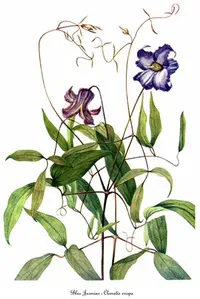
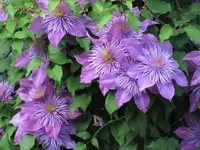
Swamp leather flower, Clematis crispa, is a deciduous, twining vine native to wetlands and stream edges in the southeastern United States. It has distinctive nodding, bell-shaped flowers with curled petals in soft shades of blue, lavender, or white.

Plants climb over shrubs or supports using leaf tendrils, forming an airy, informal screen. Its bloom and seed heads add ornamental interest for a long season.

This species is moderately easy to grow if its needs are met, but it dislikes drying out completely. It prefers sun to light shade, consistently moist soil, and good drainage, which guides how to care for swamp leather flower.

Main Plant Requirements

Care Difficulty

Moderate Care

Light Preference

Partial Sun

Water Requirements

Regular Water

Temperature Preference

Cold Hardy

Hardiness Zone

6–9

Soil Texture

Loamy, Sandy, Organic-rich

Soil pH

Acidic (5.5–6.5), Slightly acidic (6.5–7.0)

Soil Drainage

Moist but well-drained

Fertilization

Light (every 4–6 weeks)

Get Personalized Care Plan

Scan your plant to receive care tips personalized for your specific plant

Available on iOS and Android

How to Care for the swamp leather flower

Clematis crispa needs bright outdoor light with a balance of sun on top growth and shade at the root zone.

  • Provide 4–6 hours of direct morning sun with light afternoon shade; strong late-day sun in hot summers can scorch leaves and fade blooms.
  • Accepts bright dappled or high open shade, but flowering on swamp leather flower is usually lighter with less than 3–4 hours of direct sun.
  • In cooler climates, it tolerates more full sun, while in hotter regions use nearby shrubs, fences, or trellises to cast partial shade on the vine.

This species prefers evenly moist, cool soil around the roots, not constant saturation.

  • Water when the top 3–5 cm of soil feels dry, soaking the root zone deeply so moisture reaches 15–20 cm down, then let the surface dry slightly.
  • In hot, dry periods increase checks to every 1–2 days; in cool or rainy seasons reduce watering to avoid soggy soil and root rot in Clematis crispa.
  • Wilting with dry soil indicates underwatering; wilting with wet soil, yellowing lower leaves, or a sour smell suggests overwatering and poor drainage.

This vine is a hardy outdoor plant that tolerates a wide temperature range once established.

  • Active growth and flowering are strongest around 65–80°F (18–27°C), with steady warmth and moderate humidity during the growing season.
  • Established plants typically survive down to about 0°F (−18°C) in the ground, though top growth may die back and re-sprout from the crown in spring.
  • Short spikes above 90°F (32°C) are tolerated if soil stays cool and moist; mulch 5–8 cm deep to buffer heat and protect roots from rapid temperature swings.

This species prefers moderate to high humidity but usually copes with typical outdoor levels.

  • Aim for 50–70% humidity, which matches conditions in its native swampy habitats.
  • Tolerates brief drier air, but prolonged very low humidity may cause curled, browning leaf edges on swamp leather flower.
  • To ease stress in dry spells, group plants near other vegetation or mulch the root zone to conserve moisture around the plant.

Clematis crispa grows best in deep, moist, well-aerated soil that drains freely yet never stays waterlogged.

  • Use a loose loam with high organic matter, such as garden loam mixed with composted bark or leaf mold, to support root health.
  • Ensure strong drainage by avoiding heavy, compacted clay; amend with coarse sand or fine grit plus compost to open the structure.
  • Target slightly acidic to neutral pH, roughly 6.0–7.0, since strongly alkaline soils can reduce nutrient availability and vigor.
  • Keep the root zone cool by mulching with composted bark or leaf mold, avoiding plastic sheeting or dense gravel directly against stems.

This species can be grown in containers if the pot is large, deep, and very stable.

  • Choose a heavy, tall container to counterbalance vigorous vine growth and reduce tipping in wind.
  • Select a pot at least 40–50 cm deep so the roots can grow downward and remain cooler in summer heat.
  • Use a free-draining mix and raise the pot slightly on feet or bricks so drainage holes never sit in collected water.

Clematis crispa responds well to modest, consistent feeding during the growing season.

  • Use a balanced, slow-release fertilizer (for example 10-10-10) or well-rotted compost mixed into the root zone in early spring.
  • Apply a half-strength, balanced liquid feed every 4–6 weeks from spring to midsummer while the vine is actively growing.
  • Stop feeding in late summer so growth can harden before cold weather and avoid stimulating weak late-season shoots.
  • Do not fertilize during winter dormancy; maintain only light, even soil moisture for swamp leather flower.

Pruning helps Clematis crispa maintain a tidy shape and encourages strong flowering wood.

  • Prune in late winter or very early spring before new growth extends, using clean, sharp bypass pruners.
  • Remove dead, damaged, or crossing stems first, cutting back to healthy buds to reduce disease risk.
  • Thin crowded interior stems to improve light and air flow, which supports better flowering and foliage quality.
  • Shorten remaining stems to a balanced framework, guiding growth along supports for an orderly, floriferous vine.

This vine is usually grown in the ground; focus on careful transplanting or occasional container up-potting.

  • Plan transplanting or repotting for early spring or early fall when temperatures are mild and soil is workable.
  • Look for roots circling the pot drainage holes, soil drying very fast, or reduced vigor as signs a container plant needs a larger pot.
  • Shift to only 1–2 pot sizes larger, keeping the root ball intact and setting the crown at the same soil level.
  • Water deeply after planting, then shade the vine for 1–2 weeks and keep soil evenly moist to reduce transplant shock.

Clematis crispa can be propagated by cuttings, layering, or seeds, though vegetative methods keep flower traits consistent.

  • Take semi-ripe stem cuttings in late spring to midsummer, using non-flowering shoots with 2–3 nodes and applying rooting hormone.
  • Insert cuttings into a sterile, moist, free-draining mix, then maintain high humidity and bright, indirect light until rooted.
  • Use simple layering in spring by pegging a flexible stem to the soil and severing it from the parent once roots form.
  • Sow fresh seed in pots outdoors and allow natural cold stratification over winter for better germination the following spring.

This species is moderately cold hardy and usually needs only light winter care in most temperate gardens.

  • Tolerates typical winters in USDA zones around 6–9, but very young plants benefit from extra protection.
  • Apply a 5–8 cm layer of mulch over the root zone in late fall, keeping it slightly away from the stem base.
  • In colder areas or exposed sites, tie stems to supports to limit wind damage and consider a breathable burlap screen.
  • Move container-grown plants into a sheltered, frost-free or slightly protected spot and reduce watering while dormant.

Care Tips

Provide sturdy support

Install a 1.5–2 m trellis or mesh with thin wires or netting so the fine twining leaf stalks can grip securely and distribute the plant’s weight without tearing stems.

Cool roots, airy tops

Lay a 5–8 cm mulch layer or place low perennials or stones around the base to shade and cool the root zone while keeping the vine itself in good sun and good air movement.

Root zone protection

In colder regions, add an extra 5–10 cm of loose mulch over the root area in late fall to buffer freeze–thaw cycles and reduce the risk of crown damage.

Monitor for clematis wilt

Check regularly for sudden stem collapse and, if seen, cut affected stems back to healthy tissue at soil level and bin the debris to limit spread of the fungus.

Train and thin stems

As shoots elongate, gently weave them through the support and remove weak, tangled, or inward-growing stems to improve light penetration and airflow when caring for swamp leather flower.

Common Pests and Diseases

Clematis wilt

This disease causes sudden blackening and collapse of stems, often just as plants come into active growth or flowering. Symptoms include dark, shriveled shoots that die back rapidly from a point on the stem downward.

Solution

Cut affected stems back to healthy green tissue, sterilizing pruners between cuts, and remove all fallen leaves and debris from around the base. Encourage strong regrowth by keeping the crown shaded and evenly moist, avoiding mechanical damage to stems, and planting slightly deeper so new buds arise below soil level as part of careful Clematis crispa care.

Powdery mildew

This disease appears as a white, powdery coating on leaves, stems, and sometimes flower buds, often in warm, dry conditions with poor air circulation. Symptoms include distorted foliage and reduced vigor if infection is heavy.

Solution

Remove and discard heavily affected leaves and thin surrounding vegetation to improve airflow around the vine. Water at soil level, avoid overhead watering, and if needed use a labeled horticultural oil or sulfur-based fungicide applied according to directions during early stages of infection.

Spider mites

These pests are tiny sap-sucking arachnids that thrive in hot, dry weather and on stressed plants. Symptoms include fine stippling on leaves, yellowing, and delicate webbing on the undersides of foliage.

Solution

Rinse foliage thoroughly with a strong but gentle stream of water, focusing on leaf undersides, and repeat every few days to knock populations back. Increase humidity around the plant, reduce drought stress, and if mites persist use insecticidal soap or a horticultural oil, carefully coating all leaf surfaces.

Aphids

These insects cluster on tender shoot tips, buds, and the undersides of leaves, feeding on sap and excreting sticky honeydew. Symptoms include curled or distorted new growth, sticky residue, and sometimes sooty mold developing on the honeydew.

Solution

Wash colonies off with a firm stream of water or pinch off heavily infested soft tips. Encourage natural predators such as lady beetles, and if needed apply insecticidal soap or a light horticultural oil, repeating at 5–7 day intervals until populations are reduced.

Slugs and snails

These pests feed on young shoots and lower leaves, especially on newly planted or emerging stems. Symptoms include irregular holes, shredded young foliage, and slime trails around the base of the plant.

Solution

Hand-pick slugs and snails during evening or early morning, and use barriers such as copper tape or rough mulch around the crown. Keep the area around the base clear of dense mulch and debris, and if damage is severe, use iron phosphate bait products labeled for garden use, applied according to instructions.

Interesting Facts

Bell-shaped nodding flowers

This species has distinctive bell-shaped flowers with recurved petal tips that give a twisted, crisped look, which inspired the species name crispa. The flowers often have a light lavender to bluish color with paler interiors and can appear in waves from late spring into early fall in warm climates.

Native wetland climber

Clematis crispa is native to wet habitats of the southeastern United States, including swamps, marsh edges, and stream banks. It naturally scrambles over shrubs and small trees, using its leaf petioles as tendrils to climb and reach better light.

Specialized seed dispersal

After flowering, this species forms clusters of achenes (dry one-seeded fruits) each with a long feathery style that aids wind dispersal. These silky seed tails can create a decorative, plume-like effect on the vines later in the season.

Botan icon

Did you know?

Clematis crispa is one of the few North American clematis species that has been used in breeding to introduce nodding, bell-shaped flower forms into modern ornamental clematis cultivars, influencing the look of several contemporary garden varieties.

FAQs about swamp leather flower

Lack of flowers usually comes from too much shade, heavy or dry soil, or incorrect pruning that removes young flowering wood. Ensure adequate light, consistent moisture, and prune only after flowering, following basic Clematis crispa care principles.

Grow Healthy Plants with Botan Care

Keep your plants happy and healthy with plant identification, disease detection, and easy care guidance.

Botan plant care app — identify plants on mobile

Explore More Plants