Use Climbing Support
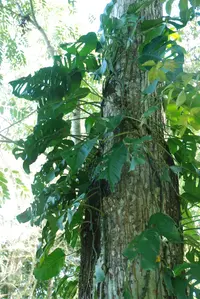
Provide a moss pole, coir pole, or rough wooden trellis so aerial roots can attach, which encourages larger leaves and denser growth along the vine.

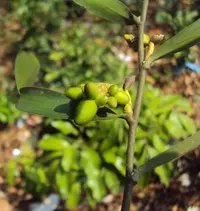
Climbing aroid (Pothos scandens) is a small, delicate vining aroid grown mainly for its slender stems and small heart-shaped leaves. It tends to climb rather than trail, especially if given a support.
In the wild it occurs in tropical forests of South and Southeast Asia, where it grows as an epiphyte or on rocky, shaded slopes. The foliage stays relatively small and neat, which makes it suitable for compact indoor spaces.
This species is considered moderately easy, but it is more sensitive to low humidity and neglect than common pothos types. It prefers bright, indirect light, lightly moist but well-drained soil, and steady warmth, which helps clarify how to care for Climbing Aroid.

Care Difficulty
Easy Care

Light Preference
Bright Indirect Light

Water Requirements
Moderate Water

Temperature Preference
Tropical / Frost Sensitive

Hardiness Zone
11–12

Soil Texture
Loamy, Sandy, Organic-rich

Soil pH
Acidic (5.5–6.5), Slightly acidic (6.5–7.0)

Soil Drainage
Moist but well-drained

Fertilization
Light (every 4–6 weeks)
Scan your plant to receive care tips personalized for your specific plant
Available on iOS and Android
Pothos scandens grows best in bright, indirect light that mimics dappled forest conditions.
Watering for Pothos scandens should balance consistent moisture with good aeration around the roots.
This species prefers warm, stable temperatures without sudden extremes.
This species prefers moderate household humidity but benefits from slightly higher levels in very dry homes.
This vine prefers a loose, airy, organic-rich mix that drains rapidly yet holds some moisture.
This species adapts very well to container growing for both trailing and climbing displays.
Pothos scandens benefits from light, consistent feeding during its active growing season.
Pothos scandens responds well to modest pruning that controls length and encourages fuller growth.
This species tolerates being slightly rootbound but grows better when repotted before roots become congested.
This vining aroid is commonly propagated from stem cuttings rather than seed.
As a tropical species, this plant is not frost hardy and requires mild indoor conditions over winter.

Plant Health Check
Not sure what's wrong with your plant? Check your plant's health inside the app.
In the wild, this species often starts life on tree trunks or in leaf litter as a hemiepiphyte, meaning it spends part of its life attached to other plants and part rooted in soil. This growth strategy lets it reach better light while still accessing moisture and nutrients from the forest floor.
Young plants have small, simple, heart-shaped leaves, but in mature wild specimens the leaves can become larger, thicker, and more elongated with a tougher texture. This change in leaf form with age is a type of heteroblasty, a developmental shift that helps the plant adapt to different light levels as it climbs.
The slender stems produce numerous aerial roots that adhere strongly to bark, rock, or other rough surfaces. These roots provide both support and extra water and nutrient uptake as the plant ascends toward brighter canopy light.

Wild populations of this species can ascend host trees to considerable heights in humid tropical forests, forming dense curtains of foliage on trunks and branches that create microhabitats for small invertebrates and epiphytic mosses and lichens.
Yellowing leaves often result from inconsistent watering, waterlogged soil, low light, or natural aging of older foliage. Check drainage, let excess water escape, remove very old leaves, and inspect roots for rot if yellowing progresses upward.
Keep your plants happy and healthy with plant identification, disease detection, and easy care guidance.