Sandpaper vine Care (Petrea volubilis)

Also known as: Sandpaper vine
Sandpaper vine

About Sandpaper vine

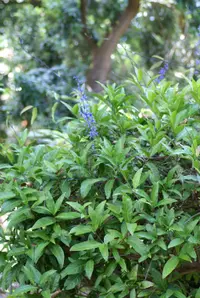
Sandpaper vine, Petrea volubilis, is a tropical woody climber grown for its long, cascading sprays of star-shaped, violet-blue flowers. The coarse, rough leaves feel like fine sandpaper, which gives the plant its common name.

It naturally occurs in Central America and the Caribbean, thriving in warm, frost-free climates where it can scramble over pergolas, fences, or large supports. In suitable conditions it can grow vigorously and flower heavily, but it needs space and some structural training.

This vine prefers bright light, warmth, and well-drained soil, so it is usually easier outdoors in mild climates than indoors. Understanding how to care for Sandpaper vine helps keep it healthy and flowering reliably.

Main Plant Requirements

Care Difficulty

Moderate Care

Light Preference

Full Sun

Water Requirements

Moderate Water

Temperature Preference

Tropical / Frost Sensitive

Hardiness Zone

10–11

Soil Texture

Sandy, Loamy, Organic-rich

Soil pH

Acidic (5.5–6.5), Slightly acidic (6.5–7.0)

Soil Drainage

Well-drained

Fertilization

Light (every 4–6 weeks)

Get Personalized Care Plan

Scan your plant to receive care tips personalized for your specific plant

Available on iOS and Android

How to Care for the Sandpaper vine

This vine prefers bright, direct sun for abundant flowering.

  • Provide 6–8 hours of direct sun daily, with morning sun and light afternoon shade ideal, especially in hotter regions.
  • Sandpaper vine tolerates light or dappled shade but flowering drops sharply if it receives less than 4–5 hours of direct light.
  • In summer, protect from intense late-afternoon sun in hot climates to prevent leaf scorch; in winter, avoid deep shade caused by overhanging trees or structures.

This plant prefers consistently moist but not saturated soil once established.

  • Water when the top 3–5 cm of soil feel dry, applying a deep soak so moisture reaches the root zone, then allow excess to drain away.
  • Use well-drained soil or a sloped site to prevent standing water, since Petrea volubilis is prone to root problems in heavy, waterlogged ground.
  • In hot, dry periods, watch for limp or curling leaves as a sign to water sooner; yellowing, soft leaves or sour-smelling soil often indicate overwatering.

This tropical vine thrives in warm, frost-free conditions.

  • Aim for 65–85°F (18–29°C) for active growth, with the strongest growth and flowering toward the upper part of this range.
  • Protect from temperatures below 40°F (4°C); light chill may cause leaf drop, and hard frost can kill stems or the entire plant.
  • In hot climates, the plant tolerates short spikes to 95–100°F (35–38°C) if soil moisture is maintained and roots are mulched to moderate temperature swings.

This vine prefers moderately humid air but copes with a range of household conditions.

  • Aim for 40–60% humidity to support steady growth and flowering in Sandpaper vine.
  • Leaves curling, browning at edges, or feeling rougher than usual can signal humidity stress in very dry air.
  • Increase humidity by grouping plants, placing the pot on a pebble tray with water, or using a room humidifier nearby.

This climbing shrub prefers a freely draining, moderately fertile mix that does not stay wet for long.

  • Use a loamy, airy mix such as 50% peat- or coco-based potting mix, 25% coarse sand, and 25% perlite or fine bark for Petrea volubilis.
  • Ensure rapid drainage; water should exit the pot within seconds, leaving the mix moist but not soggy.
  • Keep pH slightly acidic to neutral, around 6.0–7.0, avoiding very alkaline or salty soils that reduce nutrient uptake.
  • Improve poor native soil by adding coarse sand and gritty material for structure, avoiding heavy clay that compacts and holds water.

This species adapts well to container growing when given firm support and a stable, well-drained setup.

  • Choose a deep, heavy container that resists tipping as the vine gains height and woody mass.
  • Provide a fixed trellis or strong stake anchored in the pot to prevent wind rock that can loosen roots.
  • Select slightly porous materials like terracotta if extra evaporation is needed to keep the root zone from staying too wet.

Petrea volubilis responds well to moderate feeding during the warm growing season.

  • Use a balanced, water-soluble fertilizer (e.g., 10-10-10) at 1/2 strength every 4–6 weeks in spring and summer.
  • Alternatively, apply a slow-release balanced fertilizer or a thin layer of compost around the root zone once in spring.
  • Suspend feeding or reduce to very light applications in fall and winter when growth slows.
  • For Sandpaper vine in containers, flush the soil with plain water occasionally to limit salt buildup.

Pruning helps manage size and flowering performance in Petrea volubilis.

  • Carry out main pruning in late winter or very early spring before strong new growth begins.
  • Remove dead, damaged, crossing, or inward-growing stems to keep the framework open and healthy.
  • Shorten overly long vines to control spread and encourage more lateral shoots and flower-bearing wood.
  • Use clean, sharp bypass pruners and make angled cuts just above outward-facing buds or side branches.

Container-grown Petrea volubilis and young plants benefit from thoughtful transplanting to maintain steady growth.

  • Check for roots circling the pot, pushing through drainage holes, or slowed top growth as cues for moving up a size.
  • Plan transplanting or repotting for late spring to early summer, when temperatures are warm and growth is active.
  • Expect container plants to need a larger pot every 2–3 years, using a free-draining mix and a slightly wider container.
  • Water thoroughly before and after moving, handle the root ball gently, and keep the plant shaded for a few days to reduce stress.

Petrea volubilis is commonly propagated from semi-hardwood cuttings and sometimes from seed.

  • Take 10–15 cm semi-hardwood cuttings in late spring or summer from non-flowering shoots.
  • Remove lower leaves, dip the base in rooting hormone, and insert into a well-drained medium kept at 70–80°F.
  • Provide bright, indirect light and high humidity, using a clear cover or misting to limit leaf desiccation.
  • Sow fresh seeds in warm conditions, covering lightly, and keep the mix evenly moist until germination.

This tropical vine needs protection in regions with cool or freezing winters.

  • Petrea volubilis is frost-sensitive and should be grown outdoors year-round only in mild, frost-free climates.
  • Move container plants indoors or into a heated greenhouse when night temperatures approach 40°F.
  • In the ground, apply a 5–8 cm mulch layer around the root zone to moderate soil temperature.
  • Reduce watering in winter, allowing the top layer of soil to dry slightly between waterings.

Care Tips

Strong structural support

Install a sturdy trellis, pergola, or wires rated to handle a mature woody vine, and fix the main stems to this structure early so the thick, rough stems do not twist or damage weaker supports as they age.

Directed stem training

Select 3–5 main leaders and tie them loosely with soft ties along the support, then regularly remove or shorten competing side shoots so the plant builds a clear framework that can carry heavy flowering laterals.

Root-zone mulching

Apply a 5–8 cm layer of coarse organic mulch around the root zone, keeping it a few cm away from the main stem, to stabilize soil moisture, reduce weed competition, and protect surface roots in hotter or drier periods.

Salt and wind management

In coastal or windy sites, position the vine slightly back from direct sea spray and use windbreaks or fences, as consistent strong wind and salt can scorch new foliage and reduce flowering performance.

Container renewal schedule

For plants grown in large containers, plan to root prune and refresh at least the top 30–40% of the potting mix every 2–3 years to maintain vigor and prevent the substrate from becoming compacted and low in nutrients when growing Sandpaper vine.

Common Pests and Diseases

Spider mites

This pest often appears in hot, dry conditions and causes fine stippling, dull leaves, and delicate webbing on foliage and stems.

Solution

Rinse vines thoroughly with a strong but gentle stream of water, focusing on leaf undersides, then repeat every few days; if populations persist, use insecticidal soap or a horticultural oil labeled for mites and increase humidity and airflow around the plant as part of Petrea volubilis care.

Mealybugs

These insects form white, cottony clusters on stems, leaf nodes, and new growth, causing leaf yellowing, stunting, and sticky honeydew.

Solution

Physically remove colonies with cotton swabs dipped in isopropyl alcohol, then wash the plant with lukewarm water and apply insecticidal soap to all aboveground parts, repeating weekly until no new mealybugs appear.

Scale insects

This pest appears as small, rounded or oval bumps on stems and leaf midribs, leading to yellowing, reduced vigor, and sometimes sooty mold from honeydew deposits.

Solution

Scrape or peel off individual scales with a fingernail or soft brush, prune heavily infested twigs, and treat remaining surfaces with horticultural oil to smother juveniles, repeating applications according to label directions.

Leaf spot

This disease produces small to medium brown or tan spots on leaves, sometimes with a darker border, which can merge and cause premature leaf drop in humid, crowded plantings.

Solution

Remove and dispose of affected leaves, water at soil level rather than overhead, improve spacing and airflow, and if spotting spreads rapidly, apply a copper- or chlorothalonil-based fungicide according to label directions.

Sooty mold

Symptoms include a black, powdery coating on leaves and stems that grows on the sugary honeydew excreted by sap-sucking insects such as scale, mealybugs, and aphids, reducing photosynthesis and making foliage look dirty.

Solution

First manage the underlying insect problem, then gently wash leaves with a mild soap solution and water to remove the mold, ensuring good airflow and light so new foliage stays clean.

Interesting Facts

Persistent star-shaped bracts

The showy purple “flowers” are actually long-lasting star-shaped bracts that can persist for weeks after the true, small white corolla drops, extending the apparent bloom period far beyond the actual flowering phase.

Sandpaper-textured foliage

Its leaves have a conspicuously rough, abrasive surface caused by stiff epidermal hairs, which gives rise to the common name sandpaper vine and may help deter herbivores.

Butterfly-attracting nectar source

In subtropical and tropical gardens, the nectar-rich true flowers are visited by butterflies and other pollinators, making this vine an important ornamental resource for urban biodiversity where people grow Petrea volubilis.

Botan icon

Did you know?

In some Caribbean and Central American regions, long flowering racemes of this species have been traditionally used as decorative substitutes for wisteria in warm climates where true wisteria does not thrive, giving it the common name tropical wisteria.

FAQs about Sandpaper vine

Lack of flowers usually comes from insufficient light, heavy pruning at the wrong time, or excess nitrogen fertilizer. Provide strong sun, avoid cutting flowering spurs after blooming, and use a balanced, low-nitrogen feed to encourage buds.

Grow Healthy Plants with Botan Care

Keep your plants happy and healthy with plant identification, disease detection, and easy care guidance.

Botan plant care app — identify plants on mobile

Explore More Plants