filiform rockjasmine Care (Androsace filiformis)

Also known as: slender-stemmed androsace
filiform rockjasmine

About filiform rockjasmine

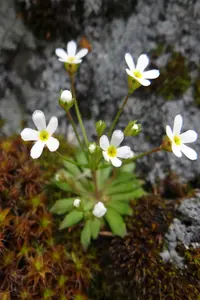
Filiform rockjasmine, Androsace filiformis, is a small alpine perennial in the primrose family. It forms delicate tufts with very slender, threadlike stems and tiny star-shaped flowers. Plants stay low to the ground and often appear in loose mats rather than as a single dense cushion.

In nature it grows in cool, open mountain habitats, often in moist meadows or rocky slopes with good drainage. It prefers bright light, cool temperatures, and consistently moist but not waterlogged soil.

Because it comes from high-elevation climates, it can be short-lived and sensitive to heat and drought in gardens. Understanding these mountain conditions makes it easier to care for filiform rockjasmine in cultivation.

Main Plant Requirements

Care Difficulty

Hard Care

Light Preference

Full Sun

Water Requirements

Moderate Water

Temperature Preference

Cold Hardy

Hardiness Zone

3–8

Soil Texture

Sandy, Loamy, Rocky

Soil pH

Acidic (5.5–6.5), Slightly acidic (6.5–7.0)

Soil Drainage

Well-drained

Fertilization

Minimal (feed rarely)

Get Personalized Care Plan

Scan your plant to receive care tips personalized for your specific plant

Available on iOS and Android

How to Care for the filiform rockjasmine

This alpine annual prefers cool, bright conditions with protection from harsh midday sun.

  • Provide 4–6 hours of direct morning sun with light shade or filtered light in the afternoon, especially in warmer regions.
  • Allow light, shifting shade or high bright shade in summer; filiform rockjasmine benefits from more sun in cool spring and fall for compact growth and flowering.
  • Watch foliage: pale, leggy stems indicate too little light, while crisped leaf edges or bleached patches suggest excessive direct sun exposure.

This species needs steady moisture in fast-draining soil, without staying wet for long periods.

  • Water when the top 2–3 cm of soil feel dry, letting water drain freely so roots do not sit in puddled or compacted ground.
  • Reduce watering during cool, cloudy spells and increase slightly in warm, windy weather when soil dries faster, especially on slopes or raised beds.
  • Signs of overwatering include limp, yellowing leaves and a sour soil smell; dry, curling foliage and slow growth in Androsace filiformis point to underwatering.

This cold-tolerant alpine annual prefers cool summers and can handle significant spring and fall chill.

  • Aim for growing-season temperatures around 50–68°F (10–20°C) to support compact growth and good flowering.
  • Mature plants and seedlings tolerate light frost down to about 20–25°F (-7 to -4°C), especially in well-drained, gritty soil and with some snow cover.
  • Prolonged heat above 80°F (27°C) can stress plants; provide afternoon shade and extra airflow during hot spells to reduce temperature around the crown.

This alpine annual prefers relatively dry air and usually does not need special humidity management.

  • Aim for 30–50% humidity, similar to most heated indoor rooms or dry outdoor air.
  • Filiform rockjasmine tolerates brief drier periods well; persistent humidity above 60% increases risk of fungal leaf spots.
  • If foliage stays damp or feels clammy, improve air movement and avoid clustering plants, rather than adding humidity.

Androsace filiformis grows best in lean, gritty soil that mimics well-drained alpine scree.

  • Use a sandy or gritty mix with 50–70% mineral content, such as coarse sand, fine gravel, and a small amount of low-nutrient compost.
  • Ensure rapid drainage; water should pass through in seconds and the surface should dry quickly after watering.
  • Keep pH slightly acidic to neutral, around 6.0–7.0, avoiding strongly acidic or alkaline mixes that limit nutrient uptake.
  • Improve aeration by adding extra perlite or pumice and avoid heavy clay, peat-heavy, or compacted soils that stay wet for long periods.

This species can be grown in containers if they are managed like shallow, very free-draining alpine troughs.

  • Choose a broad, shallow pot so roots spread horizontally in a thin, fast-drying layer of mix.
  • Use unglazed terracotta or stone containers to allow moisture to evaporate faster and reduce root rot risk.
  • Raise the container on pot feet or bricks so drainage holes never sit in collected water after rain or irrigation.

This alpine annual generally needs only light feeding when cultivated, as it is adapted to lean soils.

  • Use a weak balanced liquid fertilizer (for example 10-10-10) at 1/4 strength in very free-draining, gritty soil during active spring growth.
  • Apply no more than every 4–6 weeks in the short growing season to avoid lush, weak growth.
  • Do not fertilize during dormancy or after flowering has finished, since the life cycle of filiform rockjasmine is usually complete by then.
  • Avoid manures or heavy compost, which hold moisture and can cause root and crown rot in this species.

Pruning needs for Androsace filiformis are minimal and focus on hygiene rather than shaping.

  • In late spring or after flowering, snip off spent flower stems at the base using small, clean scissors to reduce self-seeding if desired.
  • Remove any dead or diseased foliage promptly to lower the risk of fungal problems in damp or crowded alpine beds.
  • Lightly thin crowded rosettes only if they are shading each other, taking care not to disturb shallow roots.
  • Disinfect tools before and after use with alcohol or a bleach solution to avoid spreading pathogens between plants.

This species is usually grown in rock gardens or alpine beds, so transplanting is more common than container repotting.

  • Transplant in early spring as growth starts, choosing a cool, overcast day to limit stress on the fine roots.
  • Move plants only when root growth fills the plug or small pot, or when drainage at the planting site is clearly poor.
  • Lift with a small trowel, keeping a firm soil ball around the roots, and set into sharply drained, gritty soil at the same depth.
  • Water gently after transplanting, then keep soil just slightly moist for 1–2 weeks to help roots re-establish without rotting.

Most Androsace filiformis plants are raised from seed, which suits their short-lived, annual or short-lived perennial habit.

  • Sow fresh seed in late summer or fall in trays of gritty, well-drained mix, as many seeds benefit from winter chilling.
  • Expose sown trays to natural cold outside or in a cold frame to provide cold stratification, which helps break seed dormancy.
  • Keep the medium evenly moist but never saturated, and provide bright, indirect light once seedlings emerge in spring.
  • Transplant tiny seedlings carefully when they have 2–3 true leaves, disturbing roots as little as possible.

This alpine species is cold hardy in suitable climates and usually needs only basic site management in winter.

  • Plants grown in the ground tolerate freezing conditions if soil is very well drained and not waterlogged.
  • In wet winter regions, provide extra grit or a thin gravel mulch around crowns to improve drainage and reduce rot risk.
  • Container-grown plants can be moved to a cold frame or unheated, bright shelter to avoid winter waterlogging and freeze–thaw damage.

Care Tips

Alpine-style drainage

When planting in containers, use a gritty topdressing of 0.5–1 cm gravel around the crown to keep leaf rosettes dry and reduce rot in wet periods.

Snowmelt simulation

In late winter to early spring, water from below or use a fine-rose watering can to mimic gentle snowmelt rather than heavy overhead watering, which helps protect delicate stems and flowers.

Summer dormancy support

If plants brown and retreat in hot, dry summer, mark the spot and keep the soil just barely moist so the small root system survives until cooler weather returns.

Fine-root protection

Avoid frequent repotting or deep cultivation around the plant, as its fine, shallow roots are easily damaged; instead, pull nearby weeds by hand with a gentle twisting motion.

Targeted pest checks

Inspect the tight rosettes and the base of flowering stems every 1–2 weeks in spring for aphids or spider mites, and treat early with a targeted insecticidal soap if needed when caring for filiform rockjasmine.

Common Pests and Diseases

Powdery mildew

This disease appears in cool, humid weather and on plants grown with poor air movement, forming a white, powdery film on leaves and flower stems. Symptoms include distorted growth and reduced vigor, especially in dense clumps.

Solution

Remove and destroy affected leaves and spent flower stems, then space plants to improve airflow and avoid overhead watering. If conditions stay humid, apply a sulfur or potassium bicarbonate fungicide labeled for ornamental alpines, treating at the first sign of white patches and repeating as directed until conditions dry out.

Botrytis blight

This disease develops in prolonged cool, wet periods, leading to soft, water-soaked spots that turn brown and are soon covered by gray, fuzzy mold on leaves, stems, and flower clusters. Symptoms include collapse of delicate rosettes and damping-off of young seedlings in crowded trays.

Solution

Promptly remove and discard all affected plant material and any fallen debris, then increase ventilation and avoid watering late in the day. In persistent wet weather, protect plants with a light, breathable cover and consider rotating a low-toxicity fungicide labeled for Botrytis on alpine ornamentals, focusing treatments on densely planted or seedling areas.

Alpine aphids

These insects feed on soft new growth, sucking sap from flower stalks and young leaves and excreting sticky honeydew. Symptoms include curled or stunted foliage, deformed flower stems, and sooty mold growing on the honeydew.

Solution

Rinse colonies off gently with a firm stream of water, then encourage natural predators such as lady beetles by avoiding broad-spectrum insecticides. For persistent infestations, spot-treat clusters with insecticidal soap or a light horticultural oil, coating both upper and lower leaf surfaces and repeating after 5–7 days if needed.

Spider mites

These pests become problematic in hot, dry conditions or under glass, feeding on leaf undersides and causing fine stippling and a dull, grayish cast. Symptoms include very fine webbing between rosettes, slowed growth, and eventual leaf drying and drop.

Solution

Increase humidity around plants and rinse foliage thoroughly, focusing on the undersides of leaves to dislodge mites and webs. If populations remain high, apply insecticidal soap or a light horticultural oil, treating every 5–7 days for several cycles and avoiding applications during the hottest part of the day.

Crown and stem rot

This disease develops in poorly drained or waterlogged sites, where the plant’s crown and lower stems turn brown, mushy, and easily detach from the roots. Symptoms include sudden wilting and collapse of entire rosettes, even when soil appears moist.

Solution

Remove and discard affected plants and improve drainage by using a sharply draining, gritty substrate and slightly raised planting positions. Water sparingly, especially in cool conditions, and avoid organic mulches around the crown; for collections with recurring problems, rotate planting areas and only replant healthy stock from well-drained pots, following conservative Androsace filiformis care instructions to prevent overwatering.

Interesting Facts

High-mountain annual

This species is a tiny annual of open, often wind-exposed alpine and subalpine habitats, typically occurring on gravelly or sandy soils where snow melts relatively late in the season.

Threadlike leaf rosettes

It forms very small basal rosettes with narrow, almost threadlike leaves, an adaptation that reduces water loss and damage from cold, dry alpine winds.

Disjunct global range

The species has a scattered distribution across parts of Eurasia and western North America, an interesting biogeographic pattern that likely reflects past glacial cycles and long-distance dispersal events.

FAQs about filiform rockjasmine

This species is usually an annual or short-lived perennial in cultivation. It often completes its life cycle within one growing season, relying on self-seeding to return in future years if conditions suit it.

Grow Healthy Plants with Botan Care

Keep your plants happy and healthy with plant identification, disease detection, and easy care guidance.

Botan plant care app — identify plants on mobile

Explore More Plants