Pinch For Bushiness
Pinch out the soft shoot tips every 3–4 weeks during active growth to keep plants compact, encourage more side shoots, and maintain a dense clump of colorful foliage.

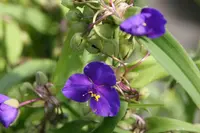
Spiderwort (Tradescantia 'Sweet Kate') is a compact, clump-forming perennial grown mainly for its bright chartreuse leaves and contrasting violet-blue flowers. It has a gently arching, grass-like habit and forms low mounds that can edge borders or fill mixed beds.
This cultivar comes from garden selections of North American spiderwort species that naturally occur in meadows and open woodlands. It tends to be robust and forgiving, so many gardeners find it straightforward to care for Spiderwort.
It tolerates a range of soils as long as they drain reasonably well and usually prefers partial sun with consistent moisture for best leaf color and flowering.

Care Difficulty
Easy Care

Light Preference
Partial Sun

Water Requirements
Moderate Water

Temperature Preference
Tropical / Frost Sensitive

Hardiness Zone
6–9

Soil Texture
Loamy, Sandy, Organic-rich

Soil pH
Acidic (5.5–6.5), Slightly acidic (6.5–7.0)

Soil Drainage
Moist but well-drained

Fertilization
Light (every 4–6 weeks)
Scan your plant to receive care tips personalized for your specific plant
Available on iOS and Android
Tradescantia 'Sweet Kate' prefers bright conditions that balance strong color with protection from scorching.
This plant prefers evenly moist but not saturated soil, with brief drying at the surface between waterings.
This plant grows best in mild, frost-free conditions and declines quickly in prolonged cold or extreme heat.
This plant prefers moderate room humidity but tolerates a fairly wide range.
Tradescantia 'Sweet Kate' prefers a loose, airy mix that drains quickly yet holds some moisture.
This species is well suited to container growing due to its compact, trailing habit.
This perennial benefits from light, consistent feeding during the active growing season for best foliage color and flowering.
Thoughtful pruning keeps Tradescantia 'Sweet Kate' compact, tidy, and flowering well.
Container-grown plants and crowded clumps benefit from occasional repotting or division to maintain vigor.
This plant is commonly propagated to refresh older clumps or increase stock for garden beds and containers.
This herbaceous perennial is fairly cold hardy and usually needs only simple winter preparation in most temperate gardens.

Plant Health Check
Not sure what's wrong with your plant? Check your plant's health inside the app.
This cultivar is prized for its bright chartreuse to golden-yellow leaves that create strong contrast with its violet-blue flowers, a color combination that breeders selected specifically for ornamental impact in mixed borders and shaded gardens.
The flowers open in the morning and usually wither by afternoon, a trait typical of the genus, but this cultivar produces enough buds that new blooms appear over many weeks, giving repeated color despite each flower’s short lifespan.
Its foliage color is strongly influenced by light levels, showing the most vivid golden tones in full sun to light shade, while in deeper shade the leaves tend to shift toward greener hues as chlorophyll production increases.
Yellowing foliage often results from overwatering, poorly drained soil, or old age of the lowest leaves. Check that the pot drains freely, let the top layer of soil dry slightly between waterings, and remove spent, aging leaves.
Keep your plants happy and healthy with plant identification, disease detection, and easy care guidance.