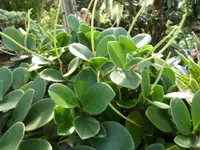
Peperomia 'Orba Lime' Care

About Peperomia 'Orba Lime'

Peperomia 'Orba Lime' is a compact tropical houseplant in the pepper family, valued for its small, rounded leaves with fresh lime-green to yellow-green tones. It forms a low, mounding clump, making it suitable for desks, shelves, and mixed arrangements.

In nature, similar Peperomia species grow as understory plants in warm, humid forests of Central and South America, often on decaying wood or among leaf litter. This background explains its preference for bright, indirect light and lightly moist but well-drained soil.

Peperomia 'Orba Lime' grows slowly and stays relatively small, so it suits limited spaces and does not need frequent pruning. Its thick, succulent-like leaves store water, which makes it more forgiving of occasional missed watering and generally simple to care for Peperomia 'Orba Lime'.

Main Plant Requirements

Care Difficulty

Easy Care

Light Preference

Bright Indirect Light

Water Requirements

Moderate Water

Temperature Preference

Tropical / Frost Sensitive

Hardiness Zone

11–12

Soil Texture

Loamy, Peaty, Organic-rich

Soil pH

Acidic (5.5–6.5), Slightly acidic (6.5–7.0)

Soil Drainage

Well-drained

Fertilization

Light (every 4–6 weeks)

Get Personalized Care Plan

Scan your plant to receive care tips personalized for your specific plant

Available on iOS and Android

How to Care for the Peperomia 'Orba Lime'

This compact plant prefers bright, filtered light that mimics a lightly shaded forest floor.

  • Provide 6–8 hours of bright, indirect light each day, with soft morning sun and protection from harsh midday or afternoon rays to prevent leaf scorch.
  • Tolerates partial shade, such as a spot set back from an east- or north-facing window, but growth may slow and internodes may stretch if light is too low.
  • In summer, shield Peperomia 'Orba Lime' from direct outdoor sun; in winter, move it closer to windows or use sheer curtains to maximize safe light levels.

Watering should be light and infrequent, allowing the semi-succulent leaves to store moisture.

  • Water only when the top 2–4 cm of soil feels dry, then water thoroughly so excess drains away, avoiding any standing water around the roots.
  • Reduce watering in fall and winter when growth slows, checking the soil a few days longer between waterings, especially in cooler rooms.
  • Watch for soft, yellowing, dropping leaves as a sign of overwatering and dry, curling, or folding leaves as a sign the plant has been kept too dry.

This species thrives in stable, warm conditions without sudden temperature swings.

  • Aim for a general range of 65–80°F (18–27°C) for steady growth, which matches typical living spaces and many sheltered outdoor spots in mild climates.
  • Protect the plant from temperatures below 55°F (13°C), since prolonged exposure near this limit can slow growth and cause leaf drop or dark, mushy tissue.
  • In hot weather above 85°F (29°C), keep it shaded, ensure air movement, and avoid placing it near hot, sunlit windows or against exterior walls that heat up.

This compact peperomia prefers moderate home humidity but tolerates drier conditions if watering is consistent.

  • Aim for 40–60% humidity to limit leaf edge browning and tip crisping.
  • Plant away from heating vents or strong drafts that accelerate moisture loss and cause curling leaves.
  • Increase humidity locally with a nearby pebble tray or grouping plants rather than misting, which adds only brief moisture.

This plant needs a loose, airy, fast-draining mix that holds some moisture but never stays wet.

  • Use a base of peat or coco coir with perlite and fine orchid bark to create a chunky, organic-rich texture.
  • Ensure the mix drains freely within seconds while still feeling slightly springy and not compacted.
  • Keep pH mildly acidic to neutral, around 6.0–7.0, which suits the roots and common peat-based mixes.
  • Avoid heavy garden soil, clayey mixes, or pots without drainage, which promote root rot in Peperomia 'Orba Lime'.

This species is well suited to container growing due to its compact, shallow root system.

  • Choose a wide, shallow pot to match the plant’s spreading root habit and keep the mix from staying wet at depth.
  • Select a breathable material such as terracotta if the home is cool or low-light, to reduce the risk of prolonged sogginess.
  • Elevate the pot on feet or a stand so drainage holes stay clear and water cannot accumulate directly under the base.

This compact species stays healthy with modest feeding when actively growing.

  • Use a balanced liquid fertilizer (for example 10-10-10 or 20-20-20) diluted to 25–50% strength for Peperomia 'Orba Lime'.
  • Apply every 4–6 weeks in spring and summer, always on slightly moist soil to avoid root burn.
  • Avoid compost-heavy mixes and slow-release pellets that may stay too wet around fine roots.
  • Stop feeding in fall and winter, when growth slows, to prevent weak, stretched tissues.

Light pruning maintains a dense, tidy shape for this small indoor plant.

  • In late winter or early spring, inspect Peperomia 'Orba Lime' before active growth resumes.
  • Use clean, sharp scissors or snips to remove dead, yellowing, or damaged leaves at the base.
  • Pinch or cut back long, sprawling stems just above a leaf node to encourage branching and fuller growth.
  • Trim only a small portion of foliage at a time to limit stress, then resume normal care.

This plant prefers slightly snug pots and only occasional repotting.

  • Plan to repot every 2–3 years, or when roots circle the pot, drainage slows, or growth stalls.
  • Best timing is spring, as Peperomia 'Orba Lime' enters active growth and recovers faster.
  • Move to a container only 2–3 cm wider, using airy, fast-draining mix with added perlite or fine bark.
  • Gently loosen circling roots, keep the root ball mostly intact, water lightly, and keep shaded for several days.

New plants are most often produced from stem or leaf cuttings.

  • Take 5–8 cm stem cuttings with 2–3 nodes from Peperomia 'Orba Lime' in spring or early summer.
  • Remove lower leaves and insert the cut end into moist, sterile, well-draining mix or perlite.
  • Maintain bright, indirect light, 70–80°F, and high humidity around cuttings to support rooting.
  • Keep the medium barely moist, then pot individually once new leaves and firm roots develop.

This tropical species is frost-sensitive and needs indoor conditions in cold climates.

  • Keep plants above 60°F; exposure near 50°F can stunt growth or damage leaves.
  • Before first frost, shift any outdoor pots indoors to a bright, draft-free location.
  • Reduce watering in winter, allowing the top mix to dry more to avoid cold, soggy roots.
  • Avoid placing Peperomia 'Orba Lime' against cold windows or near heating vents that cause temperature swings.

Care Tips

Quarterly root check

Every 3–4 months, slide the plant gently out of its pot to check that the fine, brittle roots are white and firm, trimming away any mushy or brown sections with sterilized scissors before replanting at the same depth.

Rotate for even growth

Turn the pot 90° every 2–3 weeks so the leaf rosettes develop symmetrically and stems stay compact instead of stretching toward a single light source.

Leaf-level pest scan

Inspect the undersides of leaves and tight stem joints every 1–2 weeks with a hand lens, and at the first sign of mealybugs or mites, isolate the plant and treat with a gentle insecticidal soap spray labeled safe for indoor foliage plants.

Clean foliage gently

Wipe the leaves every 4–6 weeks with a barely damp, soft cloth instead of foliar shine products to remove dust, which improves light capture and reduces hiding spots for pests when caring for Peperomia 'Orba Lime'.

Use light staking

If stems start to flop as they lengthen, insert a small, smooth stake near the base and loosely tie stems with soft plant ties to keep the plant upright without cutting into the tissue.

Common Pests and Diseases

Mealybugs

This pest appears as small white cottony clusters in leaf axils, on stems, and sometimes on roots, causing stunted growth and leaf yellowing.

Solution

Isolate the plant, then wipe or dab visible insects with cotton swabs dipped in 70% isopropyl alcohol and rinse foliage with lukewarm water; repeat weekly until no new pests appear and improve light and airflow to help the plant recover.

Spider mites

These insects create fine webbing on leaves and stems, leading to pale stippling, dull foliage, and eventual leaf drop in dry, warm rooms.

Solution

Shower the plant thoroughly with lukewarm water to remove mites, then maintain higher ambient humidity and use repeated applications of insecticidal soap or horticultural oil, ensuring full coverage of leaf undersides.

Fungus gnat larvae

This pest develops in consistently wet potting mix, where larvae feed on fine roots and can cause wilting, slow growth, or sudden decline in compact plants with shallow root systems.

Solution

Allow the top 3–4 cm of soil to dry between waterings, use yellow sticky traps for adults, and treat the potting mix with a biological control such as Bacillus thuringiensis israelensis (BTI) or beneficial nematodes if larvae are persistent.

Oedema

This disorder occurs when roots absorb more water than the leaves can transpire, producing corky, blister-like spots on the undersides of thick, succulent leaves.

Solution

Reduce watering frequency, avoid letting the plant sit in excess water, provide brighter indirect light, and keep temperature and humidity stable to prevent further blistering and support Peperomia 'Orba Lime' indoor care.

Bacterial leaf spot

This disease causes small, water-soaked lesions that may turn brown with yellow halos, often starting on lower leaves where moisture lingers.

Solution

Remove affected leaves with sterile tools, avoid overhead watering, increase air circulation around the foliage, and keep leaves dry; discard severely affected plants rather than attempting aggressive chemical treatment indoors.

Interesting Facts

Compact epiphytic origins

This cultivar comes from Peperomia species that naturally grow as small epiphytes, often rooting in leaf litter on tree branches rather than in deep soil, which explains its shallow root system and preference for airy potting mixes.

Succulentlike leaf anatomy

Its round, lime-green leaves have a thickened water-storage tissue similar to many succulents, which allows the plant to tolerate brief dry periods without visible stress.

Slow, genetically stable growth

Orba-type Peperomia lines, including 'Orba Lime', are selected for slow, compact internode growth, which keeps the plant naturally small and reduces the likelihood of sudden, lanky stretching under typical indoor light levels.

FAQs about Peperomia 'Orba Lime'

This species grows slowly to moderately, adding only a few inches of height and spread per year. Growth rate increases with stable warmth, bright indirect light, and consistent moisture, but it rarely becomes a large plant indoors.

Grow Healthy Plants with Botan Care

Keep your plants happy and healthy with plant identification, disease detection, and easy care guidance.

Botan plant care app — identify plants on mobile

Explore More Plants