


Use wider pots
Choose a shallow, wide container rather than a deep one so the fibrous root system can spread horizontally, which encourages a fuller, denser frond canopy.

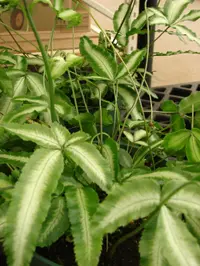
Pteris ensiformis is a compact evergreen fern often grown as a houseplant for its finely divided fronds with soft green and creamy white patterns. It forms low, dense clumps that suit tabletops, shelves, and mixed indoor plant displays.
In nature, it occurs in warm, humid forests of tropical Asia and the Pacific, where it grows on the forest floor in filtered light. Its need for steady moisture, good humidity, and protection from direct sun means it is moderate in difficulty, but manageable once conditions are stable.
Understanding how to care for Pteris ensiformis starts with providing consistent, gentle light, evenly moist but not waterlogged soil, and shelter from drafts and temperature swings.

Care Difficulty
Moderate Care

Light Preference
Bright Indirect Light

Water Requirements
Keep Soil Moist

Temperature Preference
Tropical / Frost Sensitive

Hardiness Zone
11–12

Soil Texture
Loamy, Peaty, Organic-rich

Soil pH
Acidic (5.5–6.5), Slightly acidic (6.5–7.0)

Soil Drainage
Moist but well-drained

Fertilization
Light (every 4–6 weeks)
Scan your plant to receive care tips personalized for your specific plant
Available on iOS and Android
This fern prefers soft, filtered light that mimics a forest understory.
This species prefers evenly moist conditions without staying waterlogged.
Stable, mild temperatures support dense, healthy fern fronds.
This fern needs consistently high humidity to maintain healthy fronds and avoid browning.
This fern prefers a loose, humus-rich, evenly moist substrate that never becomes waterlogged.
This species is well suited to container culture, including small table pots and hanging baskets.
This fern benefits from light, consistent feeding during active growth but is sensitive to excess salts.
Pruning is mainly used to keep this fern tidy and to remove declining fronds.
This fern prefers a slightly snug pot and reacts best to gentle, planned repotting.
New plants are most reliably produced by division rather than from spores in home conditions.
This tropical fern is frost tender and must be treated as an indoor or heated-space plant in cold climates.

Plant Health Check
Not sure what's wrong with your plant? Check your plant's health inside the app.
Many cultivated forms of this species, such as the commonly grown type often labeled 'Evergemiensis', show stable white or cream variegation along the pinnae, caused by areas of leaf tissue with reduced chlorophyll rather than disease or nutrient deficiency.
This fern spreads through short, shallow rhizomes that sit close to the soil surface, allowing it to form loose colonies on forest floors and rocky banks in parts of tropical and subtropical Asia and the western Pacific.
In its native range, this fern typically grows on shaded, humid forest understories and stream banks, where it is adapted to filtered light and consistently moist but well-drained substrates such as leaf litter and humus-rich soil.
Brown tips or edges usually come from low humidity, underwatering, or a buildup of salts from fertilizer or hard water. Increase humidity, keep the soil lightly moist, flush the pot occasionally, and remove only fully dead fronds.
Keep your plants happy and healthy with plant identification, disease detection, and easy care guidance.

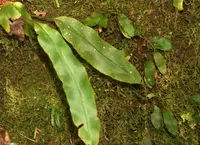
Elaphoglossum hybridum
Elaphoglossum hybridum
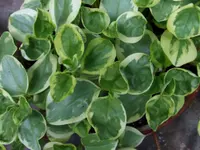
Cypress Peperomia
Peperomia glabella
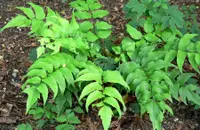
Holly Fern
Cyrtomium falcatum
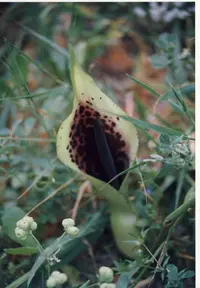
Dioscorides Arum
Arum dioscoridis
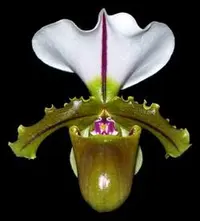
Spicer’s Paphiopedilum
Paphiopedilum spicerianum
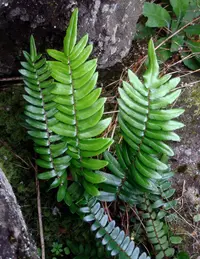
Hemionitis seticaulis
Hemionitis seticaulis
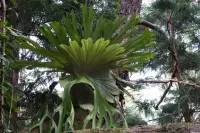
Staghorn Fern
Platycerium superbum
Anthurium consobrinum
Anthurium consobrinum