


Stabilize Heavy Foliage
Use a low, wide nursery pot or add a topdressing of coarse gravel or LECA to increase weight and reduce tipping as the plant develops large, heavy leaves.

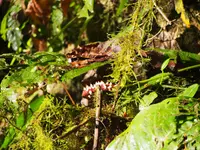
Anthurium consobrinum is a tropical aroid grown mainly for its large, elongated leaves and upright, clumping growth habit. It is usually kept as a foliage specimen rather than for its flowers. Native to humid forests in Central and South America, it favors warm, stable conditions and good air circulation. The plant tends to be moderately fast growing when conditions are stable. Its main challenges are sensitivity to cold, poor drainage, and very dry air, so it suits indoor growers who can provide a consistent environment. Understanding how to care for Anthurium consobrinum starts with providing bright, filtered light, evenly moist but not waterlogged soil, and a loose, airy substrate.

Care Difficulty
Hard Care

Light Preference
Bright Indirect Light

Water Requirements
Keep Soil Moist

Temperature Preference
Tropical / Frost Sensitive

Hardiness Zone
11–12

Soil Texture
Loamy, Peaty, Organic-rich

Soil pH
Acidic (5.5–6.5), Slightly acidic (6.5–7.0)

Soil Drainage
Moist but well-drained

Fertilization
Light (every 4–6 weeks)
Scan your plant to receive care tips personalized for your specific plant
Available on iOS and Android
This species prefers bright, filtered light similar to a lightly shaded tropical forest edge.
Watering should aim for evenly moist but never waterlogged root conditions.
Stable, warm conditions are important for steady growth and leaf health.
This species prefers consistently high humidity to keep foliage large and healthy.
Anthurium consobrinum grows best in a loose, airy, organic-rich medium that mimics forest leaf litter.
This species is well suited to container growing when the pot is chosen to support its tall, leafy habit.
Consistent, light feeding supports healthy foliage and flowering for Anthurium consobrinum in containers.
Thoughtful pruning keeps Anthurium consobrinum clean, compact, and focused on healthy growth.
Container-grown plants benefit from periodic repotting to refresh the mix and prevent root congestion.
Division is the most reliable method for increasing Anthurium consobrinum plants in cultivation.
This tropical species is not frost hardy and needs indoor-style winter protection in most climates.

Plant Health Check
Not sure what's wrong with your plant? Check your plant's health inside the app.
This species develops large, dark green leaves with a velvety surface and strongly bullate (blistered) texture, a trait that increases surface area and may help manage light and water on the leaf blade in its native understory habitat.
The inflorescences typically hang or arch outward on long peduncles, positioning the spadix in a way that can make access easier for small insect visitors that act as pollinators in its forest environment.
It belongs to the section Porphyrochitonium, a group of anthuriums characterized by certain shared floral traits and leaf textures, which helps botanists understand its evolutionary relationships within the genus.
Growth is usually moderate. New leaves appear in pulses through the warm season, then slow in winter. In stable indoor conditions, it may add 10–20 cm of height or spread per year once established.
Keep your plants happy and healthy with plant identification, disease detection, and easy care guidance.

Indonesian gum
Eucalyptus deglupta
polished maidenhair
Adiantum concinnum
Dragon Scale plant
Alocasia baginda
potbelly airplant
Tillandsia paucifolia
 POPULAR
Heartleaf philodendron
Philodendron hederaceum
Oncidium cheirophorum
Oncidium cheirophorum
 POPULAR
Bird of paradise plant
Strelitzia reginae
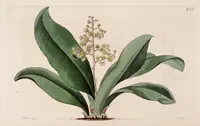
Trichocentrum pumilum
Trichocentrum pumilum