Control Spreading Edges
Once or twice a year, slice straight down with a sharp spade around the patch to stop runners from invading nearby beds or lawn, then replant the best lifted pieces where coverage is thin.

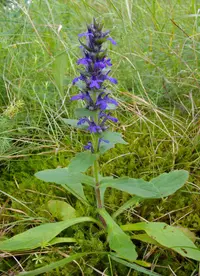
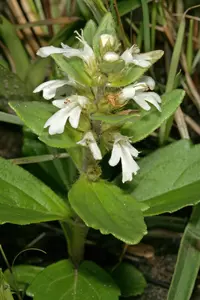
Blue bugle (Ajuga genevensis) is a low-growing perennial from Europe, valued as a groundcover for borders, slopes, and naturalized areas. It forms dense clumps rather than aggressive runners, so it spreads more slowly than the related Ajuga reptans.
Plants carry upright spikes of blue to violet flowers above rosettes of green, slightly hairy leaves, creating a soft, textured look in spring to early summer. In gardens it prefers moderately moist, well-drained soil and light shade to sun.
Its hardy nature and modest growth rate make it manageable for most home gardens, and it is generally easy to care for blue bugle when given consistent moisture and suitable light.

Care Difficulty
Easy Care

Light Preference
Partial Shade

Water Requirements
Moderate Water

Temperature Preference
Cold Hardy

Hardiness Zone
3–9

Soil Texture
Loamy, Sandy, Organic-rich

Soil pH
Acidic (5.5–6.5), Slightly acidic (6.5–7.0)

Soil Drainage
Moist but well-drained

Fertilization
Minimal (feed rarely)
Scan your plant to receive care tips personalized for your specific plant
Available on iOS and Android
Ajuga genevensis prefers bright conditions with some protection from intense midday sun.
Ajuga genevensis prefers consistently moist but not waterlogged soil.
This groundcover is cold-hardy and tolerates a wide range of outdoor temperatures when established.
Ajuga genevensis handles typical household or outdoor humidity well, so humidity is rarely a concern for blue bugle.
Ajuga genevensis prefers moist, well-drained, humus-rich soil that stays cool.
This species is suitable for container growing when moisture and spread are controlled carefully.
Ajuga genevensis is a modest feeder that benefits from light nutrition in active growth.
Ajuga genevensis responds well to light, timely pruning that keeps groundcover dense and healthy.
This species is usually grown as outdoor groundcover, so care focuses more on transplanting clumps than repotting.
Ajuga genevensis is commonly propagated by division and runners, with seed used less often for home gardens.
This groundcover is generally cold hardy in temperate climates and needs only minimal winter care once established.

Plant Health Check
Not sure what's wrong with your plant? Check your plant's health inside the app.
Unlike the closely related Ajuga reptans, this species forms clumps by short rhizomes and does not send out long stolons, so it expands more slowly and is less aggressive in gardens.
It naturally favors lime-rich, well-drained soils over acidic ones and is often found in grasslands and open woods on calcareous substrates in central and southern Europe.
Its blue flowers have a relatively long upper lip and hairy calyx teeth, features that help distinguish it from other blue-flowering Ajuga species in the field.

Ajuga genevensis has a primarily central and southern European native range and is considered less widespread and less invasive outside its home range than the more commonly planted carpet bugle, Ajuga reptans.
This species spreads steadily by short runners and seed, forming a low mat over time. It can edge into nearby planting areas but is usually manageable with edging, division, and prompt removal of unwanted offsets.
Keep your plants happy and healthy with plant identification, disease detection, and easy care guidance.