Division Renewal
Lift and divide clumps every 3–4 years in early spring, replanting only the vigorous outer sections at 45–60 cm spacing to maintain flowering performance and reduce overcrowding disease pressure.

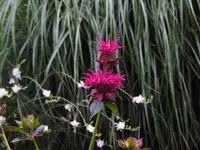
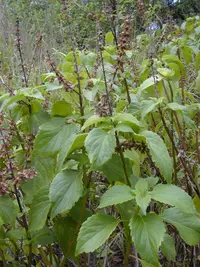
Bee balm Monarda didyma 'Raspberry Wine' is a hardy, clump-forming perennial in the mint family, grown mainly for its rich raspberry-red summer flowers. It typically forms upright stems with aromatic, deep green foliage and showy, tubular blooms that attract bees, butterflies, and hummingbirds.
This cultivar comes from species native to eastern North America, where it grows in moist meadows and woodland edges. It is generally considered easy to grow, as it tolerates a range of garden soils and recovers well after division.
Consistent moisture, sun to light shade, and reasonably fertile, well-drained soil support healthy growth. Its forgiving nature makes it a good choice for gardeners learning how to care for Bee Balm.

Care Difficulty
Easy Care

Light Preference
Full Sun

Water Requirements
Regular Water

Temperature Preference
Cold Hardy

Hardiness Zone
4–9

Soil Texture
Loamy, Clay, Organic-rich

Soil pH
Acidic (5.5–6.5), Slightly acidic (6.5–7.0)

Soil Drainage
Moist but well-drained

Fertilization
Minimal (feed rarely)
Scan your plant to receive care tips personalized for your specific plant
Available on iOS and Android
Monarda didyma 'Raspberry Wine' performs best with strong, consistent light to support dense growth and flowering.
Monarda didyma 'Raspberry Wine' prefers evenly moist but not waterlogged soil during its main growing season.
This perennial tolerates a wide temperature range but grows and flowers best in moderate conditions.
This cultivar grows well in typical outdoor humidity but benefits from slightly moist air in hot, dry climates.
Monarda didyma 'Raspberry Wine' prefers moist, well-aerated, organic-rich ground that drains freely.
This bee balm is suitable for container growing if the pot is large and stable enough for its vigorous root system and tall stems.
Monarda didyma 'Raspberry Wine' generally needs modest feeding when grown in average, fertile garden soil.
Pruning Monarda didyma 'Raspberry Wine' supports bushy growth, good air flow, and prolonged flowering.
This perennial is more often divided or transplanted in the garden than kept long term in containers.
Monarda didyma 'Raspberry Wine' is commonly propagated by division and softwood cuttings.
This cultivar is cold hardy in most temperate climates and usually needs only minimal winter attention in the ground.

Plant Health Check
Not sure what's wrong with your plant? Check your plant's health inside the app.
This cultivar develops deep raspberry-red bracts and flower tubes that hold their color well through the bloom period, a selection trait that distinguishes it from many scarlet or pink bee balms.
It was selected in part for improved resistance to powdery mildew compared with many seed-grown Monarda didyma forms, so its foliage typically stays cleaner in humid summer conditions.
Plants commonly reach about 90–120 cm in height under garden conditions, forming upright clumps that create a vertical accent and a dense canopy attractive to bees, butterflies, and hummingbirds.

Monarda didyma 'Raspberry Wine' originated as a deliberate garden selection rather than a wild-collected form, chosen for its combination of raspberry-red flowers, strong stems, and disease tolerance that make it especially useful for breeding and ornamental display in temperate gardens.
Poor flowering usually comes from too little light, overcrowded clumps, or nutrient‑rich but phosphorus‑poor soil. Division every 2–3 years, adequate sun exposure, and balanced fertilizer help restore flower production and maintain strong, showy blooms.
Keep your plants happy and healthy with plant identification, disease detection, and easy care guidance.