Slug barrier setup
Lay a continuous 5–10 cm band of sharp horticultural grit or crushed lava rock around the clump in early spring to physically discourage slugs and snails from reaching emerging shoots.

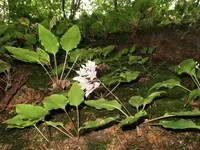
Rock hosta (Hosta longipes) is a compact, clumping perennial grown mainly for its lush foliage and neat, low mound habit. It is valued in shaded gardens and containers where a refined, small-scale hosta is needed.
Leaves are narrow, often glossy, and form dense rosettes, while flower stalks rise above with lavender to pale purple, bell-shaped blooms. The plant is native to rocky, mountainous areas of Japan, which explains its preference for cool roots and consistent moisture.
Rock hosta is generally considered reliable and manageable for gardeners who understand basic shade-plant care. It prefers partial shade, evenly moist but well-drained soil, and benefits when gardeners learn how to care for Rock Hosta in stable conditions.

Care Difficulty
Easy Care

Light Preference
Partial Shade

Water Requirements
Regular Water

Temperature Preference
Cold Hardy

Hardiness Zone
4–8

Soil Texture
Loamy, Silty, Organic-rich

Soil pH
Acidic (5.5–6.5), Slightly acidic (6.5–7.0)

Soil Drainage
Moist but well-drained

Fertilization
Light (every 4–6 weeks)
Scan your plant to receive care tips personalized for your specific plant
Available on iOS and Android
This shade-loving perennial prefers cool, dappled light to prevent leaf scorch and maintain strong growth.
This species prefers evenly moist, cool soil that never stays waterlogged for long periods.
This hardy perennial tolerates cold winters but grows best in moderate, stable temperatures during the growing season.
This shade perennial prefers moderately moist air but usually adapts to typical home and outdoor conditions.
Hosta longipes grows best in consistently moist, aerated soil that stays cool around the roots.
This species is well suited to container growing for shaded patios and balconies.
Hosta longipes benefits from modest, consistent feeding during the active growing season.
Hosta longipes needs only light, seasonal pruning to stay tidy and healthy.
Hosta longipes is usually grown in the ground and is transplanted only when crowded or poorly placed.
Hosta longipes is most reliably propagated by division of mature clumps.
Hosta longipes is cold hardy and usually needs minimal winter care in typical temperate climates.

Plant Health Check
Not sure what's wrong with your plant? Check your plant's health inside the app.
This species is naturally restricted to rocky mountain slopes and cliffs in Japan, where it anchors into crevices and thin soils exposed to heavy rainfall and runoff.
Compared with many other hostas, it develops characteristically narrow, glossy green leaves that help it shed water quickly and tolerate the splash and drip conditions of its native cliff habitats.
It typically flowers later in the season than many common hostas, producing tubular, pale lavender to white blooms on slender scapes in late summer to early autumn, which can extend ornamental interest well into fall in temperate gardens.

Hosta longipes is one of the key wild species used in breeding so-called rock hostas, contributing its compact, cliff-adapted growth and late flowering to many modern miniature and small hosta cultivars selected for troughs, rock gardens, and container displays.
Yellowing leaves usually come from natural aging, water stress, or nutrient imbalance. Older outer leaves yellow first as they age. Consistent moisture, good drainage, and a balanced slow‑release fertilizer typically correct most non-disease yellowing issues.
Keep your plants happy and healthy with plant identification, disease detection, and easy care guidance.