Weed Pressure Control
Keep the area immediately around the mat-like foliage free of taller, fast-growing weeds so the small rosettes are not shaded out or crowded, especially during the first 1–2 seasons.

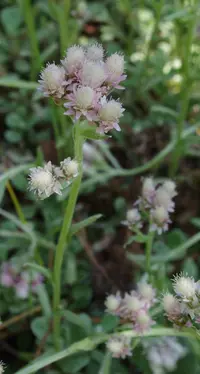
Field pussytoes (Antennaria neglecta) is a low-growing perennial wildflower that forms dense, silvery-gray mats close to the ground. It produces small, fuzzy, white flower clusters that resemble tiny cat paws, usually held just above the foliage on short stems.
This species is native to North America and is commonly found in dry, open fields, prairies, and disturbed sites. It is valued as a tough groundcover that competes well with weeds and tolerates poor, sandy, or rocky soil.
Once established, it is drought-tolerant and generally low-maintenance, which makes it suitable for gardeners learning how to care for field pussytoes in sunny, well-drained sites.

Care Difficulty
Easy Care

Light Preference
Full Sun

Water Requirements
Low Water

Temperature Preference
Cold Hardy

Hardiness Zone
3–7

Soil Texture
Sandy, Loamy, Rocky

Soil pH
Acidic (5.5–6.5), Slightly acidic (6.5–7.0)

Soil Drainage
Well-drained

Fertilization
Minimal (feed rarely)
Scan your plant to receive care tips personalized for your specific plant
Available on iOS and Android
This low-growing native prefers bright, open conditions that mimic dry meadows and prairies.
This drought-tolerant perennial prefers dry to slightly moist soil and is sensitive to excess water.
This hardy species is adapted to temperate climates with cold winters and warm summers.
This drought-adapted species has low humidity demands and thrives in dry air.
Antennaria neglecta prefers lean, well-aerated soil that drains quickly and never stays waterlogged.
This species is suitable for container growing, especially in shallow, fast-draining setups.
Antennaria neglecta is adapted to lean soils and usually needs minimal feeding.
Antennaria neglecta benefits from light, periodic pruning to keep the mat dense and tidy.
This species is more often transplanted in the garden than repotted, since it is typically grown as a groundcover.
Antennaria neglecta is commonly propagated to expand groundcover patches or renew older plantings.
This cold-hardy perennial generally needs little special winter care in typical temperate climates.

Plant Health Check
Not sure what's wrong with your plant? Check your plant's health inside the app.
Field pussytoes has male and female flower heads on separate plants, a condition called dioecy, which is unusual among many common lawn and meadow species and affects how its populations are structured in the wild.
This species forms very low, dense rosettes and creeping stolons that allow it to persist in short turf and compacted soils, so it can occupy mown lawns and paths where taller native forbs cannot survive.
Field pussytoes serves as a larval host plant for several American painted lady butterfly species (in the genus Vanessa), whose caterpillars feed on its leaves and use the low foliage as shelter.

Field pussytoes is one of the few native North American forbs that can expand in lightly disturbed, nutrient-poor sites such as old fields and road edges, sometimes forming near-monocultural patches that act as early stabilizers in secondary succession.
This species spreads slowly to moderately by short stolons, forming low mats over time. It usually stays well-behaved in garden settings and is unlikely to become a problem if given modest space and dry, lean soil.
Keep your plants happy and healthy with plant identification, disease detection, and easy care guidance.