Low sand mulching
Apply a 2–3 cm layer of coarse sand or fine gravel around the base to reduce weed competition, keep fruits clean off the soil, and discourage slugs without holding excessive moisture.

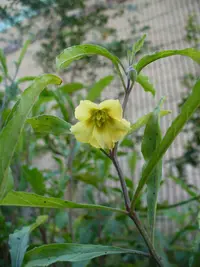
Walter's groundcherry, Physalis walteri, is a low, spreading perennial in the nightshade family, native to sandy coastal areas of the southeastern United States. It often forms small clumps or patches with narrow leaves and delicate, nodding, bell-shaped flowers that develop into papery-husked fruits.
This species is adapted to dry, well-drained, often nutrient-poor soils and full sun, which makes it relatively tough once established. Its tolerance of heat and drought can simplify how to care for Walter's groundcherry, though young plants still need steady moisture during establishment.
In gardens, it works best in naturalistic, coastal, or xeric plantings where light, sandy soil and good drainage are available.

Care Difficulty
Moderate Care

Light Preference
Full Sun

Water Requirements
Moderate Water

Temperature Preference
Warm Climate

Hardiness Zone
8–11

Soil Texture
Sandy, Loamy, Organic-rich

Soil pH
Acidic (5.5–6.5), Slightly acidic (6.5–7.0)

Soil Drainage
Well-drained

Fertilization
Minimal (feed rarely)
Scan your plant to receive care tips personalized for your specific plant
Available on iOS and Android
This coastal native prefers bright conditions to support compact, flowering growth.
Watering should support steady growth while allowing the sandy soil this species prefers to drain quickly.
This species is adapted to warm, coastal climates and dislikes extended cold or frost.
This species handles 30–60% household humidity without special measures.
Physalis walteri prefers fast-draining, slightly lean, sandy soil that never stays waterlogged.
This species adapts well to container growing when given enough root space and sharp drainage.
Physalis walteri is a light feeder but responds well to modest nutrition in poor soils.
Pruning Physalis walteri is mainly about keeping the plant healthy and compact.
This species is more often transplanted in the ground than grown long-term in containers.
New Physalis walteri plants are most commonly raised from seed, with vegetative methods used less often.
In much of its native range this plant is fairly cold tolerant and often needs minimal winter care.

Plant Health Check
Not sure what's wrong with your plant? Check your plant's health inside the app.
This species is native to the coastal plain of the southeastern United States and is especially associated with deep, well‑drained sands in Florida scrub and sandhill habitats.
Unlike many more upright Physalis species, this plant often forms low, spreading, somewhat mat‑like patches that help stabilize loose sandy soils.
Its foliage and lantern‑like husk fruits provide food and habitat for a small group of insects that preferentially use native Physalis species in southeastern coastal ecosystems.
The ripe berries inside fully formed, tan to papery husks are edible and mildly sweet. Unripe green fruits, leaves, and stems contain higher levels of solanine-like compounds and should not be eaten. Always harvest only fully ripe fruits.
Keep your plants happy and healthy with plant identification, disease detection, and easy care guidance.