white sapote Care (Casimiroa edulis)

white sapote

About white sapote

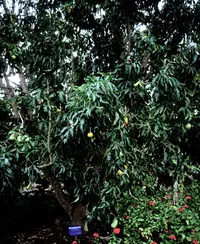
White sapote (Casimiroa edulis) is an evergreen fruit tree from the citrus family, valued for its soft, custard-like fruit. It naturally occurs in the highlands of Mexico and Central America and is now grown in warm, frost-free regions worldwide.

The tree has glossy green leaves, a rounded crown, and can become quite large in the ground, though containers keep it more compact. Its main challenge is sensitivity to cold and poor drainage, so site choice and soil preparation matter.

Those learning how to care for white sapote should note its preference for full sun, moderate moisture, and well-drained, slightly fertile soil.

Main Plant Requirements

Care Difficulty

Moderate Care

Light Preference

Full Sun

Water Requirements

Moderate Water

Temperature Preference

Warm Climate

Hardiness Zone

9–11

Soil Texture

Sandy, Loamy, Organic-rich

Soil pH

Acidic (5.5–6.5), Slightly acidic (6.5–7.0)

Soil Drainage

Well-drained

Fertilization

Minimal (feed rarely)

Get Personalized Care Plan

Scan your plant to receive care tips personalized for your specific plant

Available on iOS and Android

How to Care for the white sapote

This subtropical fruit tree needs ample sun for strong growth and reliable fruiting.

  • Provide 6–8 hours of direct sun daily; in hot inland climates, give white sapote morning sun with light afternoon shade to reduce leaf scorch.
  • Young trees benefit from 30–50% filtered shade cloth during their first 1–2 summers until roots establish deeply.
  • Too little sun leads to weak, leggy growth and poor flowering, while intense, all-day summer sun can burn exposed foliage in very hot regions.

This tree prefers evenly moist but not saturated soil, especially during establishment and fruiting.

  • Water when the top 3–5 cm of soil feel dry, applying a slow, deep soak that moistens the rooting zone rather than frequent shallow sprinkling.
  • Use well-drained soil; persistent puddling, sour smell, yellowing leaves, or dieback on young shoots indicate overwatering and potential root rot.
  • During hot, dry periods increase frequency, while in cool or rainy seasons extend intervals; dull, curling leaves and premature fruit drop signal insufficient moisture for Casimiroa edulis.

This species thrives in warm, frost-free climates with mild temperature swings.

  • Aim for 65–85°F (18–29°C) for active growth, as this range supports steady shoot development and flowering.
  • Mature trees may briefly tolerate down to about 26–28°F (-3 to -2°C), but young trees and flower buds are damaged near freezing and need protection.
  • Heat up to 95–100°F (35–38°C) is usually tolerated if soil moisture is stable; provide mulch and some afternoon shade during extreme summer heat waves.

Casimiroa edulis prefers moderately humid air but usually adapts well to typical indoor and outdoor conditions.

  • Target 40–60% humidity; the tree tolerates brief dips lower if soil moisture is stable.
  • Dry air may cause leaf edge browning and slight leaf curl, especially on young plants.
  • Increase humidity with grouped plants, a nearby open tray of water and pebbles, or a humidifier in very dry homes.

Casimiroa edulis grows best in deep, well-aerated, fast-draining soil that still retains moderate moisture.

  • Use a loamy, slightly sandy mix with structure, not pure sand or heavy peat alone.
  • Aim for pH 6.0–7.5; avoid strongly acidic or saline soils that restrict nutrient uptake.
  • For containers, combine roughly 50% composted organic matter, 30% coarse sand, and 20% perlite or small bark to improve drainage and aeration.
  • Break up compaction and avoid waterlogged sites, since chronically saturated soil encourages root rot and poor growth.

This species can be grown in large containers when given enough root space and stable support.

  • Choose a tall, heavy pot to balance the tree’s eventual height and reduce tipping in wind.
  • Select thicker-walled clay or concrete containers in hot climates to buffer root zone temperature swings.
  • Ensure a free-draining soil volume above the drain holes so lower roots do not sit in a persistently wet layer.

Casimiroa edulis benefits from moderate feeding to support steady vegetative growth and fruiting.

  • Use a balanced granular NPK fertilizer or well-rotted compost at the start of spring growth.
  • Feed every 6–8 weeks through the warm growing season, adjusting to tree vigor and soil richness.
  • Apply fertilizer at half to three-quarter label strength, spread over the root zone, and water in well.
  • Stop feeding white sapote in late summer or early fall so new growth hardens before winter.

Thoughtful pruning helps Casimiroa edulis maintain a strong framework and productive canopy.

  • Carry out structural pruning in late winter or early spring before active growth resumes.
  • Remove dead, diseased, crossing, or heavily shaded interior branches to improve light and airflow.
  • Shorten overly vigorous upright shoots to control height and encourage a broad, accessible crown.
  • Use clean, sharp bypass pruners or a pruning saw, making smooth cuts just outside the branch collar.

This species is usually grown in the ground, so focus on careful transplanting rather than frequent repotting.

  • Transplant young trees in late winter or early spring when inactive, choosing a sunny, well-drained site.
  • Move or up-pot when roots circle the container or growth slows despite good light and water.
  • Handle the root ball gently, keeping soil intact, and plant at the same depth as before.
  • Water thoroughly after planting, then shade lightly and keep evenly moist for 2–4 weeks to reduce stress.

Casimiroa edulis is most often propagated from seed, with grafting used for known fruit quality.

  • Sow fresh seeds in late winter or spring, as viability drops quickly once dry.
  • Use a deep pot with loose, well-drained mix, and keep at 70–80°F for steady germination.
  • Plant seeds 2–3 cm deep, keep evenly moist, and provide bright, indirect light.
  • Graft desired cultivars onto vigorous seedlings once stems reach pencil thickness.

This subtropical tree has limited frost tolerance and benefits from basic winter protection in colder regions.

  • Mature trees may handle brief dips to about 26–28°F, but young plants are more sensitive.
  • Apply 5–8 cm of organic mulch around the root zone, keeping it away from the trunk.
  • Wrap the trunk and main branches with breathable frost cloth during predicted freezes.
  • For containers, move plants indoors or into a bright, cool, frost-free space until temperatures stabilize.

Care Tips

Windwise staking

Stake young trees with two opposing stakes and flexible ties set low on the trunk so they develop a strong taper but are still protected from wind snap while roots establish.

Branch angle training

While branches are still flexible, use soft ties or spreaders to open narrow crotch angles to about 45–60° from the trunk to reduce limb breakage and improve long-term fruit load support.

Fruit load thinning

When fruit are marble-sized, remove excess clusters so that each fruit is spaced 10–15 cm apart along the branch to prevent limb breakage and improve individual fruit size and quality.

Cold event preparation

Before a forecast frost, water the root zone deeply, wrap the trunk with breathable frost cloth, and use temporary covers over the canopy that reach the ground to trap heat overnight.

Rootzone protection

Maintain a 5–10 cm layer of coarse organic mulch over the entire root zone, keeping it 5–8 cm away from the trunk, to buffer soil temperature and reduce stress when growing white sapote in regions with hot summers.

Common Pests and Diseases

Fruit fly infestation

These insects lay eggs in ripening fruit, leading to soft, discolored patches and larvae tunneling through the flesh. Symptoms include premature fruit drop and fruits that rot quickly after harvest.

Solution

Use fruit fly traps (such as protein or pheromone lures) hung in the canopy, combine with strict sanitation by collecting and destroying fallen or infested fruit, and harvest fruit promptly at maturity. In high-pressure areas, protect developing fruit with fine mesh bags and reduce nearby alternative host plants to lower local populations when growing white sapote outdoors in warm regions.

Black scale

This pest forms dome-shaped, dark brown to black shells on stems and leaves, often accompanied by sticky honeydew and sooty mold. Infestations weaken growth and can cause leaf yellowing and dieback on twigs.

Solution

Prune out heavily infested twigs and dispose of them, then wash remaining foliage with a strong stream of water and a mild insecticidal soap to remove scales and honeydew. Encourage natural enemies such as ladybird beetles where possible, and repeat treatments at 7–14 day intervals until new growth appears clean.

Citrus mealybug

These insects appear as white, cottony clusters in leaf axils, on young stems, and near fruit, secreting honeydew that supports sooty mold. Heavy feeding stunts new growth and can lead to leaf drop, especially on container plants.

Solution

Physically remove mealybugs with a cotton swab dipped in isopropyl alcohol and prune badly infested shoots. Improve air movement around the canopy, avoid excess nitrogen fertilization, and use insecticidal soap or horticultural oil sprays directed into crevices, repeating as needed to catch newly hatched nymphs.

Anthracnose

This disease causes small, dark, sunken lesions on young leaves, twigs, and fruit, often enlarging into irregular dead patches during warm, wet weather. Symptoms include leaf blight, twig dieback, and blemished fruit that may crack or rot.

Solution

Remove and dispose of infected leaves, twigs, and mummified fruit, and avoid overhead irrigation to keep foliage as dry as possible. Improve spacing and pruning for airflow, and apply a copper-based fungicide at the start of warm, rainy periods, repeating according to label directions if disease pressure remains high.

Leaf spot complex

Symptoms include scattered tan to dark brown spots on leaves that may coalesce, causing partial defoliation during humid or rainy seasons. Older leaves are often most affected, while new growth can become distorted when infection is severe.

Solution

Rake and discard fallen leaves to reduce fungal inoculum and water at soil level rather than on foliage. Thin the canopy lightly to improve drying, and in persistent cases use a broad-spectrum fungicide labeled for fruit trees during peak humid periods, monitoring for improved leaf quality on subsequent flushes of growth.

Interesting Facts

Mild sedative compounds

The leaves and fruit contain white crystalline compounds known as casimiroin and related alkaloids, which experimental pharmacology has shown can have mild sedative effects in animals, explaining traditional use as a sleep aid in parts of Mexico and Central America.

Cool-climate subtropical tree

Although native to highland regions of Mexico and Central America, this species tolerates light frosts and cooler subtropical conditions better than many tropical fruit trees, which makes growing white sapote possible in mild Mediterranean and warm temperate climates.

Unusual fruit texture

The ripe fruit has a thin, delicate skin and a very soft, custard-like flesh that bruises easily, which is a main reason it is rarely seen in large-scale commercial markets despite being highly regarded in home orchards.

Botan icon

Did you know?

This species has been cultivated since pre-Columbian times by Indigenous peoples of Mesoamerica, who not only valued the fruit as a food source but also planted it in home gardens and temple areas, contributing to its early distribution far beyond its original wild range in the Mexican highlands.

FAQs about white sapote

Leaf browning usually comes from underwatering, hot dry winds, salt build‑up in soil, or sunburn on newly exposed foliage. Check soil moisture, flush salts with deep watering, and protect from intense afternoon sun and strong wind.

Grow Healthy Plants with Botan Care

Keep your plants happy and healthy with plant identification, disease detection, and easy care guidance.


Botan plant care app — identify plants on mobile

Explore More Plants