Sheathed Woodtuft Care (Kuehneromyces mutabilis)

Sheathed Woodtuft

About Sheathed Woodtuft

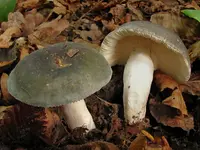
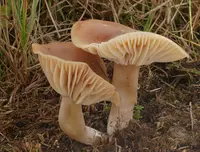
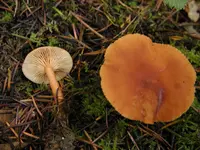
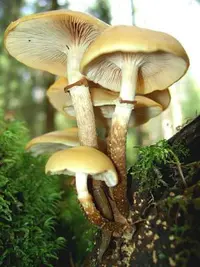
Sheathed woodtuft, Kuehneromyces mutabilis, is a saprophytic mushroom that grows in clusters on dead or decaying hardwood, especially stumps and fallen logs. It is not a houseplant but sometimes interests home growers and foragers. Caps are smooth and honey to caramel brown, with slender stems and a distinct ring zone, giving tight, tufted groups their characteristic look. This fungus appears mainly in cool, moist conditions in temperate forests across Europe and parts of North America. It is considered challenging to cultivate because it depends on well-decayed wood, stable moisture, and suitable temperatures. Those who want to care for Sheathed Woodtuft need to mimic these woodland conditions as closely as possible.

Main Plant Requirements

Care Difficulty

Hard Care

Light Preference

Partial Shade

Water Requirements

Keep Soil Moist

Temperature Preference

Cool Climate

Hardiness Zone

Unknown

Soil Texture

Loamy, Silty, Organic-rich

Soil pH

Acidic (5.5–6.5), Slightly acidic (6.5–7.0)

Soil Drainage

Moist but well-drained

Fertilization

Minimal (feed rarely)

Get Personalized Care Plan

Scan your plant to receive care tips personalized for your specific plant

Available on iOS and Android

How to Care for the Sheathed Woodtuft

This wood-decaying mushroom thrives in cool, moist forests with soft, filtered light rather than direct sun.

  • Provide bright shade or dappled woodland light, roughly equal to 2–4 hours of weak morning sun filtered through trees, avoiding harsh midday exposure.
  • Sheathed Woodtuft tolerates deep shade but fruiting bodies form best where there is indirect light and the substrate does not dry rapidly.
  • In summer, shield logs or stumps from strong afternoon sun to prevent overheating and drying; in winter, more open light is acceptable as long as moisture is maintained.

This fungus depends on consistently moist, not waterlogged, wood rather than surface watering like a typical garden plant.

  • Choose well-drained yet moisture-retentive sites where fallen logs or stumps stay evenly damp, avoiding standing water or swampy ground that can cause anaerobic conditions.
  • If cultivating Kuehneromyces mutabilis on logs, keep the wood moist by soaking or heavy rain exposure whenever the outer 2–5 cm feel dry and lightweight.
  • Reduce supplemental soaking in cool, wet seasons and increase after hot, drying weather; pale, shriveling caps suggest lack of moisture, while slimy, foul-smelling wood indicates excess saturation.

This species prefers cool to mild conditions and fruits best during temperate, moist periods.

  • Optimal fruiting temperatures are around 50–64°F (10–18°C), typical of spring and autumn in many temperate forests with stable humidity levels.
  • Mycelium in wood can tolerate down to about 23–28°F (-5 to -2°C) for short periods, but repeated hard freezes slow activity and can damage exposed fruiting bodies.
  • Sustained heat above 77–82°F (25–28°C) dries substrates and suppresses fruiting, so favor shaded, north-facing, or forested exposures that buffer temperature swings through summer.

This wood-rotting mushroom prefers consistently moist air but does not require very high humidity under outdoor conditions.

  • Aim for ambient humidity around 60–80% in cultivation, matching the naturally damp woodland and stump environments where Sheathed Woodtuft grows.
  • Dry air below about 50% slows fruiting, causes caps to crack at the margins, and can halt new pin formation.
  • Increase humidity locally with frequent fine misting, damp burlap or cloth around the substrate, or a ventilated plastic tent that prevents condensation from dripping on caps.

Kuehneromyces mutabilis naturally fruits on decaying wood rather than soil, so cultivation focuses on substrate structure and drainage.

  • Use a lignin-rich substrate such as hardwood sawdust, fine wood chips, or chopped logs, optionally supplemented with up to 20–30% wheat bran for nutrients.
  • Keep the substrate loose and fibrous so air can move through; compacted material reduces oxygen and encourages bacterial contamination.
  • Maintain moisture at a field-capacity level: evenly damp but not dripping when squeezed, with any free water draining away quickly.
  • Aim for a mildly acidic to neutral environment (around pH 5.5–7.0) and avoid mineral soils, heavy clay, or manure-based mixes that retain water and foster competitors.

This species is suitable for container growing when placed outdoors in cool, shaded conditions on wood-based substrate.

  • Choose a tall, stable bucket or tub that holds layered wood chips or logs upright without tipping in wind or when fruiting clusters develop.
  • Drill multiple side and bottom holes so excess water drains while fresh air reaches the colonized wood throughout the container depth.
  • Elevate the container slightly off the ground on bricks or slats to prevent standing water and to reduce competition from soil fungi.

Kuehneromyces mutabilis is a wood-decaying mushroom that takes nutrients from dead timber and generally does not benefit from added fertilizer.

Kuehneromyces mutabilis does not require true pruning, but fruiting bodies can be managed for hygiene and spore control.

  • Harvest clusters by cutting stems at the base with a clean knife or scissors when caps are well formed.
  • Remove old, waterlogged, or decaying mushrooms promptly to reduce mold and bacterial growth on the substrate.
  • Trim away any obviously contaminated or off-color clusters to limit spread of competing fungi.
  • Dispose of removed material in trash or hot compost, not near the growing area, to avoid unwanted reseeding.

As a fungus grown on logs or sterilized substrates, this species is not repotted like a typical potted plant; instead, the colonized substrate is renewed or moved.

  • Transplant colonized blocks or bags when growth slows, substrate is fully spent, or flushes become very small.
  • Time any moves between fruiting cycles, giving the mycelium 1–2 weeks afterward to recover in stable, humid conditions.
  • If shifting to fresh logs or substrate, introduce spawn from vigorous, actively colonized material for best establishment.
  • Handle blocks gently, minimizing breakage and exposure to dry air to reduce mycelial stress and contamination risk.

Propagation of Kuehneromyces mutabilis is usually done by spawn production rather than by typical plant methods, and it is technically demanding for most home growers.

This wood-rotting mushroom is naturally cold hardy on outdoor logs in temperate climates and usually needs no special winter care.

Care Tips

Log selection

Use freshly cut, non-resinous hardwood logs such as beech, birch, or oak that are 8–15 cm in diameter and free of visible rot, since Kuehneromyces mutabilis colonizes sound wood far more reliably than old, punky logs.

Staggered drilling

Drill inoculation holes in an offset diamond pattern along the log, spacing them about 10–15 cm apart and 3–5 cm from the log ends, which helps the mycelium spread evenly and reduces uncolonized sections.

Wax sealing technique

After inserting spawn plugs, seal each hole and the cut log ends with food-grade cheese wax applied just until it turns dull, not dripping, to keep moisture in the log while still allowing gas exchange.

Shaded stacking

Stack inoculated logs in a low, crisscross crib in full shade with one end slightly raised off the ground, which improves airflow, slows drying, and lowers contamination risk when growing Sheathed Woodtuft.

Targeted soaking

Once logs are fully colonized, soak them in clean, cool water for 12–24 hours only when they feel noticeably lighter, which mimics natural heavy rain and can trigger more synchronized fruiting flushes.

Common Pests and Diseases

Fungus gnat larvae

This pest targets moist, decaying organic matter and can colonize cultivation substrates used for fruiting. Symptoms include tiny black flies around the substrate and threadlike larvae in the upper layer of the medium.

Solution

Reduce excess surface moisture, improve ventilation around the substrate, and allow the top layer to dry slightly between heavy misting. Cover exposed substrate with a breathable barrier such as fine mesh, and use yellow sticky traps to capture adults; in persistent cases, a biological control containing Bacillus thuringiensis israelensis (Bti) can be applied to the substrate surface according to label directions.

Mite contamination

These insects are microscopic or very small and often arrive on logs, straw, or other woody material used for mushroom cultivation. Symptoms include slow or uneven fruiting and, under magnification, clusters of tiny moving specks on developing clusters.

Solution

Discard heavily infested substrate blocks and avoid reusing contaminated containers or tools. For mild issues, lower humidity slightly, increase airflow, and heat-treat or pressure-cook future substrates thoroughly; keep work areas clean and store fresh logs or wood off bare soil to reduce reintroduction.

Bacterial blotch

This disease develops on caps when free water remains on the surface for long periods under cool, humid conditions. Symptoms include greasy-looking yellow to brown spots or streaks on caps, sometimes with a slimy texture.

Solution

Reduce overhead misting directly onto caps and instead humidify the air around the crop, while keeping humidity adequate for growing Sheathed Woodtuft. Increase airflow to dry cap surfaces between misting cycles, promptly remove and discard blotched fruiting bodies, and disinfect surfaces, tools, and trays between flushes.

Green mold (Trichoderma)

This disease is caused by competitive green molds that colonize the same woody substrate used by the fungus. Symptoms include white mycelium that quickly turns bright to dark green, often accompanied by poor or aborted fruiting.

Solution

Remove and discard any substrate with clear green sporulating patches to prevent spore spread. For future cycles, use only fully pasteurized or sterilized substrate, maintain clean handling practices, avoid mechanical damage that exposes fresh substrate, and promptly separate slow-colonizing blocks that may be getting overtaken by mold.

Interesting Facts

Striking cap color shift

The fruiting bodies show a strong hygrophanous cap, meaning the cap is two-toned when wet (dark center, paler margin) but becomes uniformly pale and matt as it dries, a key field feature used by mycologists to separate it from toxic look‑alikes.

Flexible feeding strategy

This fungus is primarily saprotrophic, decomposing dead hardwood, but can also behave as a weak parasite on living trees, then continue living on the same wood after the host dies.

Seasonal fruiting clusters

It often fruits in dense clusters on stumps and fallen trunks of broadleaf trees, especially birch and beech, from spring through late autumn in temperate regions.

Botan icon

Did you know?

This species contains the pigment compound mutabilin, which contributes to its characteristic cap coloration and has been used as a chemical marker in taxonomic and biochemical studies of wood‑decaying fungi.

FAQs about Sheathed Woodtuft

This species is considered edible by experienced foragers, but it closely resembles dangerously toxic brown roll-rim and some deadly galerina species. Misidentification can be fatal, so it is unsafe for casual collection or consumption by non-experts.

Grow Healthy Plants with Botan Care

Keep your plants happy and healthy with plant identification, disease detection, and easy care guidance.

Botan plant care app — identify plants on mobile

Explore More Plants