


Substrate selection
Grow this fungus on well-aged, dense hardwood logs or large branches that are at least 10–15 cm in diameter, as thin or decomposed wood dries too fast and reduces the stability and thickness of the fruiting crust.

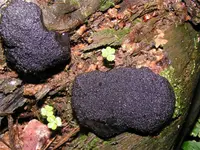
Thick tarcrust, Camarops polysperma, is a wood-decay fungus rather than a traditional green plant. It forms dark, crust-like patches on dead or dying hardwood, often looking like hardened tar on bark or exposed wood.
This species is native to temperate forests, especially in Europe, where it helps break down fallen branches and trunks. It is not typically cultivated, but understanding how to care for thick tarcrust starts with providing consistently moist, shaded, decaying wood.
Its slow, crust-forming habit and need for natural forest-like conditions make it difficult to maintain in ordinary gardens or containers. It generally favors cool, humid air and stable, undisturbed substrates.

Care Difficulty
Hard Care

Light Preference
Shade

Water Requirements
Keep Soil Moist

Temperature Preference
Cool Climate

Hardiness Zone
Unknown

Soil Texture
Loamy, Silty, Organic-rich

Soil pH
Acidic (5.5–6.5)

Soil Drainage
Moist but well-drained

Fertilization
Minimal (feed rarely)
Scan your plant to receive care tips personalized for your specific plant
Available on iOS and Android
Camarops polysperma develops best in low to moderate forest light, protected from direct, intense sun.
Camarops polysperma depends on sustained surface moisture in its woody substrate rather than direct watering of the fungus itself.
Stable, cool to mild temperatures support consistent development of this wood-inhabiting fungus.
Camarops polysperma is a crust-forming fungus that tolerates a wide humidity range but develops best in consistently moist air.
For Camarops polysperma, focus on the substrate it colonizes rather than conventional soil preparation.
This species is not realistically suited to container growing, as it is a saprobic fungus specialized for colonizing natural woody substrates rather than potting media.
Camarops polysperma is a wood-decaying fungus that gains nutrients from its host, so thick tarcrust needs no additional fertilizer in typical outdoor settings.
Pruning is not applicable to Camarops polysperma, as it is a crust-like fungus on dead or dying wood rather than a shaped garden plant.
This species naturally colonizes dead wood and is not suited to typical container culture, so it is not repotted in the usual horticultural sense.
Propagation of Camarops polysperma is mainly of interest to specialists, as it spreads by spores on decaying wood rather than through standard garden methods.
Specific winter care is not required for this hardy, wood-inhabiting fungus, which is adapted to natural outdoor temperature fluctuations.

Plant Health Check
Not sure what's wrong with your plant? Check your plant's health inside the app.
This species is most often recorded on dead beech (Fagus sylvatica) wood in temperate Europe, where it develops thick, black crust-like fruiting bodies on fallen trunks and large branches.
The mature fungal tissue forms a dense, carbonaceous layer that looks and feels like tar, giving rise to the common name thick tarcrust and making it easy to distinguish from many other wood‑decay fungi.
Most confirmed records come from western and central Europe, and it is regarded as a relatively uncommon saproxylic fungus that depends on older woodland with ample large-diameter deadwood.

In several European countries, this species is considered of conservation interest because its dependence on large, well-decayed beech logs makes it a good indicator of long-term continuity of old-growth or semi-natural forests.
This fungus spreads slowly on dead hardwood, usually remaining confined to the surface of fallen branches or logs. It does not aggressively invade living plants, soil, or built structures, so gardeners rarely need to control its spread.
Keep your plants happy and healthy with plant identification, disease detection, and easy care guidance.

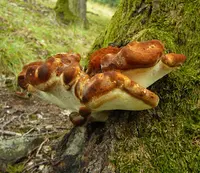
Oak polypore
Buglossoporus quercinus
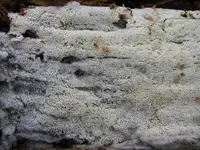
Anomoporia kamtschatica
Anomoporia kamtschatica
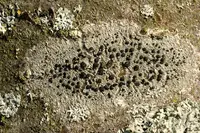
disc lichen
Buellia disciformis
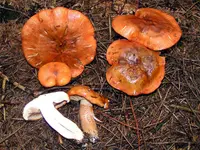
golden orange tricholoma
Tricholoma aurantium
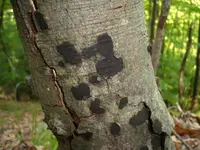
Beech Tarcrust
Biscogniauxia nummularia
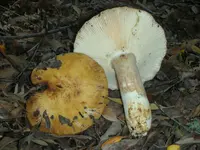
Almond-scented Russula
Russula fragrantissima
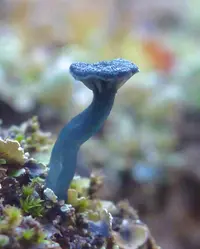
Verdigris Navel
Arrhenia chlorocyanea
Arrhenia spathulata
Arrhenia spathulata