Use host substrate
Establish the fungus on a shallow tray of well-decayed leaf litter mixed with fine, partially decomposed twigs collected from a pesticide-free woodland, which mimics the natural bryophyte-rich substrate it colonizes.

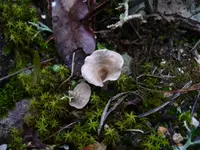
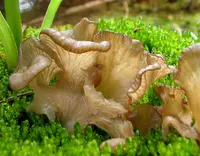
Arrhenia spathulata is a small, saprophytic fungus rather than a typical leafy houseplant. It forms thin, spoon-shaped caps with a gray to brown surface and a pale underside. The fruiting bodies usually appear low to the ground in mossy or grassy habitats.
This species occurs in cool to temperate regions, often in nutrient-poor, moist sites where it helps break down organic matter. It is not commonly grown at home, and consistent cultivation methods are still poorly documented, so it is considered challenging for beginners. For anyone exploring how to care for Arrhenia spathulata, conditions that mimic a cool, shaded, evenly moist natural habitat will be the closest match.

Care Difficulty
Moderate Care

Light Preference
Partial Shade

Water Requirements
Moderate Water

Temperature Preference
Warm Climate

Hardiness Zone
Unknown

Soil Texture
Loamy

Soil pH
Slightly acidic (6.5–7.0)

Soil Drainage
Well-drained

Fertilization
Minimal (feed rarely)
Scan your plant to receive care tips personalized for your specific plant
Available on iOS and Android
This small woodland fungus prefers cool, low to moderate light similar to a shaded forest floor.
Moisture levels around this fungus must stay consistently damp but never stagnant.
This species favors cool to mild conditions and does poorly in temperature extremes.
This moss-like fungus grows on moist substrates and relies on consistently humid conditions to fruit well.
Arrhenia spathulata develops best on a moist, well-aerated, organic substrate rather than dense mineral soil.
This species can be cultured in shallow containers if its need for a stable, moist organic substrate is met.
This fungus is typically not fertilized, as Arrhenia spathulata grows on nutrient-poor substrates and gains nutrients from decomposing organic matter.
Pruning is not a standard practice for this small saprotrophic fungus and is generally unnecessary for health or appearance.
In cultivation, this species is seldom grown in conventional containers, so focus is on relocating colonized substrate rather than classic repotting.
Propagation of Arrhenia spathulata is specialized and usually done by fungal culture techniques rather than casual home methods.
In natural settings this fungus is cold tolerant and needs no targeted winter care from the grower.

Plant Health Check
Not sure what's wrong with your plant? Check your plant's health inside the app.
This fungus forms minute, spoon-shaped caps only a few millimeters across and is most often found in cool, exposed alpine and subalpine habitats where few other agarics can persist.
It typically fruits among dense moss cushions on soil or rock, and field observations suggest a close ecological association with mosses rather than with tree roots or wood.
The fruitbodies are thin, grey to brownish-grey, and somewhat flexible, allowing them to tolerate desiccation and mechanical stress in wind-exposed, high-elevation sites.
This small, saprophytic fungus can be cultivated in shallow containers if suitable decaying organic material and consistently moist, cool conditions are provided. It is more of a specialist project than a typical ornamental pot culture.
Keep your plants happy and healthy with plant identification, disease detection, and easy care guidance.