redleg jellybelly Care (Cudonia circinans)

redleg jellybelly

About redleg jellybelly

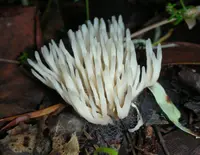
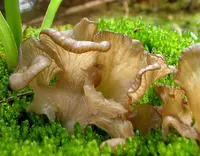
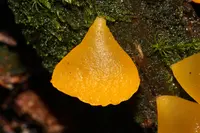
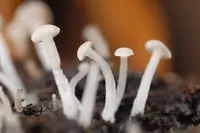
Redleg jellybelly, Cudonia circinans, is a small, club-like fungus rather than a traditional leafy plant. It forms tight groups of reddish to orange-brown, smooth clubs on decaying conifer litter.

This species is typically found in cool, moist conifer forests across parts of Europe and North America, often appearing in late summer to autumn. It is considered challenging to cultivate because it depends on specific forest-floor conditions and natural decomposition processes.

Gardeners rarely attempt to care for redleg jellybelly at home, as it is best appreciated in its natural habitat. It favors consistently moist, cool, shaded environments with plenty of decomposing needle litter.

Main Plant Requirements

Care Difficulty

Hard Care

Light Preference

Shade

Water Requirements

Keep Soil Moist

Temperature Preference

Cool Climate

Hardiness Zone

Unknown

Soil Texture

Loamy, Organic-rich, Peaty

Soil pH

Acidic (5.5–6.5)

Soil Drainage

Moist but well-drained

Fertilization

Minimal (feed rarely)

Get Personalized Care Plan

Scan your plant to receive care tips personalized for your specific plant

Available on iOS and Android

How to Care for the redleg jellybelly

This species is a small woodland fungus that develops fruiting bodies best in cool, shaded forest conditions.

  • Provide dappled or filtered light under trees, mimicking a deciduous woodland floor with only 1–3 hours of weak direct morning sun, especially in late summer to fall.
  • Avoid strong midday or afternoon sun, which can dry the substrate and damage delicate redleg jellybelly fruiting structures, especially in exposed, open ground.
  • In dense shade, ensure at least a bright, open sky view; excessive gloom under thick evergreen cover can reduce fruiting density and visibility.

This fungus relies on consistently moist, cool soil rather than direct watering of the fruiting bodies.

  • Maintain soil or leaf litter evenly moist, not waterlogged; surface should feel damp but not squishy when pressed, with no standing water in low spots.
  • Increase moisture in late summer to autumn by ensuring nearby vegetation or mulch reduces evaporation, since Cudonia circinans often fruits after sustained damp conditions.
  • Reduce supplemental moisture in prolonged heavy rain to avoid stagnant, saturated soil, which can limit oxygen around roots and surrounding forest-floor organisms.

This woodland fungus fruits best in cool, moist climates typical of temperate forests.

  • Optimal fruiting usually occurs around 50–65°F (10–18°C), often in late summer to fall when nights are cool and days are mild.
  • It tolerates cooler spells down to about 35–40°F (2–4°C), but hard frost and repeated freeze–thaw cycles can damage or collapse exposed fruiting bodies.
  • Prolonged heat above 77°F (25°C), especially with dry air, tends to halt fruiting and dry the substrate, so shade and steady moisture become increasingly important.

This fungus requires consistently moist, cool air to fruit reliably and will struggle in dry, heated indoor environments.

  • Aim for 70–90% humidity, similar to a damp forest floor, when trying to fruit redleg jellybelly in a controlled setup.
  • Cracked, shriveling fruiting bodies and rapid drying of the substrate surface indicate humidity is too low.
  • Use a closed propagation box or covered terrarium with vents, plus frequent misting of the substrate, to maintain high humidity without stagnant air.

Cudonia circinans naturally fruits on very moist, organic woodland substrates rather than typical garden soil.

  • Provide a loose, fibrous, organic-rich medium made from well-rotted leaf litter, fine bark, and a small amount of forest-type compost.
  • Keep the substrate moist but not waterlogged; it should drain slowly while remaining evenly damp, never forming standing water.
  • Maintain slightly acidic to neutral conditions around pH 5.5–7 by using leaf mold or peat-free ericaceous compost as part of the mix.
  • Avoid dense clay, sterile potting mixes, and heavily fertilized soils, which limit aeration and disrupt the specific fungi–substrate relationship needed for fruiting.

This species is challenging but can be cultured in containers for experimental or specialist setups only.

  • Use a deep, stable tray or box that allows a thick layer of substrate so moisture gradients can develop naturally.
  • Choose opaque or dark container walls to protect developing structures from light and reduce surface drying at the edges.
  • Elevate the container and provide discreet side or bottom ventilation holes so excess moisture can escape without fully drying the substrate.

Cudonia circinans (redleg jellybelly) is a forest fungus that relies on natural soil nutrients and normally should not be fertilized.

Cudonia circinans does not need pruning, as the fruiting bodies are seasonal and decompose naturally.

This species is not suited to container culture, so focus on maintaining a stable outdoor habitat rather than repotting.

  • Avoid disturbing forest soil where the fungus fruits, since its mycelium network is sensitive to disruption.
  • Transplanting is generally unsuccessful because the mycorrhizal associations with trees are highly specific.
  • If relocation is essential, move intact soil blocks in cool, moist conditions and keep them shaded.

Propagation of Cudonia circinans is challenging and rarely attempted by home growers.

This fungus is cold hardy in its native range and requires no special winter care in the ground.

Care Tips

Sterile substrate choice

Use well-aged, sterilized softwood sawdust mixed with a small amount of peat or conifer litter to mimic its natural conifer‑forest floor and reduce competing fungi when growing redleg jellybelly in controlled conditions.

Host tree association

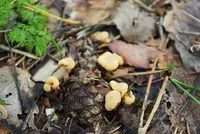
Establish the culture near mature conifers such as spruce or pine in outdoor beds, as this fungus is strongly associated with conifer litter and performs poorly without a compatible needle and wood environment.

Litter depth management

Maintain a thin but continuous layer of moist conifer needles and small twigs over the substrate (about 1–2 cm) to protect developing fruiting bodies while still allowing them to emerge through the litter.

Moisture pulse scheduling

Irrigate in short, gentle pulses that thoroughly moisten the upper 3–5 cm of substrate, then allow the surface to slightly dry before the next pulse to avoid waterlogging the fungal mycelium.

Clean tool hygiene

Disinfect tools, trays, and any surfaces that contact the substrate with a mild bleach solution (about 1:10) before use to lower the risk of contamination from aggressive molds that can quickly overrun this relatively delicate species.

Common Pests and Diseases

Fungal parasitism

This disease arises when other competitive forest fungi overgrow and colonize the small fruiting bodies, leading to distortion, discoloration, and collapse. Symptoms include a whitish, gray, or dark moldy overgrowth on or around the clubs.

Solution

Remove and discard affected fruiting bodies to limit spore spread, avoid disturbing the substrate around visibly infected patches, and maintain good forest floor airflow by not piling additional organic debris on top of existing colonies. In cultivation trials, space substrates so surfaces can dry lightly between natural wet periods, which makes it harder for aggressive competitor molds to dominate.

Slime mold colonization

This disease occurs when slime molds spread over the moist fruiting bodies, forming slimy or crusty patches that can smother and deform them. Symptoms include an irregular, often brightly colored film that later dries into a crust on the clubs and surrounding litter.

Solution

Carefully remove slime mold-covered litter and fruiting bodies without scattering fragments widely, and avoid overwatering or creating persistently waterlogged microhabitats. Maintaining a looser, better-aerated leaf litter layer around any attempt to grow Cudonia circinans reduces the chance of long-lasting surface moisture that favors slime mold spread.

Fungivorous springtails

These insects feed on fungal tissue and spores, sometimes pitting or chewing the tender club surfaces, especially in dense, moist litter. This pest is usually minor but can noticeably scar small or crowded fruiting clusters.

Solution

If damage is heavy in a controlled setting, gently reduce surface moisture and improve ventilation so the substrate is evenly moist, not saturated, which lowers springtail numbers. In containers or experimental beds, remove heavily infested debris and, when needed, use a fine-mesh cover to limit colonization while still allowing air movement.

Fungivorous mites

These pests graze on the outer tissue of the clubs and on spores, causing roughened surfaces, fine pitting, and sometimes collapse of very small fruiting bodies. This pest thrives in constantly damp, stagnant microclimates rich in decaying plant material.

Solution

In any managed or research cultivation, reduce excess humidity by increasing airflow and avoiding tight covers over the substrate, then remove and discard the most damaged clusters. Where access is possible, briefly exposing the area to slightly drier air while keeping the substrate from fully drying can lower mite pressure without the need for chemical treatment.

Interesting Facts

Jelly-like club caps

This fungus forms small, reddish to orange-brown, club-shaped caps with a distinct gelatinous texture, which is why it is sometimes called redleg jellybelly.

Habitat on decaying conifers

It is typically found in cool, moist conifer forests of Europe and parts of North America, growing in dense clusters on very decayed, buried wood or needle litter rather than on fresh logs.

Autumn fruiting specialist

The fruiting bodies usually appear in late summer to autumn, often after periods of rain, taking advantage of cool, damp conditions to release spores from the smooth, upper surface of the clubs.

Botan icon

Did you know?

Cudonia circinans belongs to a relatively small and specialized group of ascomycete fungi whose club-shaped fruiting bodies were historically difficult to classify, and its precise relationships within the Helotiales have been clarified only with modern DNA-based studies.

FAQs about redleg jellybelly

This fungus is not considered edible and is generally treated as inedible or of no culinary value. Identification can be difficult, so it is safest not to eat it or similar-looking cup fungi.

Grow Healthy Plants with Botan Care

Keep your plants happy and healthy with plant identification, disease detection, and easy care guidance.

Botan plant care app — identify plants on mobile

Explore More Plants