


Early canopy training
While the plant is young, pinch back competing leaders and lightly tip-prune outer shoots to encourage a single strong trunk and a balanced canopy that resists wind damage later.

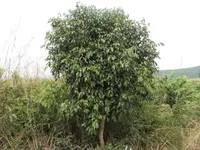
Water pear, Syzygium guineense, is a tropical to subtropical evergreen tree commonly grown as a fruit or shade tree in suitable climates. It naturally occurs across much of sub-Saharan Africa, often along rivers, woodland edges, and moist upland areas.
The tree forms a rounded crown, with glossy green leaves and clusters of white flowers that develop into small, edible, berry-like fruits. Growth is usually moderate, and plants can become quite large in the ground.
It is generally sturdy and adaptable, which helps simplify how to care for Water Pear in warm regions. It prefers consistent moisture, reasonably fertile, well-drained soil, and open light from full sun to light shade.

Care Difficulty
Moderate Care

Light Preference
Full Sun

Water Requirements
Regular Water

Temperature Preference
Warm Climate

Hardiness Zone
10–12

Soil Texture
Sandy, Loamy, Clay

Soil pH
Acidic (5.5–6.5), Slightly acidic (6.5–7.0)

Soil Drainage
Moist but well-drained

Fertilization
Minimal (feed rarely)
Scan your plant to receive care tips personalized for your specific plant
Available on iOS and Android
This species prefers bright, open conditions but adapts to varying sunlight in warm climates.
This tree thrives in moist, well-drained soil and reacts clearly to both drought and excess water.
This species is best suited to warm, frost-free climates with mild seasonal variation.
This species grows best in moderate air moisture but adapts to a range of indoor conditions when caring for Water Pear.
Syzygium guineense prefers evenly moist, well-structured soil that holds water briefly but drains freely.
This species can adapt well to container growing when given stable support and controlled moisture.
Syzygium guineense benefits from light, targeted feeding when grown in gardens or containers, but mature trees in fertile ground often cope well with minimal inputs.
Pruning Syzygium guineense helps manage size, improve structure, and maintain healthy canopy growth.
This species is usually grown as a landscape tree, so care focuses more on transplanting young Syzygium guineense than long-term container repotting.
Propagation of Syzygium guineense is typically done from seeds or semi-hardwood cuttings under controlled conditions.
In mild, frost-free climates Syzygium guineense needs little winter attention, but young or potted plants in cooler areas require some care.

Plant Health Check
Not sure what's wrong with your plant? Check your plant's health inside the app.
This species occurs from lowland riverbanks to highland woodlands across much of sub‑Saharan Africa, showing strong adaptability to different soils and rainfall regimes.
The dark purple fruits are widely gathered and eaten fresh or made into drinks in several African countries, especially during the rainy season when they are most abundant.
Along streams and rivers, this tree often forms dense stands whose roots help stabilize banks and reduce erosion, supporting both water quality and local biodiversity.

In parts of eastern and southern Africa, large specimens are traditionally used as communal meeting or shade trees in villages and along roads, and their presence often marks long‑standing human settlements in the landscape.
Growth is moderate. Young trees often add 30–60 cm per year in suitable climates, slowing as they mature. Rate depends on warmth, moisture, and soil fertility, so regular watering and mulching support steady extension growth.
Keep your plants happy and healthy with plant identification, disease detection, and easy care guidance.

Turkish Pine
Pinus brutia
Elephant Ear
Colocasia esculenta Royal Hawaiian Maui Gold
Nanking cherry
Prunus tomentosa
Garcinia cochinchinensis
Garcinia cochinchinensis
large-seeded coprosma
Coprosma macrocarpa
Vasconcellea quercifolia
Vasconcellea quercifolia
Klamath plum
Prunus subcordata
scarlet-plume
Euphorbia fulgens